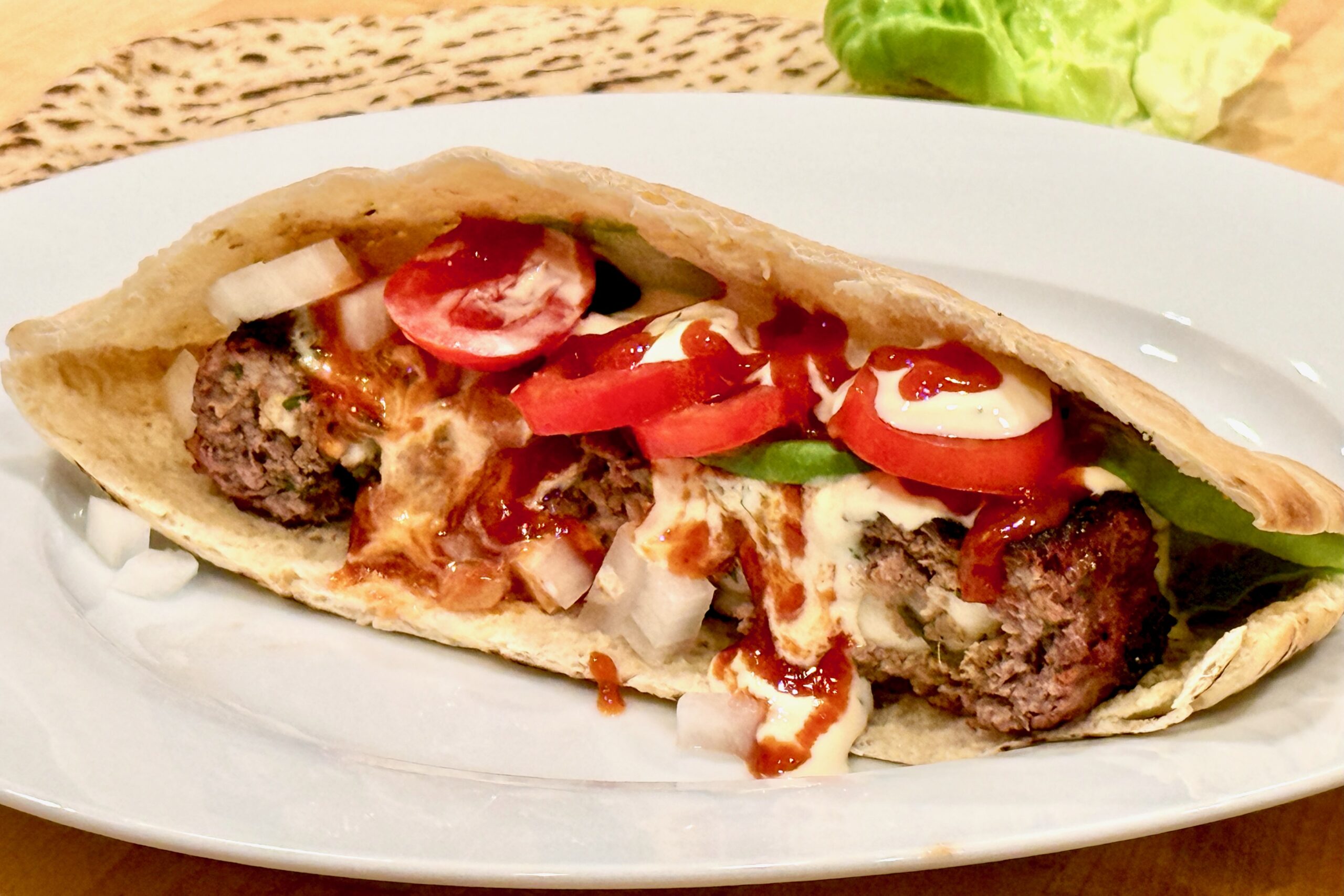
These cheese-stuffed shoarma burgers have been my son’s favorite dinner for years. The beef-and-pork patties are seasoned with Dutch shoarma kruiden, grilled over charcoal, and served in warm pita with butter lettuce, ripe tomatoes, shoarmasaus, knoflooksaus, and sambal oelek at the table. Fill them with mild fresh mozzarella or tangy goat cheese—or make some of each, as we usually do.
Ingredients
Shoarma Burgers
- 2 lb (907 g) ground beef
- 1 lb (454 g) ground pork
- 1 tbsp sambal oelek
- 1½ tbsp finely chopped or grated fresh garlic
- 1 tbsp grated fresh ginger
- 2 tsp table salt
- 3.5 g MSG
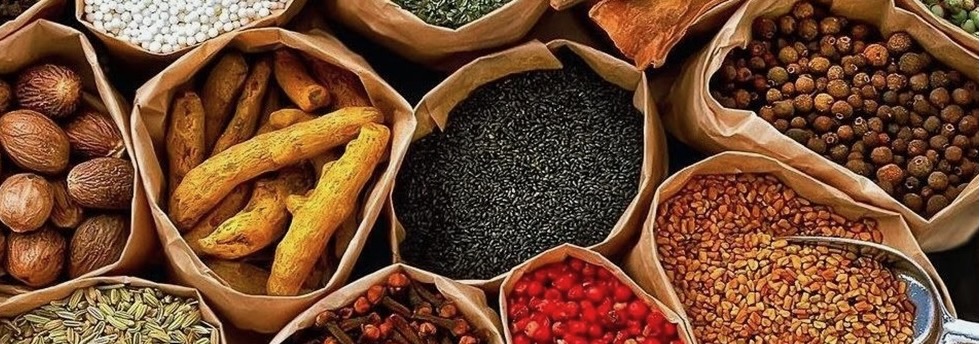
- 4 tbsp shoarma kruiden
- ¼ cup (60 g) plain yogurt
- ¼ cup (60 ml) finely chopped fresh cilantro
- Fresh sliced mozzarella, 0.9–1.1 oz (25–30 g), or goat cheese, 1.1–1.2 oz (30–35 g), per burger
For Serving
- 7 pita breads or hamburger buns
- butter lettuce leaves
- ripe sliced tomatoes, preferably garden tomatoes
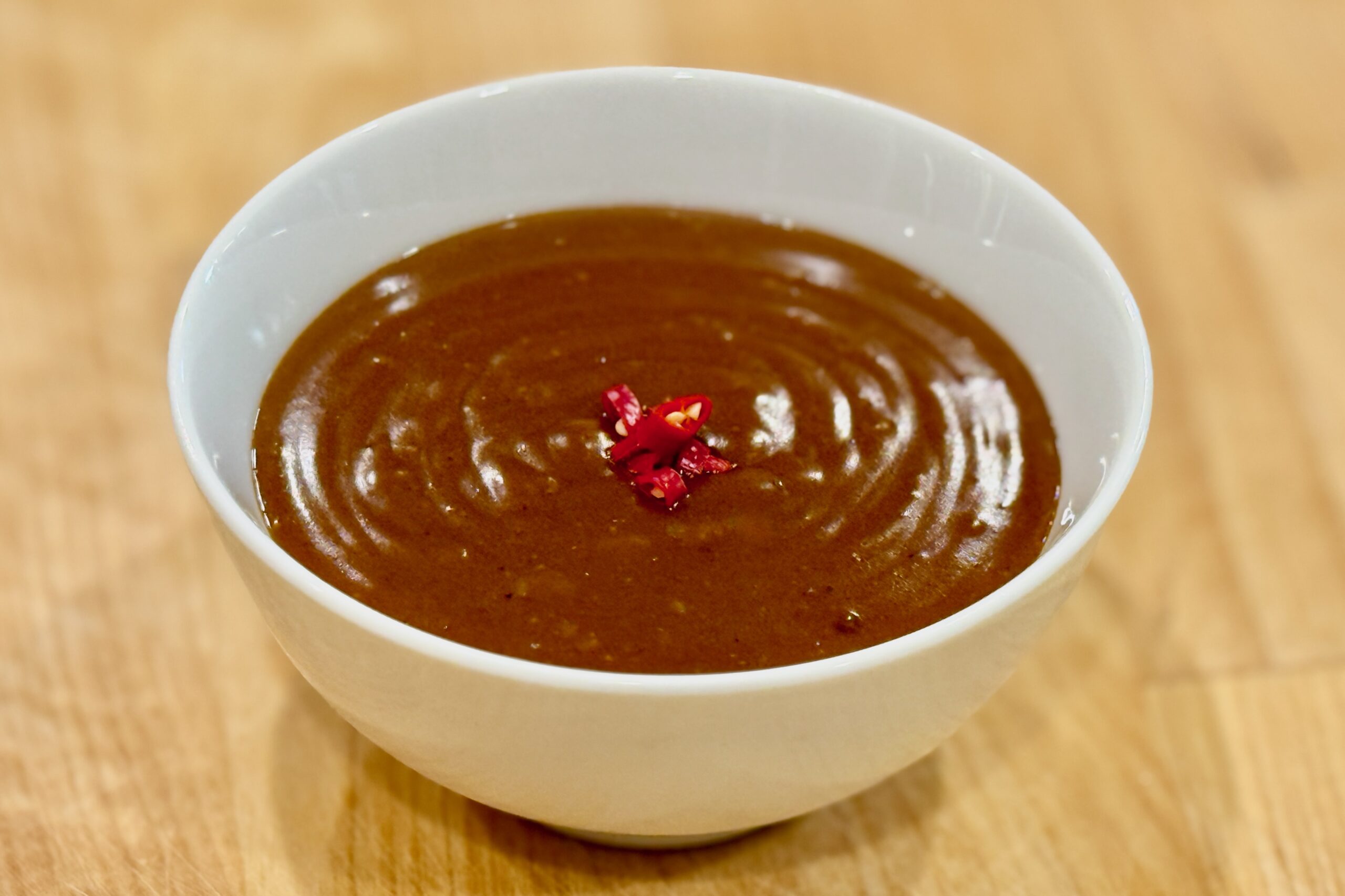
- shoarmasaus
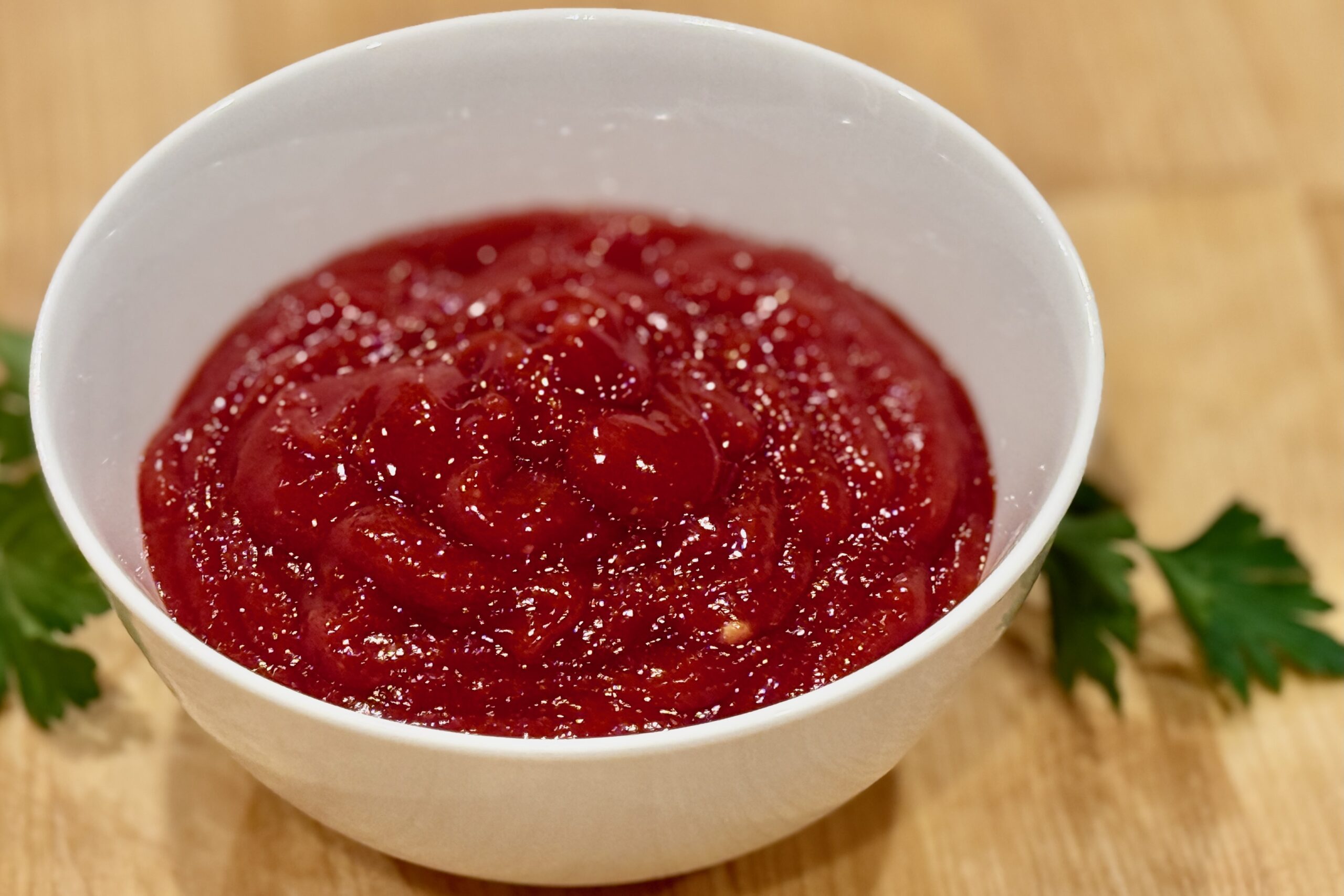
- knoflooksaus
- lime wedges
- sambal oelek
Directions
Prepare the Sauces
Prepare the shoarmasaus and knoflooksaus at least 4 hours before serving, preferably the night before, so their flavors have time to develop.
Mix the Meat
Place the ground beef, ground pork, sambal oelek, garlic, ginger, salt, MSG, shoarma kruiden, yogurt, and cilantro in a large bowl. Mix thoroughly by hand until the seasonings are evenly distributed and the meat becomes cohesive and slightly tacky. A portion pressed together should hold its shape without cracking or crumbling. Keep the mixture as cold as possible while working.
Fill and Shape the Patties
Divide the meat mixture into 7 equal portions. Working with one portion at a time, place approximately half in the bottom of a burger press or shape it by hand to create a solid base. Place 0.9–1.1 oz (25–30 g) fresh sliced mozzarella or 1.1–1.2 oz (30–35 g) goat cheese in the center, leaving a generous border around the cheese. Cover completely with the remaining meat and form into a thick patty, approximately 8.8 oz (250 g) including the filling.
Smooth and gently compress the exterior. Carefully inspect the top, bottom, and edges, pinching closed every seam or opening through which the cheese could escape. Repeat with the remaining meat and cheese.
Chill the Patties
Arrange the formed patties on a covered tray and refrigerate for at least 1 hour before grilling.
Prepare the Charcoal Grill
Prepare a charcoal grill for two-zone cooking, with a hot direct-heat area and a cooler indirect-heat area. Clean and lightly oil the grill grate.
Grill the Burgers
Place the chilled patties over direct heat and grill until well browned. Turn carefully without pressing down with a spatula. If the exteriors brown before the centers are cooked, move the patties to the cooler side of the grill, close the lid, and finish over indirect heat.
Cook until the meat surrounding the cheese reaches 160°F (71°C). Insert an instant-read thermometer horizontally through the side of each patty, aiming for the meat rather than the cheese filling. Transfer to a platter and rest for 3–5 minutes.
Finish and Assemble
Squeeze a lime wedge lightly over each rested burger. Warm the pita bread briefly on the grill, then fill each pita with a burger, butter lettuce, ripe sliced tomato, shoarmasaus, and knoflooksaus. Hamburger buns may be substituted for the pita. Serve immediately with additional sambal oelek and lime wedges at the table.
Yield: 7 burgers.
Notes
Preparation
- Fresh mozzarella creates a mild, melty center and is generally preferred by younger children.
- Goat cheese provides a tangier, more pronounced filling.
- Keep the cheese cold and compact in the center of each patty to make the burgers easier to seal.
- A burger press makes the stuffed patties easier to shape, but they can also be formed and sealed by hand.
- Mixing until the meat becomes slightly tacky helps the large patties hold together on the grill.
- Do not press the patties with a spatula while grilling, as this can force the cheese through the sealed exterior.
Make-Ahead & Storage
- The sauces are best prepared the day before serving.
- The patties may be formed, covered, and refrigerated earlier the same day.
- Refrigerate leftover cooked burgers in an airtight container up to 3 days.