Bags of Spices

Favorite Recipes

Pasta

Classic and modern pasta dishes—from handmade noodles and traditional sauces to comforting baked pastas and quick weeknight favorites.

  • Umbricelli — Traditional Umbrian Hand-Rolled Pasta

    Umbricelli — Traditional Umbrian Hand-Rolled Pasta

    Umbricelli is one of those pastas that feels like it came straight from a farmhouse kitchen—simple ingredients, rolled by hand, and built for sauces that cling and coat every strand. Originating in the heart of Italy, this thick, rustic pasta delivers a firm, satisfying bite that’s closer to traditional semolina pasta than soft egg noodles. Around our table, it’s become a favorite for nights when we want something hearty and hands-on—rolled together, cooked quickly, and finished in a bold sauce that brings everything to life.


    Ingredients

    • 250 g (about 2 cups) all-purpose flour, plus more for dusting
    • ½ tsp table salt
    • 180 ml (¾ cup) warm water, as needed

    Directions

    Make the Dough

    Add the flour and salt to the bowl of a KitchenAid stand mixer fitted with the dough hook. With the mixer on low speed (1–2), slowly drizzle in about 160 ml (⅔ cup) of the warm water until a shaggy dough begins to form.

    Continue mixing on low for 5–7 minutes until the dough becomes smooth, cohesive, and firm with slight resistance when pressed. Add additional water only as needed, 5 ml (1 tsp) at a time, until the dough comes together. It should not be soft or sticky.

    If your mixer struggles with the stiff dough, stop and finish kneading by hand for 1–2 minutes.

    Rest the Dough

    Wrap the dough tightly or cover with an inverted bowl and let rest at room temperature for at least 30 minutes. This relaxes the gluten and makes shaping easier.

    Shape the Umbricelli

    Divide the dough into 4 portions, keeping unused portions covered to prevent drying.

    Roll one portion into a rope about ½ inch thick, then cut into small pieces about the size of a marble.

    Using your palms, roll each piece on a clean work surface into long strands, generally about ⅛–¼ inch (3–6 mm) thick. Apply light, even pressure, letting friction stretch the dough naturally. Umbricelli is intentionally rustic—perfect uniformity is neither necessary nor desirable.

    Place finished strands on a lightly floured towel or work surface, keeping them separated so they do not stick together.

    Cook

    Bring a large pot of well-salted water to a rolling boil. Add the umbricelli and cook for 3–5 minutes, or until tender but still pleasantly firm to the bite.

    Transfer directly to your prepared sauce and finish cooking for 1–2 minutes, allowing the pasta to absorb flavor while the sauce clings to the strands.

    Yield: 4 servings.


    Notes

    Preparation

    • For the most consistent dough, weigh the flour and water with a kitchen scale.
    • The dough should feel firm but workable—too soft and the strands will stretch unevenly; too dry and they may crack while rolling.
    • If the dough resists rolling or shrinks back, let it rest an additional 10–15 minutes.
    • Light flour on the work surface helps prevent sticking, but too much flour reduces the friction needed for rolling.
    • Rustic variation in thickness is expected and part of the character of traditional umbricelli.

    Variations

    • Traditional Hand Method: Mix the flour and salt in a bowl, gradually add the warm water, then knead by hand for 8–10 minutes until smooth and firm.
    • More Semolina: Substitute 50 g (about ⅓ cup) semolina for an equal weight of the all-purpose flour, using 200 g (about 1⅔ cups) all-purpose flour and 50 g semolina total. The dough may hydrate more slowly, so let it rest briefly before adding extra water.
    • Adjust the Thickness: Roll slightly thicker for a heartier chew or slightly thinner for a more refined presentation.

    Serving Suggestions

    • Finish simply with butter, cracked black pepper, and freshly grated parmesan.
    • Pair with sausage-based sauces like Umbrian-style alla Norcina.
    • Serve with our Fresh San Marzano Tomato Basil Sauce.
    • Excellent with garlic-chili oil, truffle butter sauces, or other robust tomato sauces.

    Make-Ahead & Storage

    • Fresh umbricelli can rest at room temperature for up to 2 hours before cooking.
    • Refrigerate, lightly floured and covered, for up to 24 hours.
    • Freeze in loose nests on a tray, then transfer to a freezer bag; cook directly from frozen, adding 1–2 minutes.

    High Altitude

    • At about 4,750 ft (1,400 m), the dough may need an additional 15–30 ml (1–2 tbsp) water because of drier conditions.
  • Fresh San Marzano Tomato Basil Sauce

    Fresh San Marzano Tomato Basil Sauce

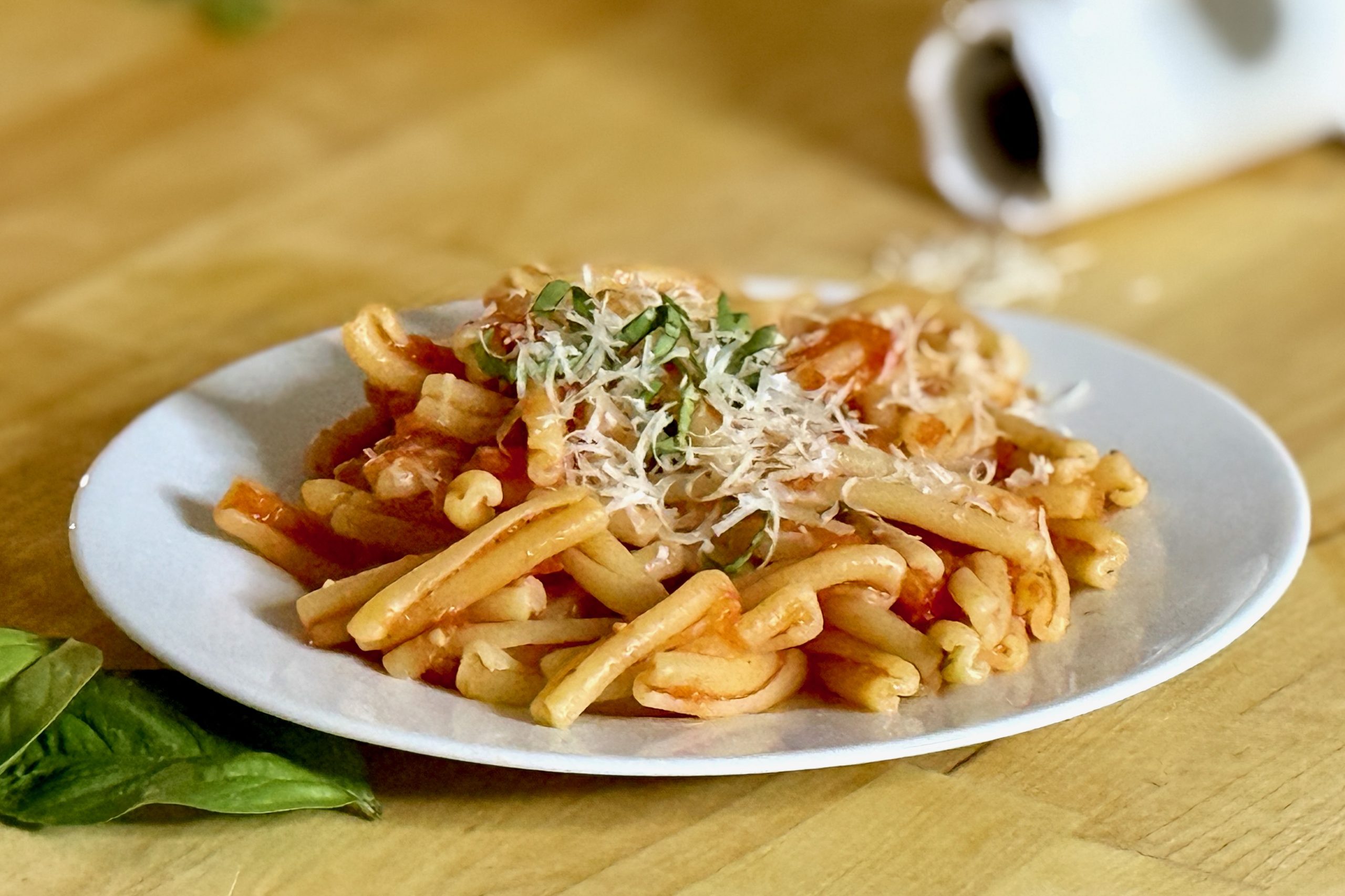
    Each year, our backyard garden gives us a bumper crop of San Marzano tomatoes along with plenty of freshly harvested basil, and this sauce is one of our favorite ways to bring the two together. The tomatoes are grated and briefly simmered with gently cooked garlic, fresh basil, and olive oil, creating a sauce that is bright, fragrant, and full of fresh tomato flavor. Finishing the pasta directly in the sauce allows the tomato juices, olive oil, and pasta starch to come together into a light, silky coating that clings beautifully to every strand.


    Ingredients

    • 2 lb (900 g) fresh San Marzano tomatoes
    • 3 tbsp (45 ml) extra-virgin olive oil, divided
    • 2–3 cloves garlic, thinly sliced
    • ½ tsp table salt, plus more to taste
    • Freshly ground black pepper, to taste, optional
    • 10–15 fresh basil leaves, divided
    • Reserved pasta cooking water, only if needed

    Directions

    Prepare the Tomatoes

    Cut the tomatoes in half. Holding each tomato by the skin, grate the cut side against the large holes of a box grater until only the skin remains. Discard the skins, retaining all of the tomato pulp, juice, seeds, and surrounding gel.

    Make the Sauce

    Heat 2 tbsp (30 ml) olive oil in a wide skillet or sauté pan over medium-low heat. Add the sliced garlic and cook gently for 30–60 seconds, just until fragrant. Do not allow the garlic to brown.

    Add the grated tomatoes and ½ tsp salt. Add 3–4 whole basil leaves or a few tender basil stems.

    Bring to a gentle simmer and cook uncovered for about 15–20 minutes, stirring occasionally, until the raw tomato flavor has softened and the tomatoes have reduced slightly. The sauce should still be relatively loose; do not continue cooking simply to achieve the consistency of a finished pasta sauce.

    Remove and discard the cooked basil leaves or stems. Taste and adjust the salt and black pepper as needed.

    Finish the Pasta in the Sauce

    Cook the pasta in well-salted boiling water until about 2 minutes shy of your preferred doneness.

    Transfer the pasta directly into the simmering tomato sauce. Toss continuously over medium to medium-high heat for about 2 minutes, or until the pasta is properly cooked and the tomato juices, starch, and olive oil have come together into a light sauce that clings to the pasta.

    Add reserved pasta cooking water only if the sauce becomes too tight.

    Remove from the heat. Tear the remaining fresh basil leaves into the pasta and drizzle with the remaining 1 tbsp (15 ml) olive oil. Toss well and serve immediately.

    Yield: 4 servings.


    Notes

    Preparation

    • Use fully ripe tomatoes with good natural sweetness and acidity. Because the sauce contains so few ingredients, the quality and ripeness of the tomatoes make a significant difference.
    • Do not seed the tomatoes. The pulp and gel surrounding the seeds contribute flavor and moisture to the finished sauce.
    • Grating the tomatoes removes the skins while retaining more pulp than processing them through a fruit and vegetable strainer.
    • Keep the garlic pale and aromatic. Browning it produces a deeper flavor that can compete with the fresh tomatoes.
    • Cooking time will vary somewhat with the moisture content of the tomatoes. Judge the sauce primarily by flavor rather than trying to reduce away all of the tomato liquid.
    • The sauce is intentionally loose before the pasta is added. Finishing the pasta directly in the sauce allows the pasta to absorb some of the tomato liquid while released starch helps bind the tomato juices and olive oil.
    • Avoid substantially extending the tomato cooking time simply to thicken the sauce. The short simmer helps preserve its fresh tomato character.
    • Sugar should not normally be necessary with ripe tomatoes. If a particular batch is unusually acidic, make any adjustment only after tasting the cooked sauce.

    Variations

    • Spicy Tomato & Basil: Add a small pinch of crushed red pepper flakes with the garlic.
    • Chunkier Sauce: Peel the tomatoes by blanching rather than grating, then hand-crush or roughly chop them before cooking.
    • Fresh Pomodoro Variation: Add a small amount of finely grated onion and extend the simmer for a slightly richer, sweeter, and more developed sauce.

    Serving Suggestions

    • Especially good with fresh, rustic pastas such as umbricelli, where the irregular surface and substantial texture give the sauce plenty to cling to.
    • Use with other fresh or dried pasta shapes, finishing the pasta directly in the sauce using the same method.
    • Finish individual servings with additional fresh basil or a drizzle of extra-virgin olive oil.
    • Parmigiano-Reggiano or Pecorino Romano can be served at the table, although the sauce is flavorful enough to serve without cheese.
    • For a bruschetta-style serving, chill leftover sauce and spoon it over toasted or grilled bread. Finish with fresh basil and a drizzle of extra-virgin olive oil.

    Make-Ahead & Storage

    • The tomato sauce can be prepared several hours ahead and gently reheated before finishing the pasta in it. Reserve the finishing basil and final tablespoon of olive oil until serving.
    • Refrigerate leftover sauce in an airtight container for up to 4 days.
    • Leftover sauce is excellent served cold or at room temperature as a bruschetta-style topping.
    • The sauce can be frozen, although its fresh basil aroma and especially fresh character are best when served shortly after preparation.