Bags of Spices

Favorite Recipes

Pantry & Basics

Simple, foundational recipes—sauces, staples, and building blocks that bring depth and flavor to everyday cooking.

  • Vanilla Extract

    Vanilla Extract

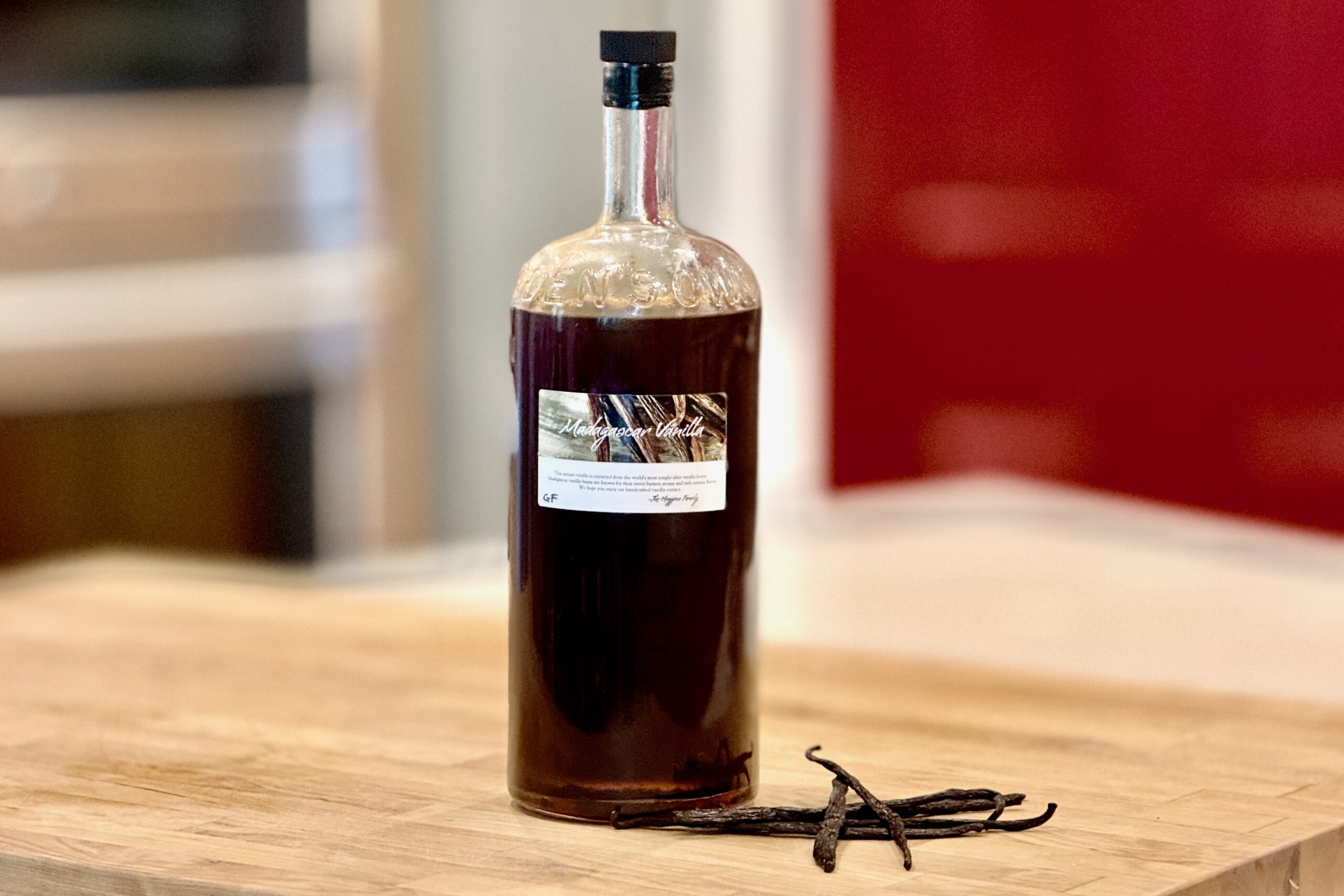
    Homemade vanilla extract is one of those quiet staples that rewards patience. Made with just two ingredients—vanilla beans and liquor—it develops a deep, rounded flavor over time that far surpasses most store-bought versions. Most vanilla beans fall into two primary varieties—Bourbon (Madagascar) and Tahitian—each offering a distinct profile, from rich and classic to floral and aromatic, with additional nuance depending on the country of origin. Our method follows the FDA’s definition of single-fold extract, resulting in a reliable, repeatable ratio whether you’re making a small bottle or scaling up for gifts or long-term use.


    Ingredients

    • 375 ml (12.7 oz) vodka (or light rum or bourbon)
    • 37.5 g (1.32 oz) vanilla beans

    Directions

    Prepare the Beans

    Beginning just below the curved end of each vanilla bean, split the pod lengthwise, leaving the top intact.

    The split beans can also be cut into 1–2 inch segments to increase surface area and improve extraction.

    Combine

    Place the prepared vanilla beans into the liquor.

    Seal the bottle and shake well.

    Extract

    Store in a cool, dark place.

    Shake daily for the first 2 weeks to help initiate extraction.

    After that, shake every few days for an additional 6 weeks.

    Finish

    The extract is ready in about 8 weeks and will continue to deepen in flavor over time.


    Notes

    Preparation

    • Use liquor that is at least 70 proof (35% alcohol) for proper extraction.
    • Vodka produces a clean, neutral extract; bourbon and rum add subtle background flavor.
    • For best results, use a glass bottle with a tight-fitting lid.
    • The FDA single-fold standard is 0.1 g vanilla beans per ml liquor.

    Serving Suggestions

    • Use in baking, custards, ice cream, and sauces.
    • Add a splash to coffee, whipped cream, or oatmeal for extra depth.

    Variations

    • Double-fold extract: double the vanilla bean weight for a more concentrated extract.
    • Blend different spirits, such as vodka and bourbon, for a layered flavor profile.
    • Use beans from different origins to explore flavor differences, from deeper cocoa-like notes to brighter floral tones.

    Make-Ahead & Storage

    • Store in a cool, dark place indefinitely.
    • Top off with additional liquor as you use the extract to maintain volume.
    • Beans can be reused for a second batch, though the flavor will be lighter.
    • For scaling, use 10 g (0.35 oz) beans per 100 ml liquor, 25 g (0.88 oz) per 250 ml, 50 g (1.76 oz) per 500 ml, 75 g (2.65 oz) per 750 ml, and 100 g (3.53 oz) per 1 liter.
  • Habanero Hot Honey

    Habanero Hot Honey

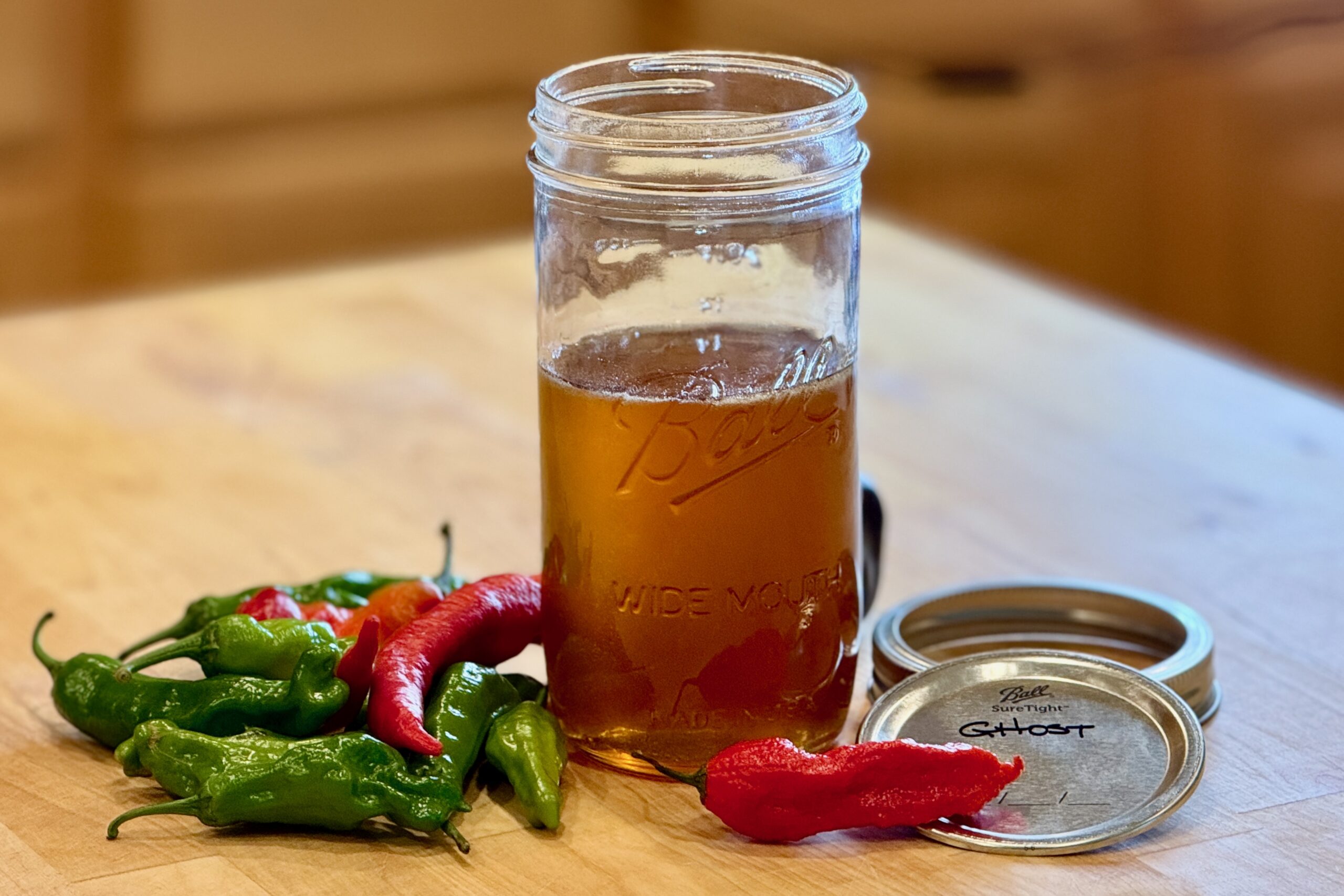
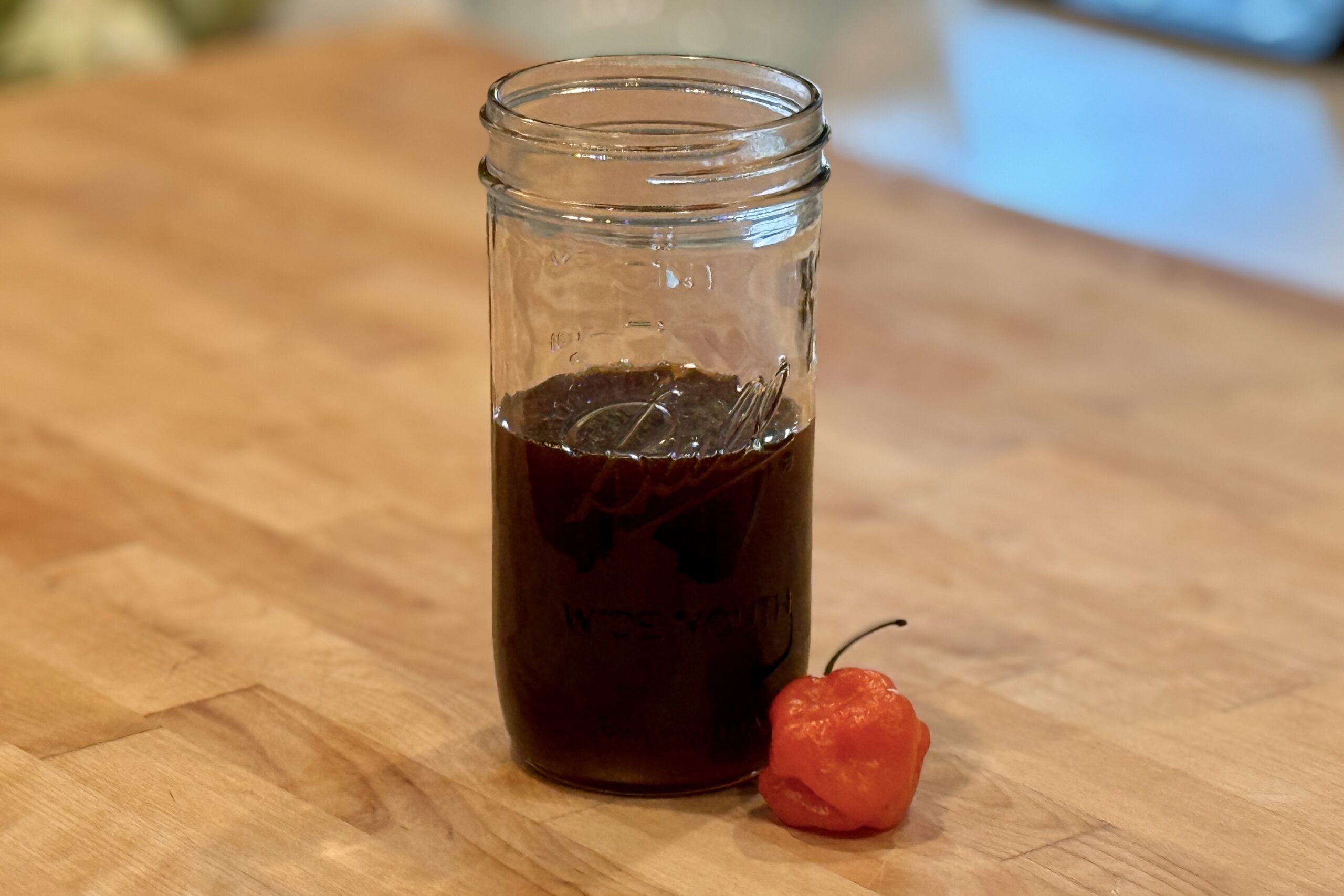
    This habanero hot honey is simple, versatile, and built for flexibility. A gentle sous vide infusion brings a clean, balanced heat while preserving the natural character of the honey, making it just as useful for drizzling over fried chicken, biscuits, or pizza as it is for building into barbecue sauces and finishing glazes. Because the base stays intentionally clean—just honey, habanero, and an optional pinch of salt—it can be adjusted to fit whatever you’re cooking.


    Ingredients

    • 1 cup unfiltered honey
    • 1 fresh habanero, halved
    • Pinch of table salt (optional)

    Directions

    Prepare the Jar

    Add the honey, habanero, and optional salt to a small mason jar. Seal the jar finger-tight so pressure can equalize during the infusion.

    Infuse Sous Vide

    Set a sous vide bath to 130°F (54°C). Submerge the jar and infuse for 2 hours.

    Strain and Store

    Remove the jar from the water bath and let it cool just enough to handle comfortably. Strain out the habanero through a fine-mesh strainer.

    For a cleaner finish and better consistency, strain again through cheesecloth or a coffee filter before transferring to a clean jar for storage.


    Notes

    Preparation

    • Leave the seeds in for a hotter infusion, or remove some or all of them for a milder result.
    • If your honey is very thick or lightly crystallized, it may loosen naturally during the infusion.
    • Wear gloves when handling habaneros, and avoid touching your face or eyes afterward.
    • This recipe is designed as a base ingredient, so the flavor stays clean and flexible for later adjustments.

    Serving Suggestions

    • Drizzle over fried chicken, pizza, roasted vegetables, cornbread, or biscuits.
    • Use as a finishing touch for pulled pork, brisket, grilled chicken, or ribs.
    • Stir a small amount into barbecue sauce, vinaigrettes, or marinades for balanced sweetness and heat.

    Variations

    • For a milder version, use only ½ habanero or shorten the infusion time slightly.
    • For a hotter version, use a longer infusion or a second habanero.
    • This base can later be turned into a citrus-forward barbecue variation without changing the core method.

    Make-Ahead & Storage

    • Store in a clean jar in the refrigerator for the best shelf life.
    • If the honey crystallizes in storage, warm the jar gently in hot water until fluid again.
    • Because this recipe uses fresh pepper, thorough straining is important for stability and consistency.
  • Fresh Lasagna Pasta Sheets

    Fresh Lasagna Pasta Sheets

    These fresh lasagna sheets are designed for structure, not just tenderness—giving you distinct, satisfying layers that hold their shape through baking. A blend of all-purpose flour and semolina adds just enough bite, while a slightly firmer dough ensures the pasta doesn’t disappear into the sauce. Rolled a bit thicker than traditional recommendations, this version creates a hearty, rustic lasagna with beautifully defined layers in every slice—perfect for dishes like our favorite recipe for Grandma’s Lasagna.


    Ingredients

    • 365 g all-purpose flour
    • 90 g semolina flour
    • ½ tsp table salt
    • 4–5 large eggs (target 240–250 g without shells)
    • 1 tbsp water, if needed

    Directions

    Mix the Dough:

    Add the all-purpose flour, semolina flour, and salt to the bowl of a stand mixer fitted with the paddle attachment. Mix on speed 2 just to combine.

    Add 4 eggs, one at a time, mixing briefly between additions. The mixture should resemble coarse crumbs. If the dough does not begin to come together, add part or all of the remaining egg as needed. Add up to 1 tbsp water only if necessary to bring the dough together into a firm, slightly dry mass.

    Knead:

    Switch to the dough hook and knead on speed 2 for 2–3 minutes, until the dough becomes smooth and cohesive. It should feel firm but pliable, not sticky.

    Rest:

    Wrap the dough tightly in plastic wrap and let rest at room temperature for at least 30 minutes. For best results, refrigerate up to overnight, then allow to come to room temperature before rolling.

    Roll the Sheets:

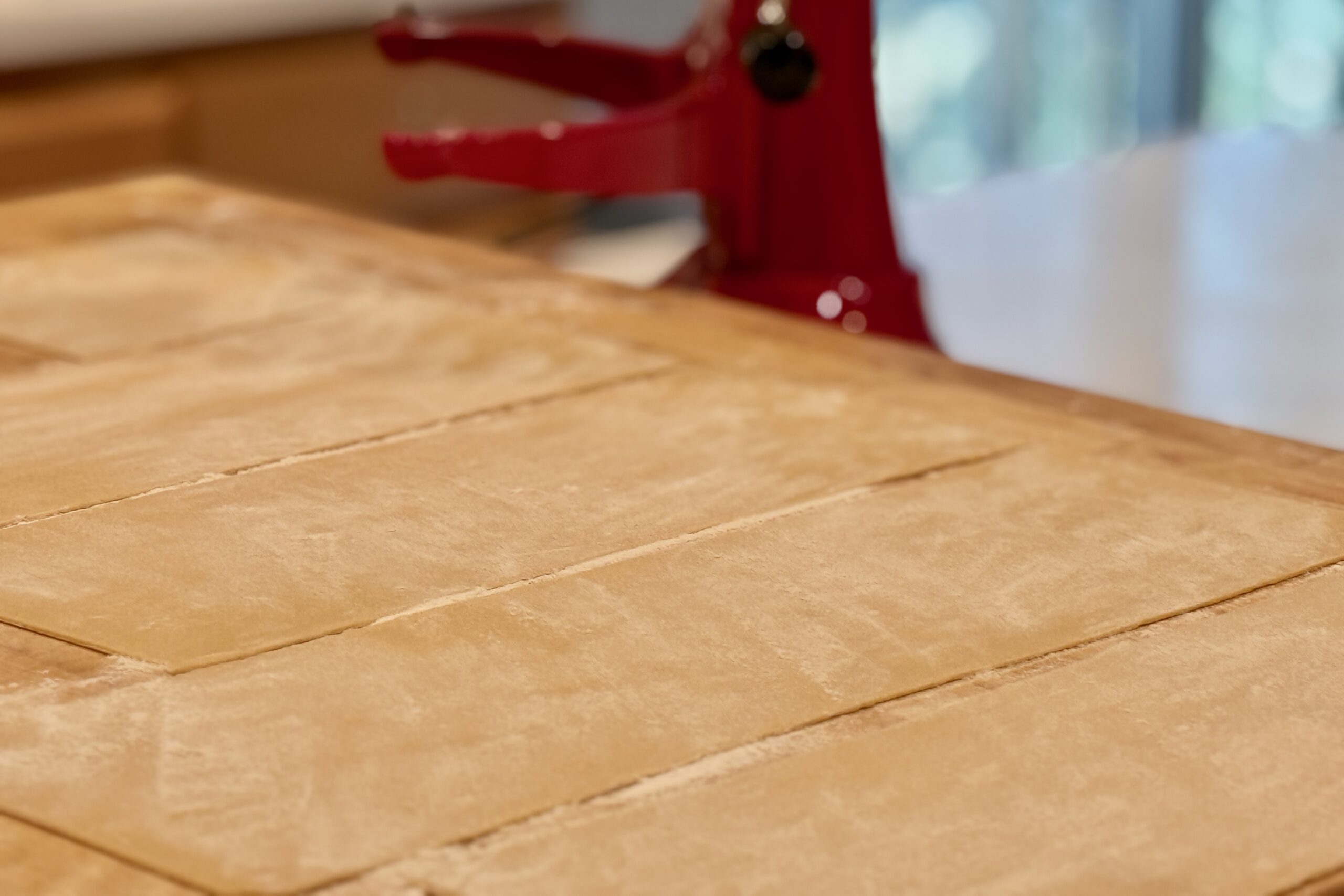
    Divide the dough into 4 portions. Working with one piece at a time, flatten slightly and run through a pasta roller, folding and passing through the widest setting several times until smooth.

    Gradually reduce the thickness setting until reaching setting #3 or #4 . Cut sheets to fit your baking dish as needed.

    Prepare for Use:

    Lay sheets on a lightly floured surface and allow to rest for 10–20 minutes before using. This slight drying improves texture and handling.

    Cook (Optional):

    These sheets can be used directly in lasagna without boiling, especially when using a well-hydrated sauce.

    If parboiling is preferred, cook in well-salted boiling water for 2–3 minutes, then transfer to cold water and drain before layering.


    Notes

    Preparation

    • For best consistency, weigh the eggs. Aim for 240–250 g total egg weight.
    • The dough should feel slightly firmer than typical pasta dough—this helps it hold structure during baking.
    • Lightly flour sheets as needed to prevent sticking, but avoid excess flour which can dry out the layers.

    Serving Suggestions

    • Use with a rich meat sauce and béchamel for classic lasagna.
    • Pairs well with vegetable-forward lasagnas, including spinach and mushroom or roasted vegetable variations.

    Variations

    • For a more traditional, delicate lasagna, roll sheets to setting #4 or #5.
    • For a richer dough, replace 1 whole egg with 2 egg yolks.
    • For a softer texture, reduce semolina slightly and increase all-purpose flour.

    Make-Ahead & Storage

    • Dough can be refrigerated for up to 24 hours before rolling.
    • Rolled sheets can be lightly floured, layered between parchment, and refrigerated for up to 1 day.
    • For longer storage, freeze sheets flat and transfer to a sealed bag once solid. Cook from frozen or thaw before use.
  • Fresh Spaghetti Pasta

    Fresh Spaghetti Pasta

    This fresh spaghetti dough builds on the country-style noodles we’ve been using, but with a slightly firmer structure and cleaner bite—perfect for pairing with sauces like Chicken Parmesan. By blending all-purpose flour, bread flour, and semolina, the pasta rolls smoothly, cuts cleanly, and cooks up with that ideal balance of tenderness and elasticity. Mixing the dough in a KitchenAid stand mixer keeps the process simple and consistent, while a short finish by hand lets you dial in the texture before rolling.


    Ingredients

    • 1½ cups (180 g) all-purpose flour
    • ½ cup (60 g) bread flour
    • ½ cup (75 g) semolina flour
    • ½ tsp (3 g) table salt
    • 2 large eggs (about 100 g)
    • 2 large egg yolks (about 36 g)
    • 1 tbsp (15 ml) olive oil
    • 1–2 tbsp (15–30 ml) water, as needed

    Directions

    Mix the Dough

    Add the all-purpose flour, bread flour, semolina flour, and salt to the bowl of a KitchenAid stand mixer. Fit the mixer with the paddle attachment and mix briefly on low speed just to combine.

    Add the eggs, egg yolks, and olive oil. Mix on low speed until the mixture becomes evenly crumbly.

    With the mixer still on low, add water 1 tsp to 1 tbsp at a time, just until the dough begins to come together. It should still look fairly firm and somewhat shaggy at this stage.

    Knead

    Switch to the dough hook and knead on speed 2 for 5–7 minutes, until the dough becomes smooth, firm, and elastic.

    Transfer the dough to a clean work surface and knead by hand for 1–2 minutes to finish bringing it together and check the texture.

    The dough should feel firm and slightly resistant, but still pliable. It should not be sticky.

    Rest the Dough

    Wrap the dough tightly in plastic wrap and let it rest at room temperature for at least 30 minutes.

    Roll the Dough

    Divide the dough into 3–4 pieces. Flatten one piece into a rectangle and pass it through a pasta roller, starting on the widest setting.

    Fold and re-roll as needed, then gradually reduce the thickness setting until you reach a medium-thin sheet, typically setting #4 or #5.

    Cut the Spaghetti

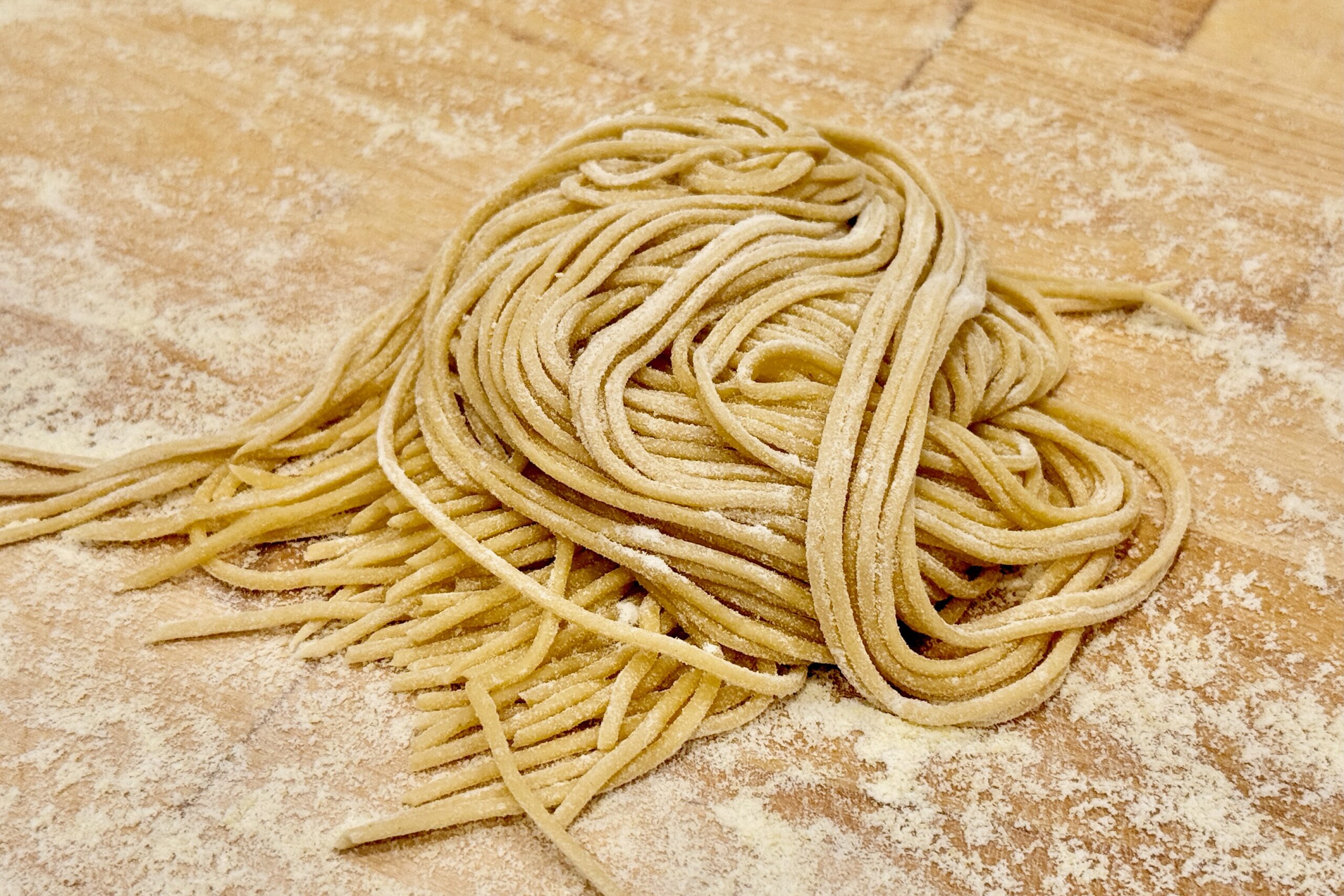
    Pass the sheet through a spaghetti cutter attachment. Lightly dust the strands with flour and lay them on a floured surface or hang them to dry for 15–30 minutes.

    Cook

    Bring a large pot of salted water to a boil. Cook the pasta for 2–3 minutes, until tender but still firm (al dente). Drain and serve immediately.


    Notes

    Preparation

    • This dough is intentionally firmer than country-style noodles to create a cleaner bite and better structure for spaghetti.
    • The addition of bread flour increases elasticity and chew, while semolina adds texture and helps the pasta hold sauce.
    • You may need the full 2 tbsp (30 ml) water due to the higher protein content. Add it gradually, stopping as soon as the dough just comes together.
    • If the mixer strains or struggles, stop and finish kneading by hand.

    Serving Suggestions

    • Perfect with Chicken Parmesan, marinara, or light olive oil-based sauces.
    • Also works well with garlic butter, pesto, or simple tomato sauces.

    Variations

    • For a more traditional, tender pasta, replace the bread flour with additional all-purpose flour.
    • Increase semolina slightly for a firmer, more rustic texture.
    • Skip the olive oil for a more traditional Italian-style dough.

    Make-Ahead & Storage

    • Fresh pasta can be refrigerated for up to 24 hours before cooking.
    • To freeze, portion into loose nests, dust lightly with flour, and freeze on a sheet pan until solid before transferring to a container or freezer bag. Cook directly from frozen.
    • Freshly cut pasta can also be dried thoroughly and stored at room temperature for several days if fully dried.
  • Fresh Country-Style Pasta

    Fresh Country-Style Pasta

    This country-style pasta is designed for a firm, satisfying bite—closer to traditional semolina pasta than soft egg noodles. Built on a semolina-forward dough and lightly dried before cooking, it holds its shape beautifully and maintains its texture in sauces and stir-fries. Cut slightly narrower than classic country noodles, this version is perfect when you want that same hearty chew in a longer, more versatile format.


    Ingredients

    • 350 g semolina flour
    • 100 g bread flour
    • ½ tsp table salt
    • 200–220 g water

    Directions

    Mix the Dough:

    Add the semolina flour, bread flour, and salt to the bowl of a stand mixer fitted with the paddle attachment. Mix on speed 2 just to combine.

    With the mixer running, slowly add the water until the mixture forms a coarse, crumbly dough that just begins to come together. The dough should feel firm and slightly dry—avoid adding excess water.

    Knead:

    Switch to the dough hook and knead on speed 2 for 3–4 minutes, until the dough becomes smooth and cohesive. It should be firm but pliable, not sticky.

    Rest:

    Wrap the dough tightly in plastic wrap and let rest at room temperature for 30–45 minutes to allow the flour to fully hydrate.

    Roll the Dough:

    Divide the dough into 4 portions. Working with one piece at a time, flatten slightly and pass through a pasta roller on the widest setting. Fold and repeat several times until smooth.

    Gradually reduce the thickness setting until reaching setting #4.

    Cut the Pasta:

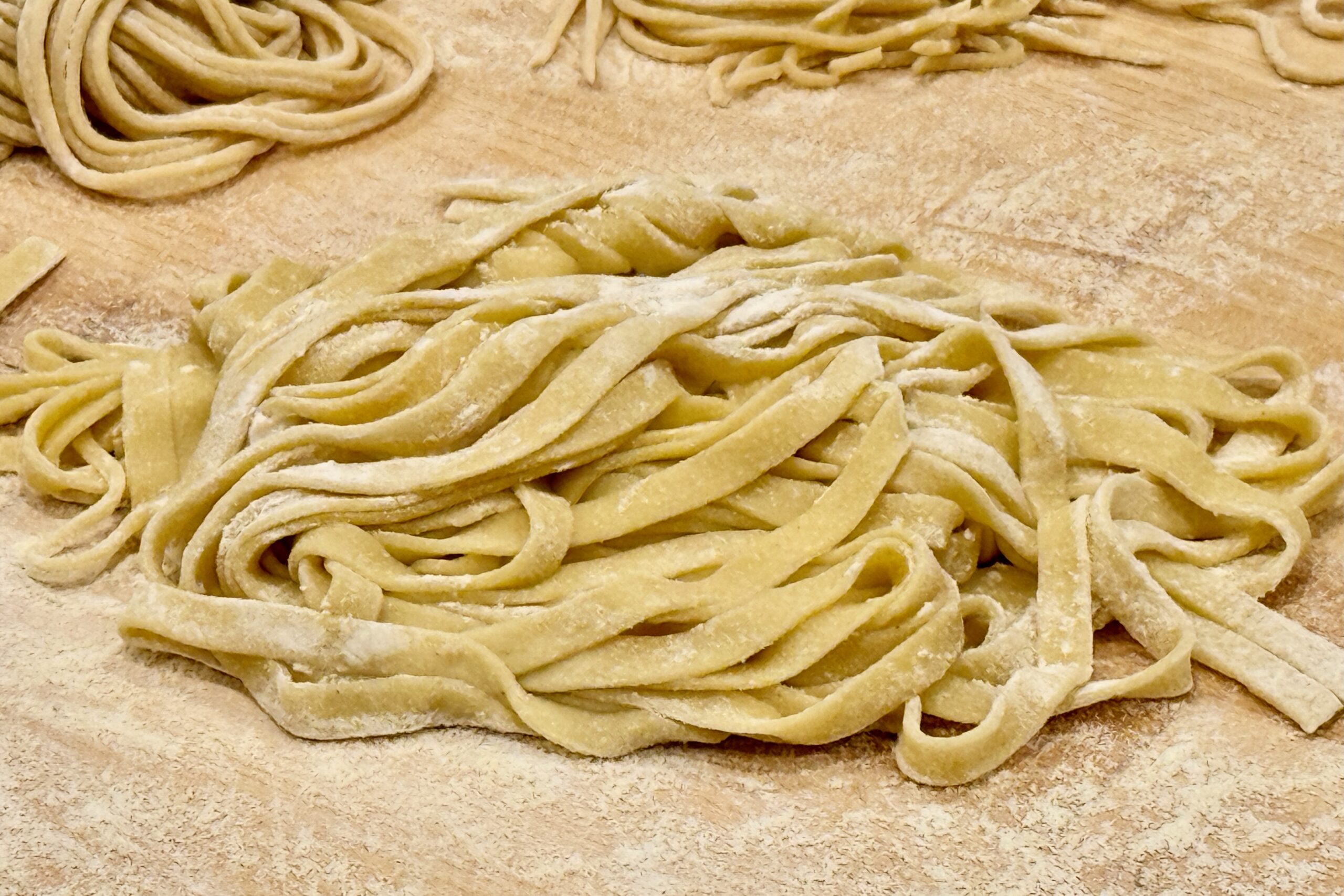
    Run the sheets through a fettuccine cutter. Lightly dust with flour and arrange in loose nests or straight lengths to prevent sticking.

    Dry:

    Let the pasta air dry for 60–120 minutes. In a dry environment, this step helps develop a firmer texture and improves how it holds up during cooking.

    Cook:

    Cook in well-salted boiling water for 3–5 minutes, or until tender but still firm to the bite. Drain and use immediately.


    Notes

    Preparation

    • This dough is intentionally firmer than egg-based pasta dough—resist the urge to add extra water.
    • If the dough feels too dry to come together, add water 1 tsp at a time until it just holds.
    • Resting the dough is essential for proper hydration and smooth rolling.

    Serving Suggestions

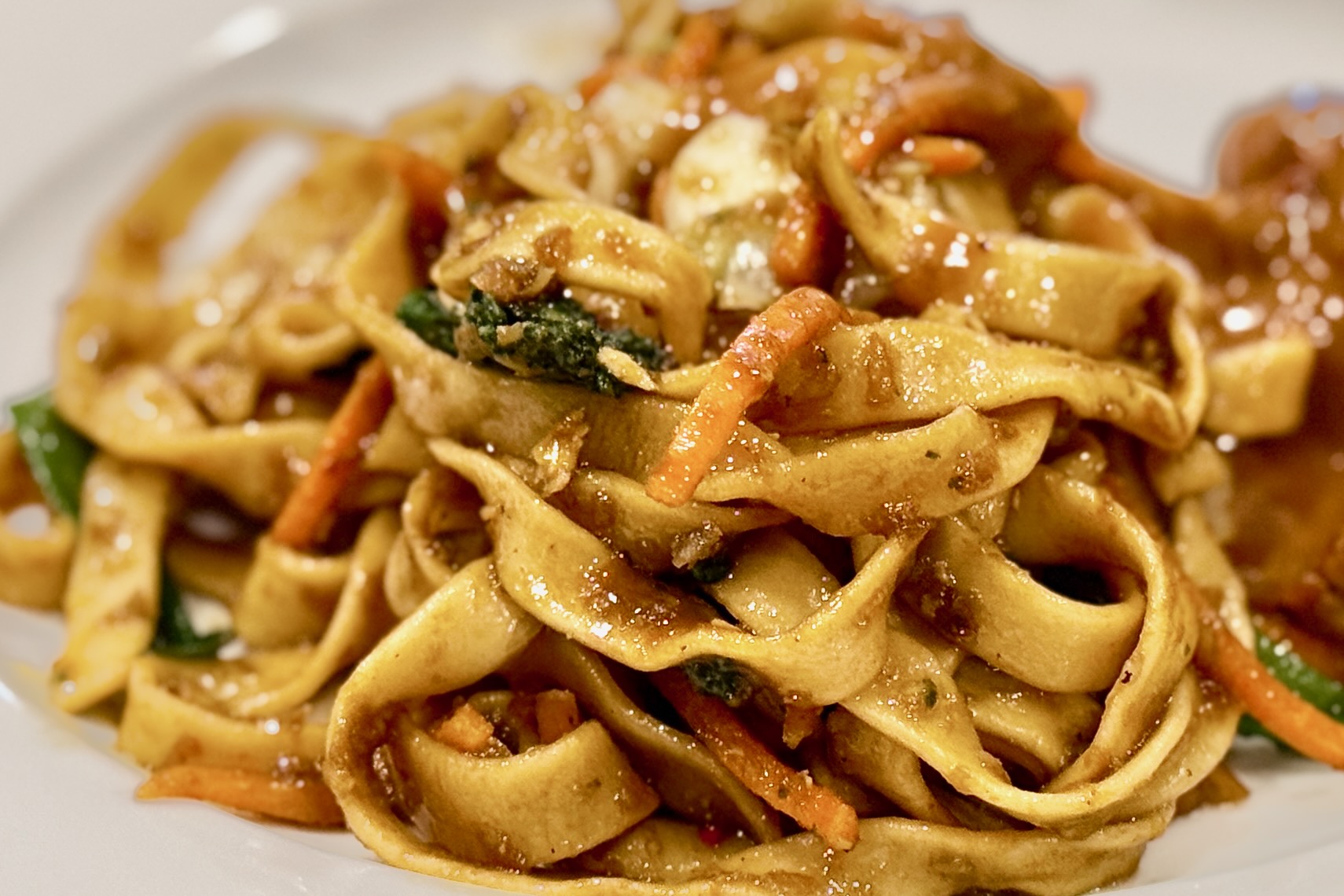
    • Works well for stir-fried noodle dishes.
    • Works well with hearty sauces where a firmer pasta is preferred.

    Variations

    • For slightly richer pasta, replace 25–40 g of water with 1 large egg.
    • For a softer texture, increase bread flour slightly and reduce semolina.
    • For a more traditional pasta texture, shorten the drying time to 30–45 minutes.

    Make-Ahead & Storage

    • Pasta can be dried longer (up to overnight) for a firmer, more shelf-stable texture.
    • For short-term storage, refrigerate for up to 1 day.
    • For longer storage, freeze in loose nests and cook directly from frozen.
  • Garlic Oil

    Garlic Oil

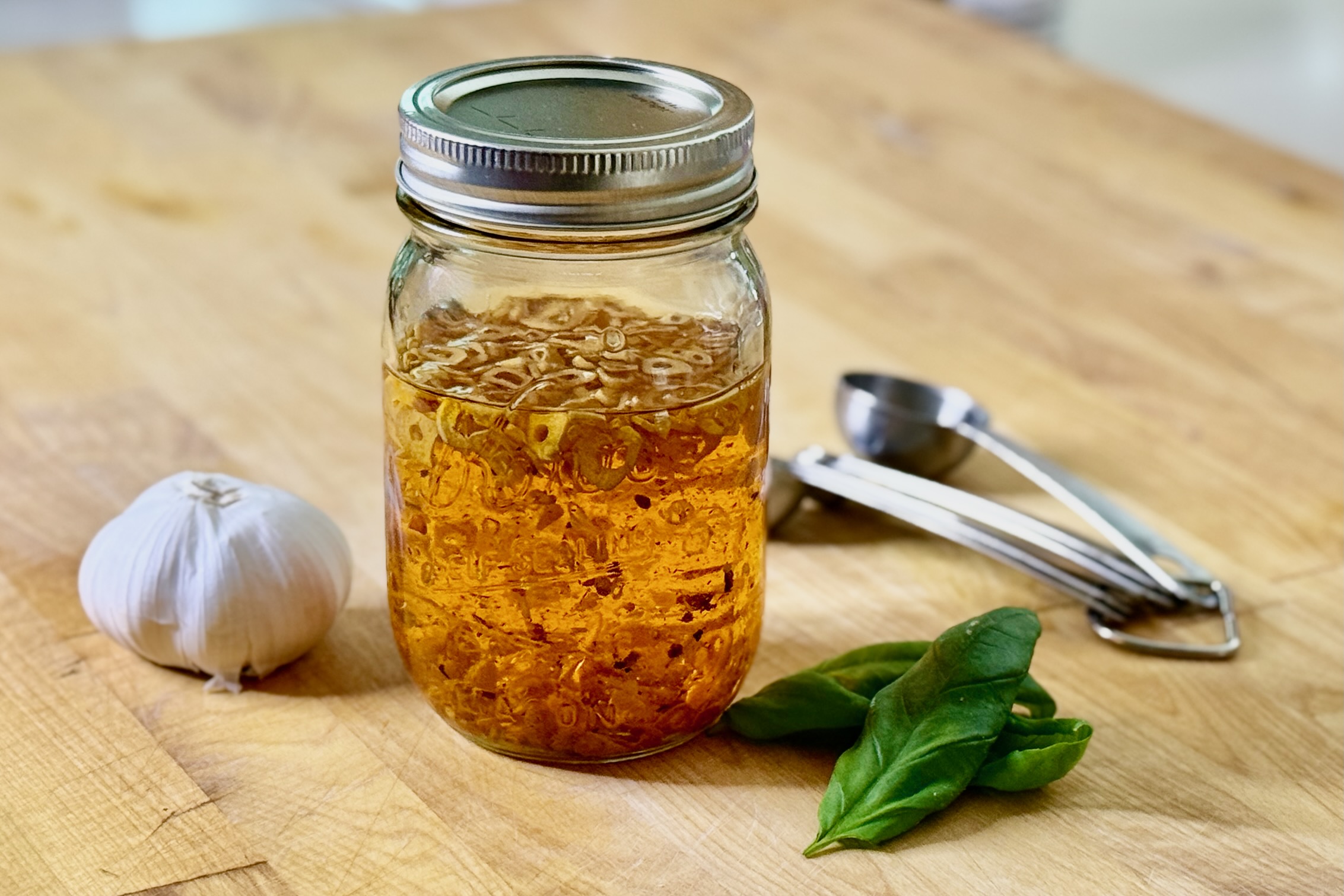
    Garlic oil is a simple yet flavorful staple for cooking, dipping, or drizzling. Slow-infused with fresh garlic, it adds aromatic richness to pasta, grilled vegetables, and stir-fries. The chili version adds a spicy kick perfect for noodles, dumplings, and stir-fried dishes.


    Ingredients

    • 1 cup neutral oil (canola, vegetable, or light olive oil)
    • 6–8 cloves garlic, thinly sliced
    • Optional Aromatics

    • ½ tsp crushed red pepper flakes (for heat)
    • ½ tsp dried herbs (oregano, basil, or thyme)
    • 1 small sprig fresh rosemary (for infusion)
    • Chili Garlic Oil Variation

    • 2 tbsp crushed red pepper flakes
    • 1 tbsp minced shallots or dried minced onion
    • 1 tsp sesame seeds (optional, for texture)

    Directions

    Prepare the Ingredients

    Peel and thinly slice the garlic. Gather optional herbs and spices if using.

    Infuse the Oil

    Place oil and garlic in a small saucepan or skillet.

    • For mild flavor – heat gently over low heat until small bubbles form and garlic turns pale golden (about 8–10 minutes)
    • For deeper flavor – continue cooking until garlic reaches a rich golden brown (about 12–15 minutes), but do not let it burn

    For Chili Garlic Oil

    Remove the saucepan from heat and let the oil cool for 1–2 minutes. Add the following directly to the hot oil:

    • Crushed red pepper flakes
    • Minced shallots or onion
    • Sesame seeds (if using)

    Allow the mixture to sizzle lightly for 30–60 seconds as it infuses, then cool completely before transferring to a jar.

    Cool and Strain (for Plain Garlic Oil Only)

    Remove from heat. Let the oil cool completely, then strain out the solids if a clear oil is desired.


    Notes

    Preparation

    • For food safety, always refrigerate garlic oil to prevent botulism.
    • Let refrigerated oil come to room temperature before using to restore full aroma and pourable texture.
    • To enhance flavor, include a few slices of toasted garlic or chili flakes when serving.

    Serving Suggestions

    • Use as a drizzle over pasta, grilled vegetables, or meats.
    • Brush on pizza dough for a garlic oil base before baking.
    • Use chili garlic oil for noodles, dumplings, or fried rice.

    Variations

    • Add herbs like rosemary or thyme during infusion for a Mediterranean twist.
    • Use a mix of neutral oil and sesame oil for a nutty, Asian-inspired flavor.
    • Infuse with a strip of lemon peel for a fresh, aromatic note.

    Make-Ahead & Storage

    • Transfer to a clean, dry jar after cooling.
    • Plain garlic oil – refrigerate for up to 2 weeks.
    • Chili garlic oil – refrigerate for up to 1 month.
    • Always keep stored oil chilled and discard if any cloudiness or off odors develop.