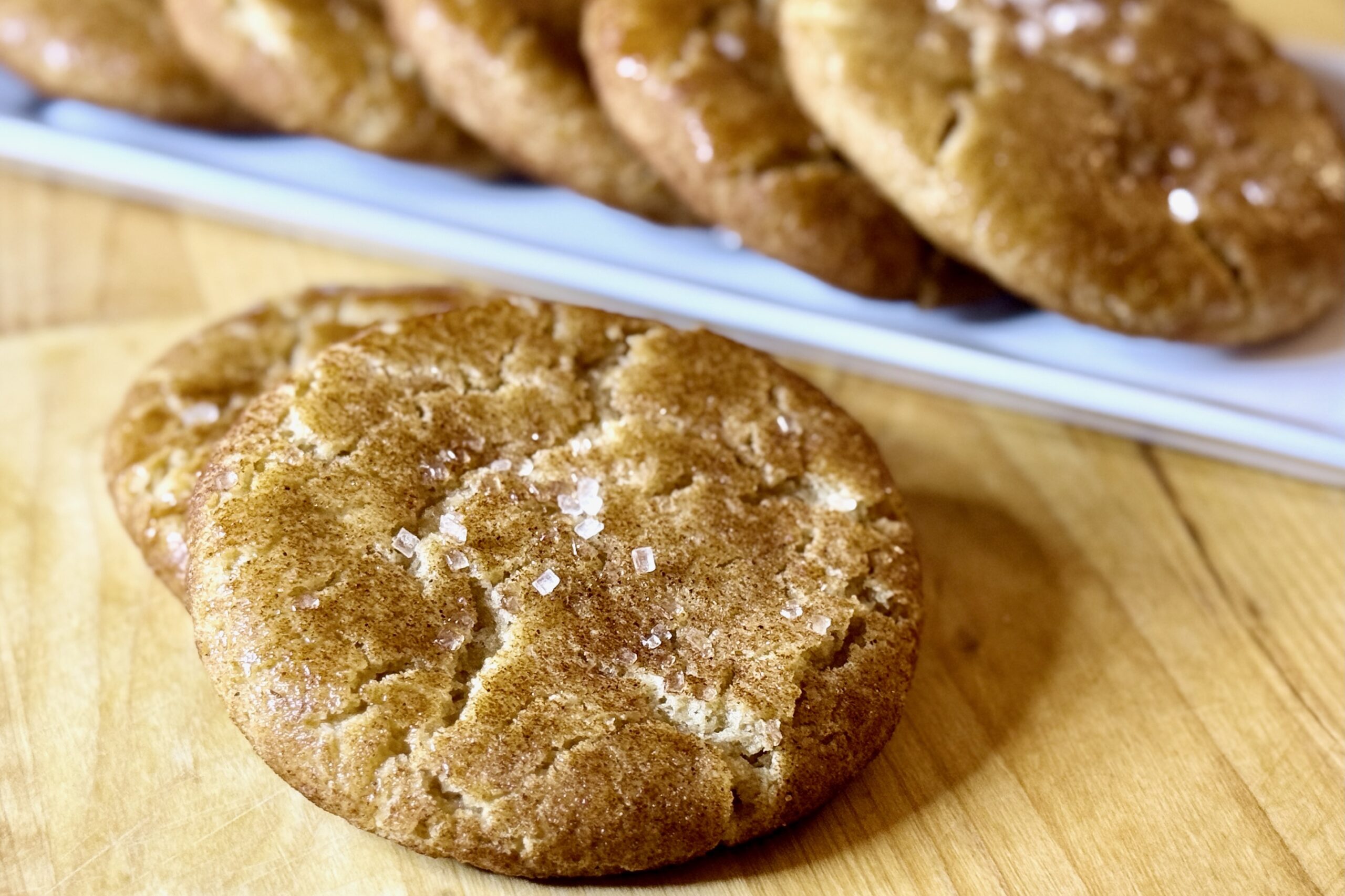
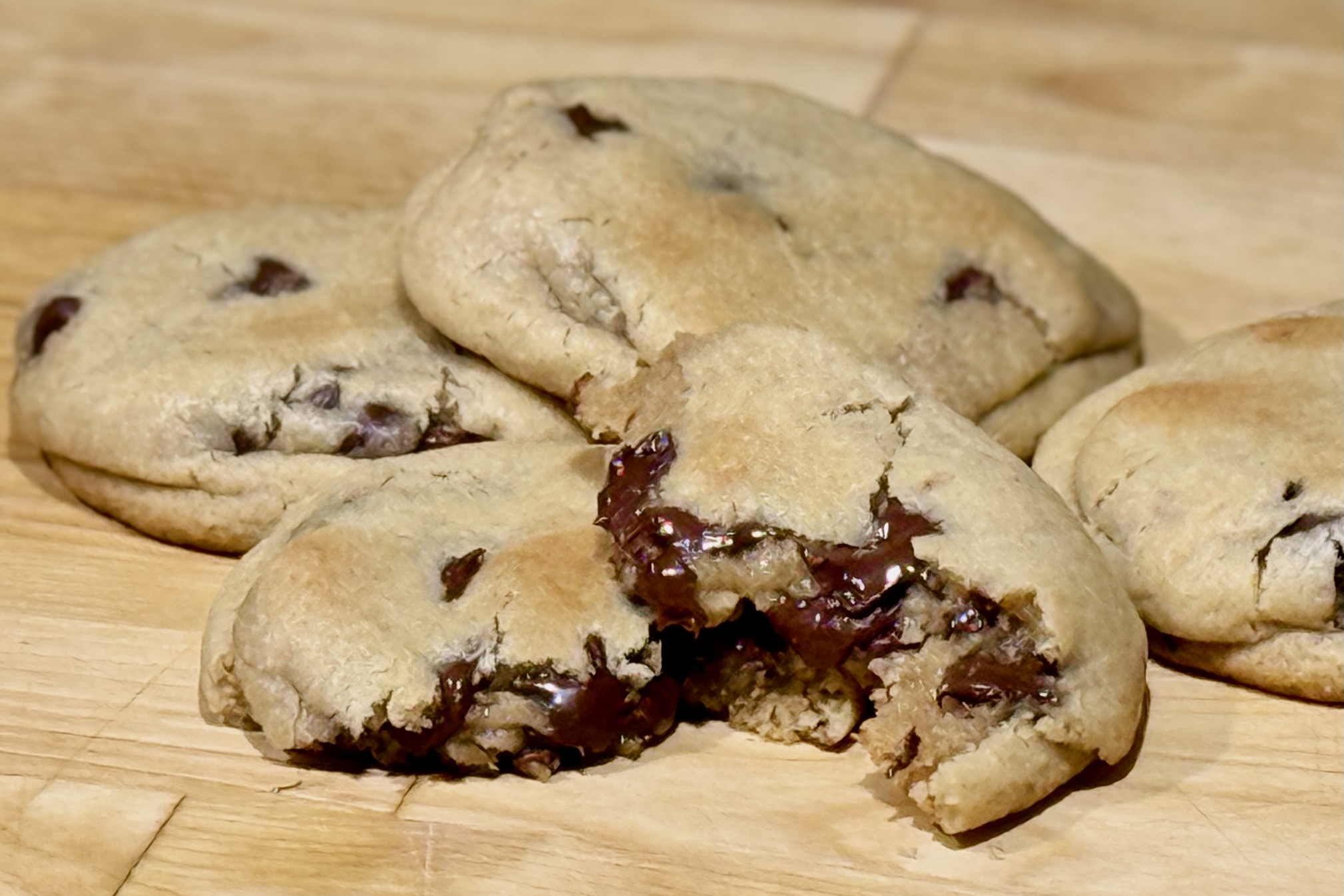
This original Huggins Family recipe—affectionately known in our house as “Fat Daddo’s Cookies”—is our master dough for thick, chewy bakery-style cookies with crisp edges and soft centers. Built to handle everything from classic chocolate chip to brown butter pecan, chocolate orange, and more, it’s designed as a true “one dough, endless variations” system. This version is adjusted for high-altitude baking at about 4,500 ft (1,370 m), so the cookies keep their structure without sacrificing that soft, indulgent texture. For sea-level baking, see the Notes section for adjustments.
Ingredients
Base Dough
- 1 cup (227 g) unsalted butter, softened
- 1 cup (220 g) packed brown sugar
- ¼ cup (50 g) granulated sugar
- 1 large egg (50 g)
- 1 large egg yolk (18 g)
- 1½ tsp (7 g) vanilla extract
- 1–2 tbsp (15–30 g) milk
- 3 cups + 2 tbsp (375 g) all-purpose flour
- 2 tbsp (16 g) cornstarch
- ¾ tsp (4 g) baking soda
- 1 tsp (6 g) table salt
Directions
Make the Dough
In the bowl of a stand mixer or in a large mixing bowl, cream together the softened butter, brown sugar, and granulated sugar until light and fluffy, about 1–2 minutes.
Add the egg, egg yolk, vanilla extract, and 1 tbsp (15 g) milk. Mix until smooth and slightly thickened, about 1 minute. If the dough seems especially stiff once the flour is added, mix in the remaining 1 tbsp (15 g) milk.
In a separate bowl, whisk together the flour, cornstarch, baking soda, and salt.
Finish the Dough
Add the dry ingredients to the wet mixture and mix just until combined. Do not overmix.
Fold in the optional mix-ins for your chosen variation just until evenly distributed.
The dough should be soft and slightly tacky, but not sticky.
Portion, Shape, and Chill
Portion the dough into either 8 large cookies or approximately 18 regular cookies.
Gently flatten each dough ball to about ¾–1 inch (2–2.5 cm) thick to encourage even spreading while baking.
Place the dough on a parchment-lined or silicone mat-lined baking sheet and refrigerate for at least 1 hour and up to 48 hours. Chilling helps prevent excess spreading and improves flavor and texture.
For slightly more spread, let the dough sit at room temperature for 10–15 minutes before baking.
Bake
Preheat the oven to 400°F (204°C). Line a baking sheet with parchment paper or a silicone baking mat.
Arrange the chilled dough 2–3 inches (5–7.5 cm) apart.
Bake large cookies for 12–15 minutes or regular cookies for 7–9 minutes, until the edges are set and the centers still look slightly underbaked.
Let the cookies cool on the baking sheet for 15 minutes, then transfer to a wire rack to cool completely.
Yield: 8 large cookies or approximately 18 regular cookies.
Notes
Preparation
- For mix-ins that absorb moisture—such as oats, toasted coconut, or freeze-dried fruit—add an extra 1 tbsp (15 g) milk to the dough.
- Metric equivalents for optional mix-ins are approximate; weights vary with the brand, cut size, and packing. Volume equivalents are used for mix-ins whose weights depend especially on how finely they are chopped or crushed.
- Bulky mix-ins like chocolate chunks, nuts, and toffee usually need no additional adjustment.
- Soft or sticky mix-ins like marshmallows and almond paste work best when frozen first or enclosed inside the dough.
- For Gevulde Koek-style filled cookies, wrap the filling completely in dough and bake at 375°F (190°C) instead of 400°F (204°C) for more even baking.
Variations
Chocolate Dough:
Replace ½ cup (60 g) of the flour with ½ cup (50 g) unsweetened Dutch-process cocoa powder.
Increase the milk by 1–2 tbsp (15–30 g), using 2–4 tbsp (30–60 g) total, as needed to achieve a soft, slightly tacky dough.
Browned Butter:
Weigh the butter, then place it in a small saucepan and cook over medium heat until deeply golden and nutty.
Weigh the browned butter after cooking and add only enough water to bring the combined weight of the browned butter and water back to the original butter weight.
Let cool until thickened but still workable before mixing the dough.
When using browned butter, begin with no added milk; add milk only if the finished dough is too stiff.
Base Dough Optional Mix-Ins:
- Chocolate Chip: 1½ cups (255 g) semisweet chocolate chips or 1½ cups (265 g) mini semisweet chocolate chips; add 1 cup (about 115 g) roasted chopped pecans if desired.
- Dark Chocolate Chunk & Roasted Hazelnuts: 6–8 oz (170–227 g) dark chocolate chunks, ¾ cup (about 105 g) roasted chopped hazelnuts, and ¾ cup (about 45 g) toasted unsweetened coconut flakes if desired.
- White Chocolate Macadamia: 1 cup (170 g) white chocolate chips, ¾ cup (about 112 g) macadamia nuts, and ¾ cup (about 45 g) toasted unsweetened coconut flakes if desired.
- Oatmeal Raisin: 1¼–1½ cups (111–134 g) quick oats and 2 cups (about 300 g) raisins; add 1 tbsp (15 g) extra milk.
- Toffee & Chocolate: 1 cup (156 g) Heath toffee bits and ¾ cup (128 g) semisweet chocolate chips.
- S’mores: ½ cup (85 g) milk chocolate chips, ½ cup (85 g) semisweet chocolate chips, 1 cup (43 g) frozen mini marshmallows, and ½ cup (120 ml) slightly crushed Golden Grahams cereal.
- White Chocolate Cranberry: ¾ cup (128 g) white chocolate chips, ¾ cup (85 g) dried cranberries, and ½ cup (120 ml) chopped crystallized ginger if desired.
- White Chocolate Raspberry: 1 cup (170 g) white chocolate chunks and ½ cup (120 ml) crushed freeze-dried raspberries; add 1 tbsp (15 g) extra milk.
- Pretzel Crunch: 1 cup (240 ml) chopped pretzels and ¾ cup (180 ml) peanut butter chips or semisweet chocolate chips.
Chocolate Dough Optional Mix-Ins:
- White Chocolate Chip: 1¼ cups (213 g) white chocolate chips.
- Peanut Butter Chip: 1½–2 cups (360–475 ml) peanut butter chips.
- Chocolate S’mores: 1 cup (43 g) frozen mini marshmallows and ¾ cup (180 ml) slightly crushed Golden Grahams cereal.
- Chocolate Orange: zest of 1 orange and 1 cup (170 g) white chocolate chips.
- Chocolate Raspberry: 1 cup (170 g) white chocolate chips and ½ cup (120 ml) crushed freeze-dried raspberries; add 1 tbsp (15 g) extra milk.
- Tuxedo Cookies: 1 cup (170 g) white chocolate chunks, ¾ cup (128 g) chopped 70% dark chocolate, and ½ tsp espresso powder.
- Mochanut: 1 cup (about 60 g) toasted unsweetened coconut flakes, ¾ cup (180 ml) semisweet or dark chocolate chips, and 1 tsp instant espresso powder; add 1 tbsp (15 g) extra milk.
- Cherry Chocolate: ¾ cup (about 105 g) dried cherries, plumped with water and drained well, plus ¾ cup (128 g) chopped 70% dark chocolate.
- Chocolate Gevulde Koek: 2 boxes almond paste, 8 oz (227 g) each, portioned into disks and enclosed in the chocolate dough; bake at 375°F (190°C).
- Burnt Almond Fudge: 1½ cups (255 g) semisweet chocolate chips, ½ cup (about 57 g) roasted chopped slivered almonds, and replace ½ tsp vanilla extract with ½ tsp almond extract.
Browned Butter Dough Optional Mix-Ins:
- Ginger Chunk: ½ cup (120 ml) crystallized ginger, chopped.
- Brown Butter Pecan: 1 cup (about 115 g) toasted chopped pecans, ¾ cup (117 g) toffee bits, replace ½ tsp vanilla extract with ½ tsp maple extract, and press a pecan half into the top before baking.
- Golden Gevulde Koek: 2 boxes almond paste, 8 oz (227 g) each, portioned into disks and enclosed in the dough; bake at 375°F (190°C).
Serving Suggestions
- Serve slightly warm for the softest centers and best melted-chocolate texture.
- Pair with cold milk or vanilla ice cream.
- Large cookies are perfect for sharing or bakery-style presentation.
Make-Ahead & Storage
- Dough can be refrigerated for up to 48 hours.
- Freeze portioned dough on a tray until firm, then transfer to a freezer bag or airtight container. Store for up to 2 months. Bake from frozen, adding 2–3 minutes to the normal baking time.
- Baked cookies keep in an airtight container at room temperature for 3–4 days.
- Warm briefly before serving for best texture.
High Altitude
- At About 4,500 ft (1,370 m): Use the ingredient amounts listed for thicker cookies with better structure and controlled spread.
- Sea Level: Reduce the flour to 3 cups (360 g), increase the baking soda to 1 tsp, and use only enough milk to bring the dough together if needed.