Bags of Spices

Favorite Recipes

Fresh Pasta

  • Umbricelli — Traditional Umbrian Hand-Rolled Pasta

    Umbricelli — Traditional Umbrian Hand-Rolled Pasta

    Umbricelli is one of those pastas that feels like it came straight from a farmhouse kitchen—simple ingredients, rolled by hand, and built for sauces that cling and coat every strand. Originating in the heart of Italy, this thick, rustic pasta delivers a firm, satisfying bite that’s closer to traditional semolina pasta than soft egg noodles. Around our table, it’s become a favorite for nights when we want something hearty and hands-on—rolled together, cooked quickly, and finished in a bold sauce that brings everything to life.


    Ingredients

    • 250 g (about 2 cups) all-purpose flour, plus more for dusting
    • ½ tsp table salt
    • 180 ml (¾ cup) warm water, as needed

    Directions

    Make the Dough

    Add the flour and salt to the bowl of a KitchenAid stand mixer fitted with the dough hook. With the mixer on low speed (1–2), slowly drizzle in about 160 ml (⅔ cup) of the warm water until a shaggy dough begins to form.

    Continue mixing on low for 5–7 minutes until the dough becomes smooth, cohesive, and firm with slight resistance when pressed. Add additional water only as needed, 5 ml (1 tsp) at a time, until the dough comes together. It should not be soft or sticky.

    If your mixer struggles with the stiff dough, stop and finish kneading by hand for 1–2 minutes.

    Rest the Dough

    Wrap the dough tightly or cover with an inverted bowl and let rest at room temperature for at least 30 minutes. This relaxes the gluten and makes shaping easier.

    Shape the Umbricelli

    Divide the dough into 4 portions, keeping unused portions covered to prevent drying.

    Roll one portion into a rope about ½ inch thick, then cut into small pieces about the size of a marble.

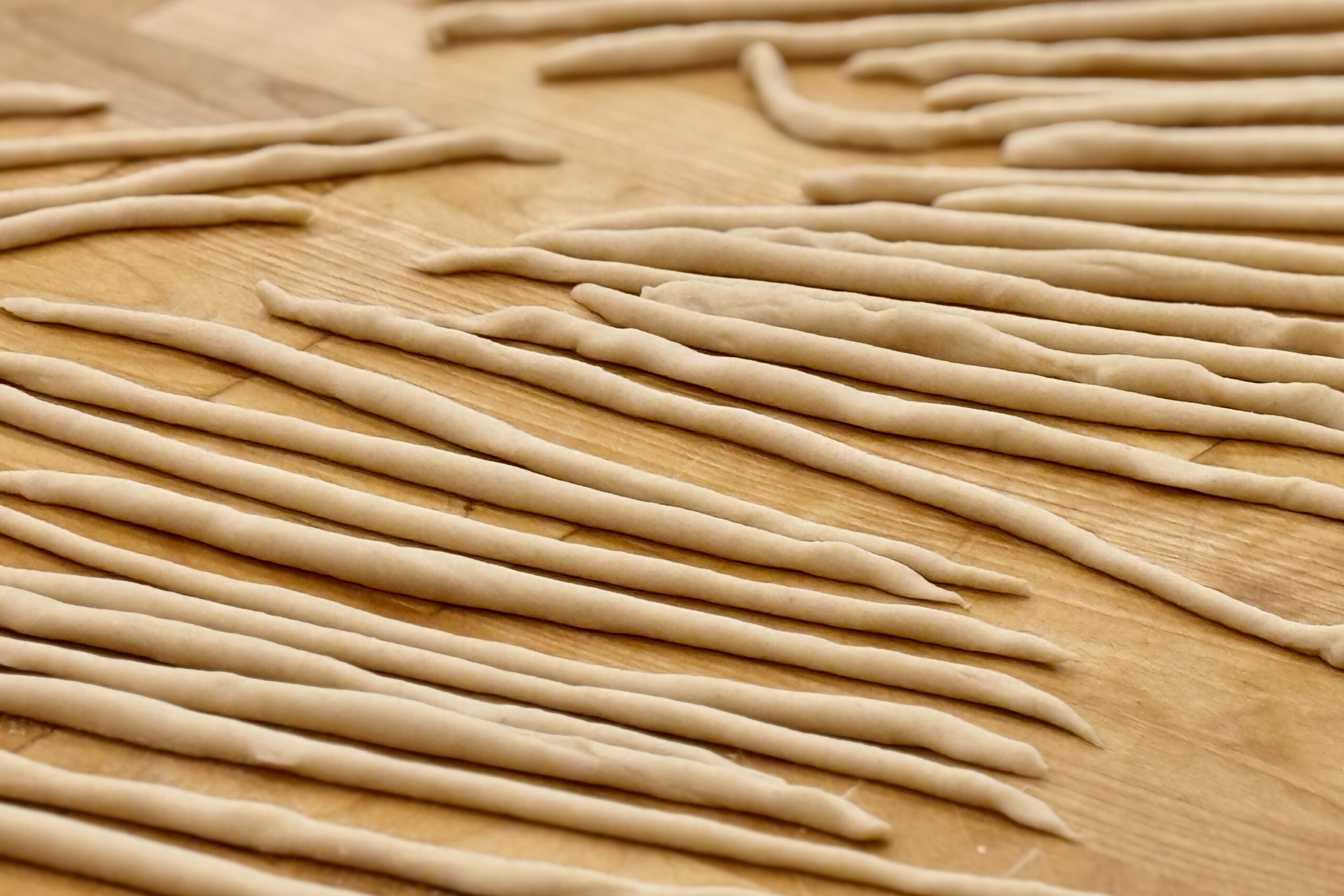
    Using your palms, roll each piece on a clean work surface into long strands, generally about ⅛–¼ inch (3–6 mm) thick. Apply light, even pressure, letting friction stretch the dough naturally. Umbricelli is intentionally rustic—perfect uniformity is neither necessary nor desirable.

    Place finished strands on a lightly floured towel or work surface, keeping them separated so they do not stick together.

    Cook

    Bring a large pot of well-salted water to a rolling boil. Add the umbricelli and cook for 3–5 minutes, or until tender but still pleasantly firm to the bite.

    Transfer directly to your prepared sauce and finish cooking for 1–2 minutes, allowing the pasta to absorb flavor while the sauce clings to the strands.

    Yield: 4 servings.


    Notes

    Preparation

    • For the most consistent dough, weigh the flour and water with a kitchen scale.
    • The dough should feel firm but workable—too soft and the strands will stretch unevenly; too dry and they may crack while rolling.
    • If the dough resists rolling or shrinks back, let it rest an additional 10–15 minutes.
    • Light flour on the work surface helps prevent sticking, but too much flour reduces the friction needed for rolling.
    • Rustic variation in thickness is expected and part of the character of traditional umbricelli.

    Variations

    • Traditional Hand Method: Mix the flour and salt in a bowl, gradually add the warm water, then knead by hand for 8–10 minutes until smooth and firm.
    • More Semolina: Substitute 50 g (about ⅓ cup) semolina for an equal weight of the all-purpose flour, using 200 g (about 1⅔ cups) all-purpose flour and 50 g semolina total. The dough may hydrate more slowly, so let it rest briefly before adding extra water.
    • Adjust the Thickness: Roll slightly thicker for a heartier chew or slightly thinner for a more refined presentation.

    Serving Suggestions

    • Finish simply with butter, cracked black pepper, and freshly grated parmesan.
    • Pair with sausage-based sauces like Umbrian-style alla Norcina.
    • Serve with our Fresh San Marzano Tomato Basil Sauce.
    • Excellent with garlic-chili oil, truffle butter sauces, or other robust tomato sauces.

    Make-Ahead & Storage

    • Fresh umbricelli can rest at room temperature for up to 2 hours before cooking.
    • Refrigerate, lightly floured and covered, for up to 24 hours.
    • Freeze in loose nests on a tray, then transfer to a freezer bag; cook directly from frozen, adding 1–2 minutes.

    High Altitude

    • At about 4,750 ft (1,400 m), the dough may need an additional 15–30 ml (1–2 tbsp) water because of drier conditions.
  • Fresh Spaghetti Pasta

    Fresh Spaghetti Pasta

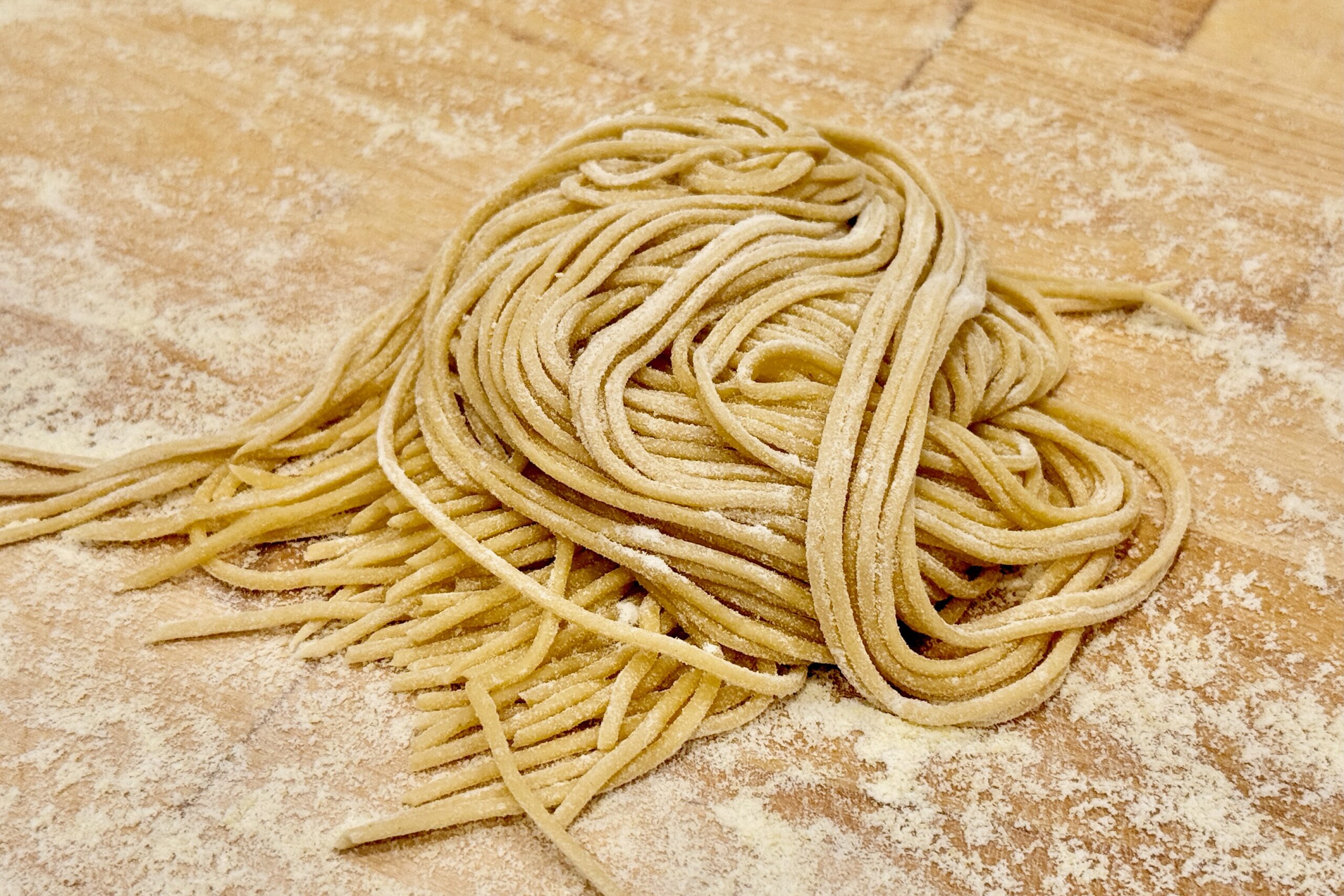
    This fresh spaghetti dough builds on the country-style noodles we’ve been using, but with a slightly firmer structure and cleaner bite—perfect for pairing with sauces like Chicken Parmesan. By blending all-purpose flour, bread flour, and semolina, the pasta rolls smoothly, cuts cleanly, and cooks up with that ideal balance of tenderness and elasticity. Mixing the dough in a KitchenAid stand mixer keeps the process simple and consistent, while a short finish by hand lets you dial in the texture before rolling.


    Ingredients

    • 180 g (about 1½ cups) all-purpose flour
    • 60 g (about ½ cup) bread flour
    • 75 g (about ½ cup) semolina flour
    • 3 g (about ½ tsp) table salt
    • 100 g (about 2 large) eggs
    • 36 g (about 2 large) egg yolks
    • 15 ml (1 tbsp) olive oil
    • 15–30 ml (1–2 tbsp) water, as needed

    Directions

    Mix the Dough

    Add the all-purpose flour, bread flour, semolina flour, and salt to the bowl of a KitchenAid stand mixer. Fit the mixer with the paddle attachment and mix briefly on low speed just to combine.

    Add the eggs, egg yolks, and olive oil. Mix on low speed until the mixture becomes evenly crumbly.

    With the mixer still on low, add water 5–15 ml (1 tsp–1 tbsp) at a time, just until the dough begins to come together. It should still look fairly firm and somewhat shaggy at this stage.

    Knead

    Switch to the dough hook and knead on speed 2 for 5–7 minutes, until the dough becomes smooth, firm, and elastic.

    Transfer the dough to a clean work surface and knead by hand for 1–2 minutes to finish bringing it together and check the texture.

    The dough should feel firm and slightly resistant, but still pliable. It should not be sticky.

    Rest the Dough

    Wrap the dough tightly in plastic wrap and let it rest at room temperature for at least 30 minutes.

    Roll the Dough

    Divide the dough into 3–4 pieces. Flatten one piece into a rectangle and pass it through a pasta roller, starting on the widest setting.

    Fold and re-roll as needed, then gradually reduce the thickness setting until you reach a medium-thin sheet, typically setting #4 or #5.

    Cut the Spaghetti

    Pass the sheet through a spaghetti cutter attachment. Lightly dust the strands with flour and lay them on a floured surface or hang them to dry for 15–30 minutes.

    Cook

    Bring a large pot of salted water to a boil. Cook the pasta for 2–3 minutes, until tender but still firm (al dente). Drain and serve immediately.

    Yield: 4 servings.


    Notes

    Preparation

    • For the most consistent results, use a kitchen scale for the flour, eggs, egg yolks, and water.
    • This dough is intentionally firmer than country-style noodles to create a cleaner bite and better structure for spaghetti.
    • The addition of bread flour increases elasticity and chew, while semolina adds texture and helps the pasta hold sauce.
    • You may need the full 30 ml (2 tbsp) water due to the higher protein content. Add it gradually, stopping as soon as the dough just comes together.
    • If the mixer strains or struggles, stop and finish kneading by hand.

    Variations

    • All-Purpose Flour: For a more traditional, tender pasta, replace the bread flour with additional all-purpose flour.
    • More Semolina: For firmer, more rustic spaghetti, use 155 g (about 1¼ cups + 1 tbsp) all-purpose flour and increase the semolina to 100 g (about ⅔ cup), leaving the other ingredients unchanged. The dough may require closer to the full 30 ml (2 tbsp) water.
    • No Olive Oil: Skip the olive oil for a more traditional Italian-style dough.

    Serving Suggestions

    • Perfect with Chicken Parmesan, marinara, or light olive oil-based sauces.
    • Also works well with garlic butter, pesto, or simple tomato sauces.

    Make-Ahead & Storage

    • Fresh pasta can be refrigerated for up to 24 hours before cooking.
    • To freeze, portion into loose nests, dust lightly with flour, and freeze on a sheet pan until solid before transferring to a container or freezer bag. Cook directly from frozen.
    • Freshly cut pasta can also be dried thoroughly and stored at room temperature for several days if fully dried.
  • Fresh Country-Style Pasta

    Fresh Country-Style Pasta

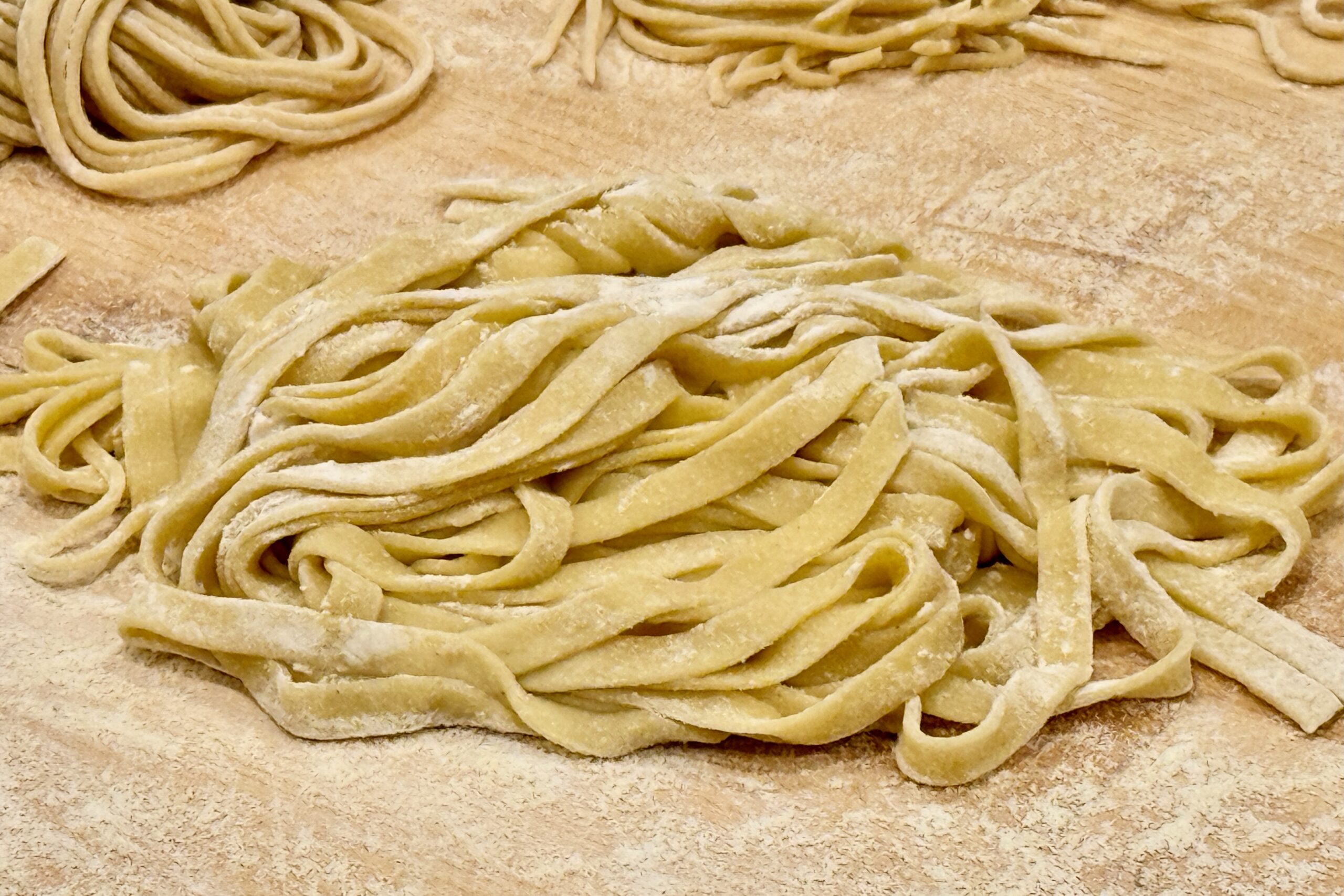
    This country-style pasta is designed for a firm, satisfying bite—closer to traditional semolina pasta than soft egg noodles. Built on a semolina-forward dough and lightly dried before cooking, it holds its shape beautifully and maintains its texture in sauces and stir-fries. Cut slightly narrower than classic country noodles, this version is perfect when you want that same hearty chew in a longer, more versatile format.


    Ingredients

    • 350 g (about 2⅛ cups) semolina flour
    • 100 g (about ¾ cup + 1 tbsp) bread flour
    • ½ tsp table salt
    • 200–220 g (about ¾ cup + 1½–3 tbsp) water

    Directions

    Mix the Dough

    Add the semolina flour, bread flour, and salt to the bowl of a stand mixer fitted with the paddle attachment. Mix on speed 2 just to combine.

    With the mixer running, slowly add the water until the mixture forms a coarse, crumbly dough that just begins to come together. The dough should feel firm and slightly dry—avoid adding excess water.

    Knead

    Switch to the dough hook and knead on speed 2 for 3–4 minutes, until the dough becomes smooth and cohesive. It should be firm but pliable, not sticky.

    Rest

    Wrap the dough tightly in plastic wrap and let rest at room temperature for 30–45 minutes to allow the flour to fully hydrate.

    Roll the Dough

    Divide the dough into 4 portions. Working with one piece at a time, flatten slightly and pass through a pasta roller on the widest setting. Fold and repeat several times until smooth.

    Gradually reduce the thickness setting until reaching setting #4.

    Cut the Pasta

    Run the sheets through a fettuccine cutter. Lightly dust with flour and arrange in loose nests or straight lengths to prevent sticking.

    Dry

    Let the pasta air dry for 60–120 minutes. In a dry environment, this step helps develop a firmer texture and improves how it holds up during cooking.

    Cook

    Cook in well-salted boiling water for 3–5 minutes, or until tender but still firm to the bite. Drain and use immediately.

    Yield: 4 servings.


    Notes

    Preparation

    • Use a kitchen scale for the flour and water; the household equivalents are approximate.
    • This dough is intentionally firmer than egg-based pasta dough—resist the urge to add extra water.
    • If the dough feels too dry to come together, add water 1 tsp at a time until it just holds.
    • Resting the dough is essential for proper hydration and smooth rolling.

    Variations

    • Richer Pasta: For slightly richer pasta, replace 25–40 g (about 1¾–2¾ tbsp) of water with 1 large egg.
    • Softer Texture: Use 300 g (about 1⅞ cups) semolina flour and 150 g (about 1¼ cups) bread flour. Keep the remaining ingredients unchanged, beginning with 200 g (about ¾ cup + 1½ tbsp) water and adding more only as needed. Dry the cut pasta for 30–45 minutes before cooking.
    • Shorter Drying: For a more traditional pasta texture, shorten the drying time to 30–45 minutes.

    Serving Suggestions

    • Works well for stir-fried noodle dishes.
    • Works well with hearty sauces where a firmer pasta is preferred.

    Make-Ahead & Storage

    • Pasta can be dried longer (up to overnight) for a firmer, more shelf-stable texture.
    • For short-term storage, refrigerate for up to 1 day.
    • For longer storage, freeze in loose nests and cook directly from frozen.