Bags of Spices

Favorite Recipes

Handmade Pasta

  • Fresh Spaghetti Pasta

    Fresh Spaghetti Pasta

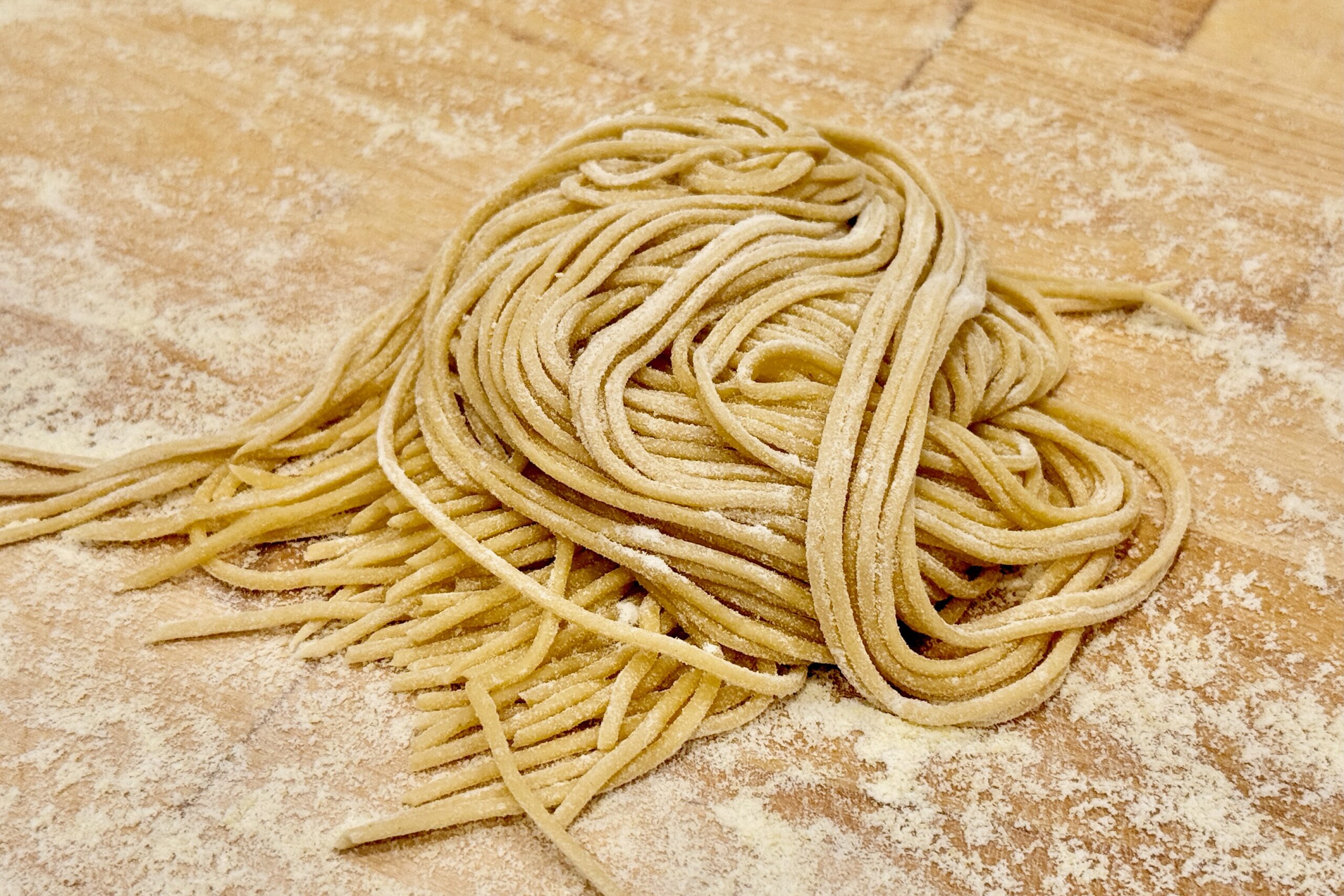
    This fresh spaghetti dough builds on the country-style noodles we’ve been using, but with a slightly firmer structure and cleaner bite—perfect for pairing with sauces like Chicken Parmesan. By blending all-purpose flour, bread flour, and semolina, the pasta rolls smoothly, cuts cleanly, and cooks up with that ideal balance of tenderness and elasticity. Mixing the dough in a KitchenAid stand mixer keeps the process simple and consistent, while a short finish by hand lets you dial in the texture before rolling.


    Ingredients

    • 180 g (about 1½ cups) all-purpose flour
    • 60 g (about ½ cup) bread flour
    • 75 g (about ½ cup) semolina flour
    • 3 g (about ½ tsp) table salt
    • 100 g (about 2 large) eggs
    • 36 g (about 2 large) egg yolks
    • 15 ml (1 tbsp) olive oil
    • 15–30 ml (1–2 tbsp) water, as needed

    Directions

    Mix the Dough

    Add the all-purpose flour, bread flour, semolina flour, and salt to the bowl of a KitchenAid stand mixer. Fit the mixer with the paddle attachment and mix briefly on low speed just to combine.

    Add the eggs, egg yolks, and olive oil. Mix on low speed until the mixture becomes evenly crumbly.

    With the mixer still on low, add water 5–15 ml (1 tsp–1 tbsp) at a time, just until the dough begins to come together. It should still look fairly firm and somewhat shaggy at this stage.

    Knead

    Switch to the dough hook and knead on speed 2 for 5–7 minutes, until the dough becomes smooth, firm, and elastic.

    Transfer the dough to a clean work surface and knead by hand for 1–2 minutes to finish bringing it together and check the texture.

    The dough should feel firm and slightly resistant, but still pliable. It should not be sticky.

    Rest the Dough

    Wrap the dough tightly in plastic wrap and let it rest at room temperature for at least 30 minutes.

    Roll the Dough

    Divide the dough into 3–4 pieces. Flatten one piece into a rectangle and pass it through a pasta roller, starting on the widest setting.

    Fold and re-roll as needed, then gradually reduce the thickness setting until you reach a medium-thin sheet, typically setting #4 or #5.

    Cut the Spaghetti

    Pass the sheet through a spaghetti cutter attachment. Lightly dust the strands with flour and lay them on a floured surface or hang them to dry for 15–30 minutes.

    Cook

    Bring a large pot of salted water to a boil. Cook the pasta for 2–3 minutes, until tender but still firm (al dente). Drain and serve immediately.

    Yield: 4 servings.


    Notes

    Preparation

    • For the most consistent results, use a kitchen scale for the flour, eggs, egg yolks, and water.
    • This dough is intentionally firmer than country-style noodles to create a cleaner bite and better structure for spaghetti.
    • The addition of bread flour increases elasticity and chew, while semolina adds texture and helps the pasta hold sauce.
    • You may need the full 30 ml (2 tbsp) water due to the higher protein content. Add it gradually, stopping as soon as the dough just comes together.
    • If the mixer strains or struggles, stop and finish kneading by hand.

    Variations

    • All-Purpose Flour: For a more traditional, tender pasta, replace the bread flour with additional all-purpose flour.
    • More Semolina: For firmer, more rustic spaghetti, use 155 g (about 1¼ cups + 1 tbsp) all-purpose flour and increase the semolina to 100 g (about ⅔ cup), leaving the other ingredients unchanged. The dough may require closer to the full 30 ml (2 tbsp) water.
    • No Olive Oil: Skip the olive oil for a more traditional Italian-style dough.

    Serving Suggestions

    • Perfect with Chicken Parmesan, marinara, or light olive oil-based sauces.
    • Also works well with garlic butter, pesto, or simple tomato sauces.

    Make-Ahead & Storage

    • Fresh pasta can be refrigerated for up to 24 hours before cooking.
    • To freeze, portion into loose nests, dust lightly with flour, and freeze on a sheet pan until solid before transferring to a container or freezer bag. Cook directly from frozen.
    • Freshly cut pasta can also be dried thoroughly and stored at room temperature for several days if fully dried.
  • Fresh Country-Style Pasta

    Fresh Country-Style Pasta

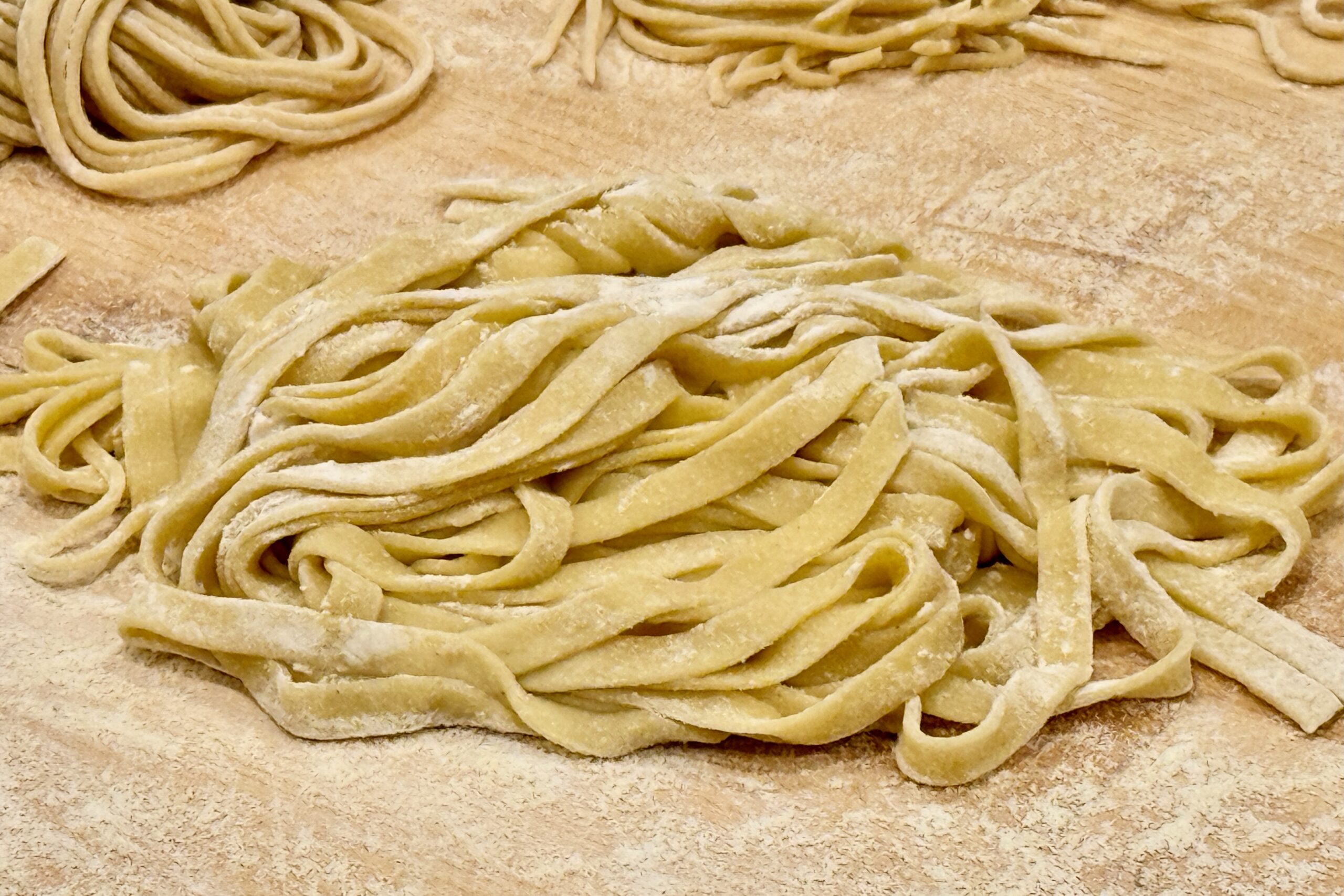
    This country-style pasta is designed for a firm, satisfying bite—closer to traditional semolina pasta than soft egg noodles. Built on a semolina-forward dough and lightly dried before cooking, it holds its shape beautifully and maintains its texture in sauces and stir-fries. Cut slightly narrower than classic country noodles, this version is perfect when you want that same hearty chew in a longer, more versatile format.


    Ingredients

    • 350 g (about 2⅛ cups) semolina flour
    • 100 g (about ¾ cup + 1 tbsp) bread flour
    • ½ tsp table salt
    • 200–220 g (about ¾ cup + 1½–3 tbsp) water

    Directions

    Mix the Dough

    Add the semolina flour, bread flour, and salt to the bowl of a stand mixer fitted with the paddle attachment. Mix on speed 2 just to combine.

    With the mixer running, slowly add the water until the mixture forms a coarse, crumbly dough that just begins to come together. The dough should feel firm and slightly dry—avoid adding excess water.

    Knead

    Switch to the dough hook and knead on speed 2 for 3–4 minutes, until the dough becomes smooth and cohesive. It should be firm but pliable, not sticky.

    Rest

    Wrap the dough tightly in plastic wrap and let rest at room temperature for 30–45 minutes to allow the flour to fully hydrate.

    Roll the Dough

    Divide the dough into 4 portions. Working with one piece at a time, flatten slightly and pass through a pasta roller on the widest setting. Fold and repeat several times until smooth.

    Gradually reduce the thickness setting until reaching setting #4.

    Cut the Pasta

    Run the sheets through a fettuccine cutter. Lightly dust with flour and arrange in loose nests or straight lengths to prevent sticking.

    Dry

    Let the pasta air dry for 60–120 minutes. In a dry environment, this step helps develop a firmer texture and improves how it holds up during cooking.

    Cook

    Cook in well-salted boiling water for 3–5 minutes, or until tender but still firm to the bite. Drain and use immediately.

    Yield: 4 servings.


    Notes

    Preparation

    • Use a kitchen scale for the flour and water; the household equivalents are approximate.
    • This dough is intentionally firmer than egg-based pasta dough—resist the urge to add extra water.
    • If the dough feels too dry to come together, add water 1 tsp at a time until it just holds.
    • Resting the dough is essential for proper hydration and smooth rolling.

    Variations

    • Richer Pasta: For slightly richer pasta, replace 25–40 g (about 1¾–2¾ tbsp) of water with 1 large egg.
    • Softer Texture: Use 300 g (about 1⅞ cups) semolina flour and 150 g (about 1¼ cups) bread flour. Keep the remaining ingredients unchanged, beginning with 200 g (about ¾ cup + 1½ tbsp) water and adding more only as needed. Dry the cut pasta for 30–45 minutes before cooking.
    • Shorter Drying: For a more traditional pasta texture, shorten the drying time to 30–45 minutes.

    Serving Suggestions

    • Works well for stir-fried noodle dishes.
    • Works well with hearty sauces where a firmer pasta is preferred.

    Make-Ahead & Storage

    • Pasta can be dried longer (up to overnight) for a firmer, more shelf-stable texture.
    • For short-term storage, refrigerate for up to 1 day.
    • For longer storage, freeze in loose nests and cook directly from frozen.
  • Sweet Potato Gnocchi

    Sweet Potato Gnocchi

    After our family took a cooking class together—where we learned to make and shape classic gnocchi—we gathered again on a Sunday evening and had a light-bulb moment: what if we made gnocchi with roasted sweet potatoes? Roasting the sweet potatoes deepens their flavor and keeps the dumplings light yet richly savory. Finished in a nutty browned butter and crisp sage leaves, each pillowy bite evokes cozy autumn warmth—without drifting into dessert territory.


    Ingredients

    • Gnocchi:

    • 2 lb (900 g) orange-flesh sweet potatoes (about 2 large)
    • 1 large egg yolk
    • ¾–1 cup (90–120 g) all-purpose flour, plus more for dusting (start with ¾ cup)
    • ½ tsp table salt
    • ¼ tsp white pepper (or black pepper)
    • pinch nutmeg (optional; up to ⅛ tsp)
    • 2–3 tbsp finely grated parmesan (optional; adds savory depth)
    • semolina or additional flour, for dusting the tray
    • To Serve:

    • 1 batch Browned Butter & Sage Sauce
    • finely grated parmesan, for finishing (optional)

    Directions

    Roast the Sweet Potatoes

    Roast sweet potatoes at 400ºF (205ºC) until completely tender, 45–60 minutes. Split open and let steam escape for 10–15 minutes to reduce moisture. Scoop out the flesh.

    Rice and Cool

    Pass warm sweet potato flesh through a ricer (or mash very thoroughly). Measure 2 packed cups (450–500 g). Spread briefly on a sheet pan to steam off residual moisture, then cool until just warm.

    Make the Dough

    In a bowl, combine sweet potato, egg yolk, salt, pepper, optional nutmeg, and parmesan. Sprinkle ¾ cup (90 g) flour over the top. Fold gently with a bench scraper or spatula until a soft dough forms. It should be supple and just slightly tacky. If sticky, add flour 1 tbsp at a time.

    Test for Texture

    Bring a small pot of well-salted water to a boil. Roll and boil a small test nugget. If it falls apart or tastes mushy, knead in 1 tbsp flour and test again. Avoid overworking the dough.

    Shape the Gnocchi

    Lightly flour the counter and divide dough into four pieces. Roll each into a ¾-inch (2 cm) rope and cut into ¾-inch (2 cm) pieces. Optionally roll on a gnocchi board or fork. Transfer pieces to a semolina- or flour-dusted sheet pan.

    Boil

    Bring a large pot of well-salted water to a boil. Cook gnocchi in batches. They will sink, then float. Cook 30–60 seconds after floating, then lift gently with a spider directly into a warm bowl.

    Serve

    Toss gently with Browned Butter & Sage Sauce, loosening with a splash of cooking water as needed. Finish with parmesan and serve immediately.


    Notes

    Preparation

    • Roasting reduces moisture and prevents dense or gummy dough.
    • Flour amounts vary based on moisture. Add just enough to make dough manageable.
    • A potato ricer ensures the lightest texture; avoid food processors, which make puree gluey.
    • Nutmeg is optional. Keep to a tiny pinch for a savory balance.
    • Parmesan in the dough deepens savoriness and firms texture slightly.

    Serving Suggestions

    • Classic pairing: Browned Butter & Sage Sauce.
    • Also works with simple garlic–olive oil or a light gorgonzola cream.
    • Top with toasted breadcrumbs for added texture.

    Variations

    • Add 1–2 tbsp minced fresh herbs (sage, thyme, chives) to the dough.
    • Use purple sweet potatoes for a more earthy, colorful version; flour amount may vary.
    • Add ¼ cup ricotta for softer, pillowy gnocchi (increase flour slightly).

    Make-Ahead & Storage

    • Freeze uncooked gnocchi on a floured tray, then store in freezer bags up to 2 months. Boil from frozen; add 1–2 minutes to cook time.
    • Refrigerate cooked gnocchi lightly coated in oil up to 2 days. Rewarm gently in sauce.
    • Refrigerate raw dough tightly wrapped up to 24 hours; dust with a little flour if it hydrates.