Bags of Spices

Favorite Recipes

Homemade Noodles

  • Bahmi with Chili-Garlic Ground Chicken

    Bahmi with Chili-Garlic Ground Chicken

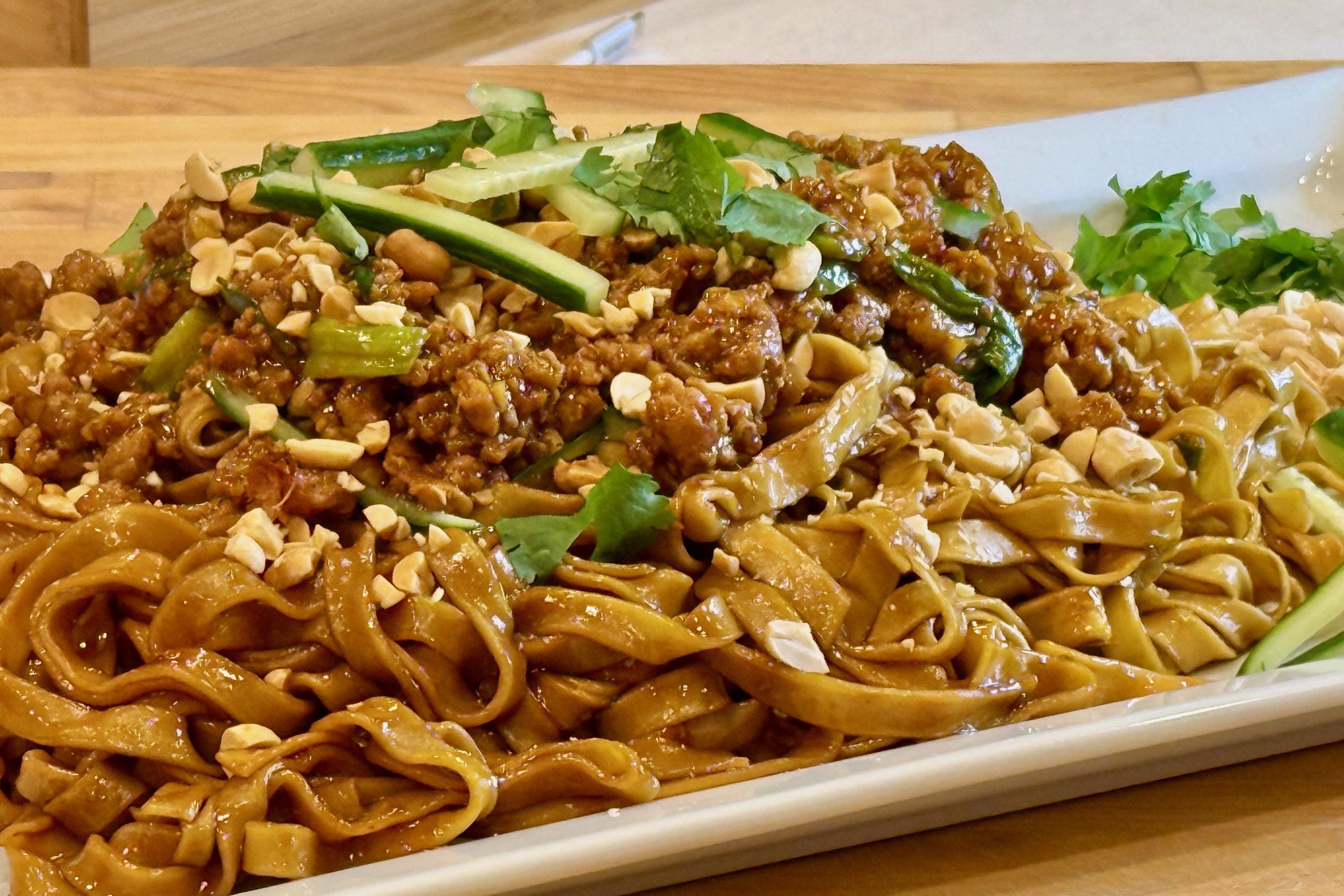
    These noodles first appeared at our Easter table when I was tired of serving the same traditional holiday dinner and decided to make something completely different alongside it. They were such a hit that the family has requested them often ever since. Our version pairs thick, chewy homemade bahmi noodles with a glossy chili-garlic sauce, finely crumbled chicken, and fresh garnishes served at the table.


    Ingredients

    • Ground Chicken
    • 1 lb (454 g) ground chicken
    • 2 tbsp (30 g) Shaoxing wine
    • 2 tsp (10 g) soy sauce
    • 1 tsp (3 g) cornstarch
    • 1 tsp (5 g) neutral oil
    • Chili-Garlic Sauce
    • 2 tbsp (28 g) neutral oil
    • 2 tbsp (30 g) sambal oelek
    • 2 tbsp (18 g) garlic, finely minced
    • 2 tbsp (12 g) fresh ginger, finely minced
    • 8 green onions, thinly sliced, white portions and green tops separated; reserve the tops
    • 3 cups (710 g) chicken broth
    • ⅓ cup (80 g) soy sauce
    • ¼ cup (80 g) ketjap manis
    • 2 tbsp (30 g) Shaoxing wine
    • 2 tbsp (36 g) oyster sauce
    • 1 tbsp (12 g) granulated sugar
    • ¼ tsp (1 g) roasted sesame oil
    • 1 tbsp (15 g) fresh lime juice
    • ¼ cup (32 g) cornstarch
    • ¼ cup (60 g) cold water
    • For Serving
    • 1 batch Bahmi Noodles
    • 1 small cucumber, julienned
    • 1 cup (100 g) mung bean sprouts
    • ½ cup (70 g) roasted, unsalted peanuts, coarsely chopped
    • ¼ cup (10 g) loosely packed fresh cilantro leaves, roughly chopped
    • 1 lime, cut into wedges

    Directions

    Marinate the Chicken

    Gently combine the ground chicken, Shaoxing wine, soy sauce, cornstarch, and oil. Let stand for 10–15 minutes.

    Mix the Sauce

    Whisk together the chicken broth, soy sauce, ketjap manis, Shaoxing wine, oyster sauce, and sugar. In a separate small bowl, stir together the cornstarch and cold water.

    Cook the Chicken

    Heat a wok or large skillet over medium-high heat. Add the oil, followed by the chicken. Let the chicken sear briefly, then break it into fine crumbles and cook until lightly browned and the thickest pieces reach 165°F (74°C).

    Add the Aromatics

    Add the sambal oelek, garlic, ginger, and green-onion whites. Stir-fry for about 30 seconds, until fragrant. Transfer the chicken mixture to a bowl and set aside.

    Finish the Sauce

    Pour the broth mixture into the wok and bring to a boil. Stir the cornstarch slurry again, then add it gradually until the sauce is glossy, flowing, and thick enough to cling to the noodles. The entire slurry may not be needed. Remove from the heat and stir in the roasted sesame oil and lime juice.

    Add about one-third of the finished sauce to the chicken mixture, or enough to coat it generously, and stir to combine. Keep warm. Reserve the remaining sauce for the noodles. Just before serving, stir the reserved green-onion tops into the chicken mixture.

    Cook the Noodles

    Prepare the Bahmi Noodles according to the recipe. Boil for 2–4 minutes, until the noodles reach your preferred doneness, then drain thoroughly without rinsing.

    Assemble

    Toss the drained noodles with the reserved sauce until evenly coated, then transfer to shallow bowls or a serving platter. Spoon the chicken and sauce mixture over the center of the noodles. Serve immediately, with the cucumber, bean sprouts, chopped peanuts, cilantro, and lime wedges at the table.

    Yield: 6 servings.


    Notes

    Preparation

    • The sauce should remain glossy and flowing rather than becoming as thick as gravy.
    • Add the cornstarch slurry gradually; the entire amount may not be needed.
    • If the drained noodles must wait before serving, toss them with only enough neutral oil to prevent sticking.

    Variations

    • Ground pork or turkey may be substituted for the ground chicken.
    • Adjust the sambal oelek to make the sauce milder or spicier.

    Make-Ahead & Storage

    • The cooked chicken mixture and unthickened sauce can be prepared separately up to 1 day ahead and refrigerated in covered containers.
    • Reheat the chicken mixture and sauce separately. Bring the sauce to a boil, thicken it with the freshly stirred cornstarch slurry, then combine about one-third with the chicken as directed.
    • Refrigerate leftover noodles and chicken mixture separately when possible. Reheat gently, adding a small amount of chicken broth if the sauce has thickened too much.
  • Bahmi Noodles

    Bahmi Noodles

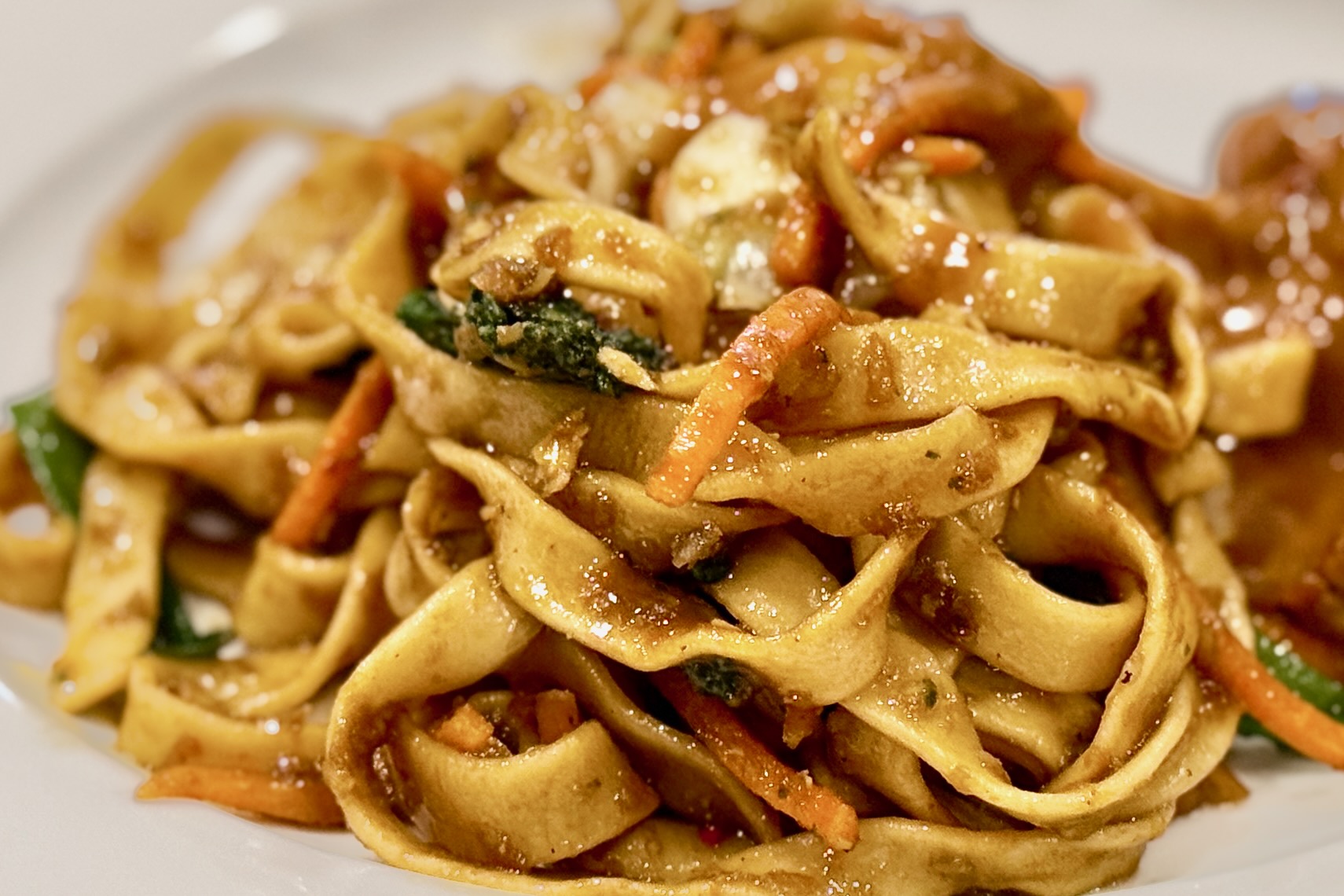
    These bahmi-style noodles are built for a firmer, springier bite than standard fresh pasta—substantial enough to stand up to stir-frying, sauce, and high heat without turning soft. A blend of bread flour and semolina gives the noodles strength and chew, while a small amount of baking soda shifts the texture toward the distinctive resilience found in many Asian noodle styles. Rolled to a moderate thickness and cut with a fettuccine cutter, this version is designed as a test batch for bahmi goreng and other noodle dishes where you want the noodles to stay pleasantly firm after cooking.


    Ingredients

    • 275 g (about 2¼ cups) bread flour
    • 175 g (about 1 cup + 1 tbsp) semolina flour
    • ½ tsp table salt
    • ¾ tsp baking soda
    • 1 large egg
    • 155–175 g (about ⅔–¾ cup) water

    Directions

    Mix the Dry Ingredients

    Add the bread flour, semolina flour, and salt to the bowl of a stand mixer fitted with the paddle attachment. Mix on speed 2 just to combine.

    Combine the Liquid Ingredients

    In a measuring cup, whisk the baking soda into the water until dissolved, then whisk in the egg.

    Make the Dough

    With the mixer running on speed 2, slowly add the liquid mixture to the flour. Mix until the dough forms coarse crumbs and just begins to come together.

    Add only as much liquid as needed to form a firm, slightly dry dough. It should hold together when pressed, but should not feel soft or sticky.

    Knead

    Switch to the dough hook and knead on speed 2 for 3–4 minutes, until the dough becomes smooth and cohesive. Wrap tightly in plastic wrap.

    Rest

    Let the dough rest at room temperature for 45 minutes to allow the flour to fully hydrate and the gluten to relax.

    Roll the Dough

    Divide the dough into 4 portions. Working with one piece at a time, flatten slightly and pass it through the pasta roller on the widest setting. Fold and repeat several times until the sheet is smooth and even.

    Gradually reduce the thickness until reaching setting #4.

    Cut the Noodles

    Run the sheets through a fettuccine cutter. Lightly dust the noodles with flour and arrange in loose nests or straight lengths to prevent sticking.

    Dry

    Let the noodles air dry for 30–60 minutes before cooking. This helps the noodles develop a firmer exterior and improves their texture in stir-fried dishes.

    Cook

    Bring a large pot of well-salted water to a boil. Cook the noodles for 2–4 minutes, depending on how long they were dried and how firm you want them.

    Drain well and use immediately in bahmi goreng or another stir-fried noodle dish.

    Yield: 4 servings.


    Notes

    Preparation

    • For the most consistent results, use a kitchen scale for the bread flour, semolina flour, and water.
    • This dough should feel firmer than standard fresh pasta dough. Resist the urge to add too much water.
    • Dissolving the baking soda in the water first helps distribute it evenly throughout the dough.
    • If the dough seems too dry to come together, add water 1 tsp at a time until it just holds.
    • Because this dough contains baking soda, it will have a slightly different aroma and feel than traditional Italian-style pasta dough.

    Variations

    • Less Alkaline: For a slightly firmer, more wheat-forward noodle, reduce the baking soda to ½ tsp.
    • More Spring: For a stronger alkaline character and more spring, increase the drying time slightly and keep the noodles on the shorter end of the cooking range.
    • Softer Noodles: For a somewhat softer, more pliable noodle, use 300 g (about 2½ cups) bread flour and 150 g (about ⅞ cup) semolina flour. Begin with 155 g (about ⅔ cup) water and add more only as needed to form a firm, slightly dry dough.

    Serving Suggestions

    • Use for bahmi goreng, mie goreng, or other stir-fried noodle dishes where a firmer noodle is desirable.
    • These noodles are especially good with savory sauces that include ketjap manis, soy sauce, garlic, and aromatics.
    • For a ramen-style application, roll the dough one setting thinner and cut using a spaghetti cutter for narrower strands. Let the cut noodles rest 30–60 minutes before cooking, then boil for about 1½–2 minutes until just firm. These noodles work especially well in broth-based dishes where a springy texture is desired.

    Make-Ahead & Storage

    • The dough can be wrapped and refrigerated for up to 24 hours before rolling. Let it come closer to room temperature before using.
    • Cut noodles can be refrigerated for up to 1 day if lightly floured and loosely covered.
    • For longer storage, freeze the noodles in loose nests and cook directly from frozen, adding a little extra time as needed.