Bags of Spices

Favorite Recipes

European

Continental classics — comforting breads, pastries, stews, sauces, street foods, and regional favorites.

  • Snert — Erwtensoep — Dutch Split Pea Soup

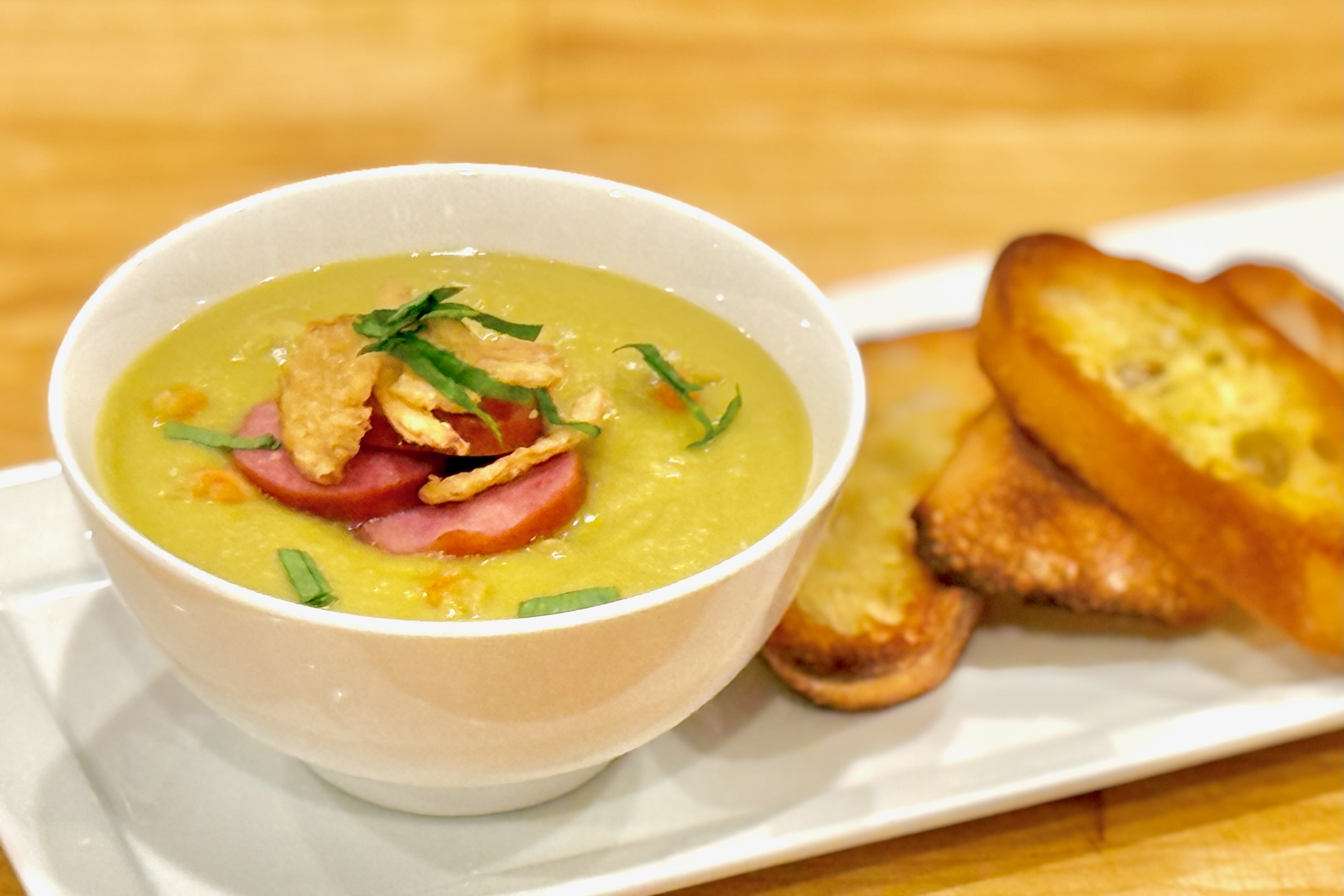
    Snert — Erwtensoep — Dutch Split Pea Soup

    Snert, or Dutch split pea soup, is a beloved winter tradition in the Netherlands. This hearty, comforting soup warms cold bodies after a day of skating on frozen canals. Every family has its own cherished version, often prepared a day in advance so the flavors can deepen and the soup can thicken to its signature consistency—thick enough that a spoon can stand upright in the bowl. I first tasted snert in the province of Friesland, just after watching ice skaters compete in the Elfstedentocht, the legendary eleven-city race that only takes place in years when the ice is thick enough to carry thousands of racers across the canals.


    Ingredients

      For the Stock

    • 2 smoked ham hocks (about 2 lb total)
    • 10 cups (2.4 L) low-sodium chicken stock
    • 1 onion, halved
    • 1 celery stalk, cut in chunks
    • 1 small carrot, cut in chunks
    • 1 bay leaf
    • 4 parsley stems
    • ½ tsp black peppercorns
    • For the Soup

    • 4 cups (800 g) dried green split peas, rinsed
    • 2 tbsp unsalted butter
    • 1 medium onion, finely diced
    • 1 leek (white and light green parts only), thinly sliced
    • 2 celery stalks, finely diced (reserve a few leaves for garnish)
    • 1 medium carrot, finely diced
    • ½ small celeriac (or 1 potato), finely diced
    • ½ tsp dried thyme
    • ¼ tsp white pepper
    • ½ cup (120 ml) dry white wine (optional but adds brightness)
    • To Finish

    • 8 oz (225 g) rookworst or smoked sausage, thinly sliced
    • 1–2 tsp apple cider vinegar (to taste)
    • Kosher or table salt, to taste
    • Small knob of butter or splash of cream (optional, for gloss)
    • Celery leaves, celery leaf oil or finely chopped parsley, for garnish

    Directions

    Make the Stock (Can Be Done a Day Ahead)

    Place ham hocks, chicken stock, onion, celery, carrot, bay leaf, parsley stems, and peppercorns in a large pot. Bring to a simmer and cook gently for 1½ hours, skimming foam as needed.

    Strain the stock through a fine mesh sieve and set aside. Discard the vegetables but reserve the hocks for meat later.

    Build the Flavor Base

    In a clean soup pot, melt the butter over medium heat. Add onion, leek, celery, carrot, and celeriac. Sweat gently (do not brown) for 6–8 minutes until softened and aromatic. Add thyme and white pepper.

    Deglaze and Simmer

    If using, pour in white wine and simmer 1–2 minutes to reduce slightly. Add split peas and enough of the strained ham stock to cover by about 1 inch (you’ll have some stock left to adjust consistency later). Bring to a simmer, then reduce heat to low and cook gently for 1½–2 hours, stirring occasionally, until peas have completely softened.

    Blend for Smoothness

    Remove from heat. Transfer about ¾ of the soup to a blender (or use an immersion blender) and puree until silky smooth. Pass through a fine mesh sieve or chinois for a restaurant-quality texture.

    Return the puree to the pot along with the remaining unblended portion for a touch of rustic body.

    Add Meats and Adjust Seasoning

    Remove skin and bones from the ham hocks, finely dice the meat, and stir it into the soup with the sliced sausage. Simmer gently for 15–20 minutes to meld flavors.

    Add vinegar, salt, and black pepper to taste. For a glossy finish, swirl in a small knob of butter or a splash of cream.

    Fine-Tune Texture

    Adjust consistency with reserved stock as needed. We prefer that it be thick enough to coat the back of a spoon, but not so dense that it feels heavy, although many like it thick enough to stand a spoon in it.

    Serve

    Ladle the soup into wide, shallow bowls. Arrange a few slices of sausage and cubes of ham neatly in the center. Garnish with a few drops of celery leaf oil or a drizzle of olive oil. Add finely chopped celery leaves or micro herbs for color and freshness. Optionally, serve with a crisp rye toast point or small bacon tuile on the rim.


    Notes

    Preparation

    • Keep heat gentle during simmering to preserve the soup’s bright green hue.
    • The vinegar is key—it sharpens the flavor and keeps it from feeling heavy.
    • Passing through a fine sieve gives the soup that unmistakable restaurant-level smoothness.
    • Like all good snert, it deepens in flavor overnight. Reheat gently and adjust texture before serving.

    EASY RUSTIC VERSION

    Ingredients

    • 4 cups dried split peas, rinsed
    • 2 ham hocks
    • 8 chicken bouillon cubes
    • 1 onion, finely diced
    • 1 bunch leeks, thinly sliced (green tops discarded)
    • 1 bunch celery (including leaves), finely chopped
    • 2 bay leaves
    • kielbasa (or smoked sausage), cut into disks
    • vinegar

    Directions

    Combine all ingredients except kielbasa and vinegar in a crock pot; add water to about 1 inch from the top of the crock pot. Cook on high for approximately 8 hours.

    Remove hocks and bay leaves; slice meat from hocks and add back to soup (discard bones and skin).

    Stir in kielbasa and cook for an additional hour. Add a small amount of vinegar just prior to serving to brighten the flavor.

  • Anijsmelk — Dutch Star-Anise Steamer

    Anijsmelk — Dutch Star-Anise Steamer

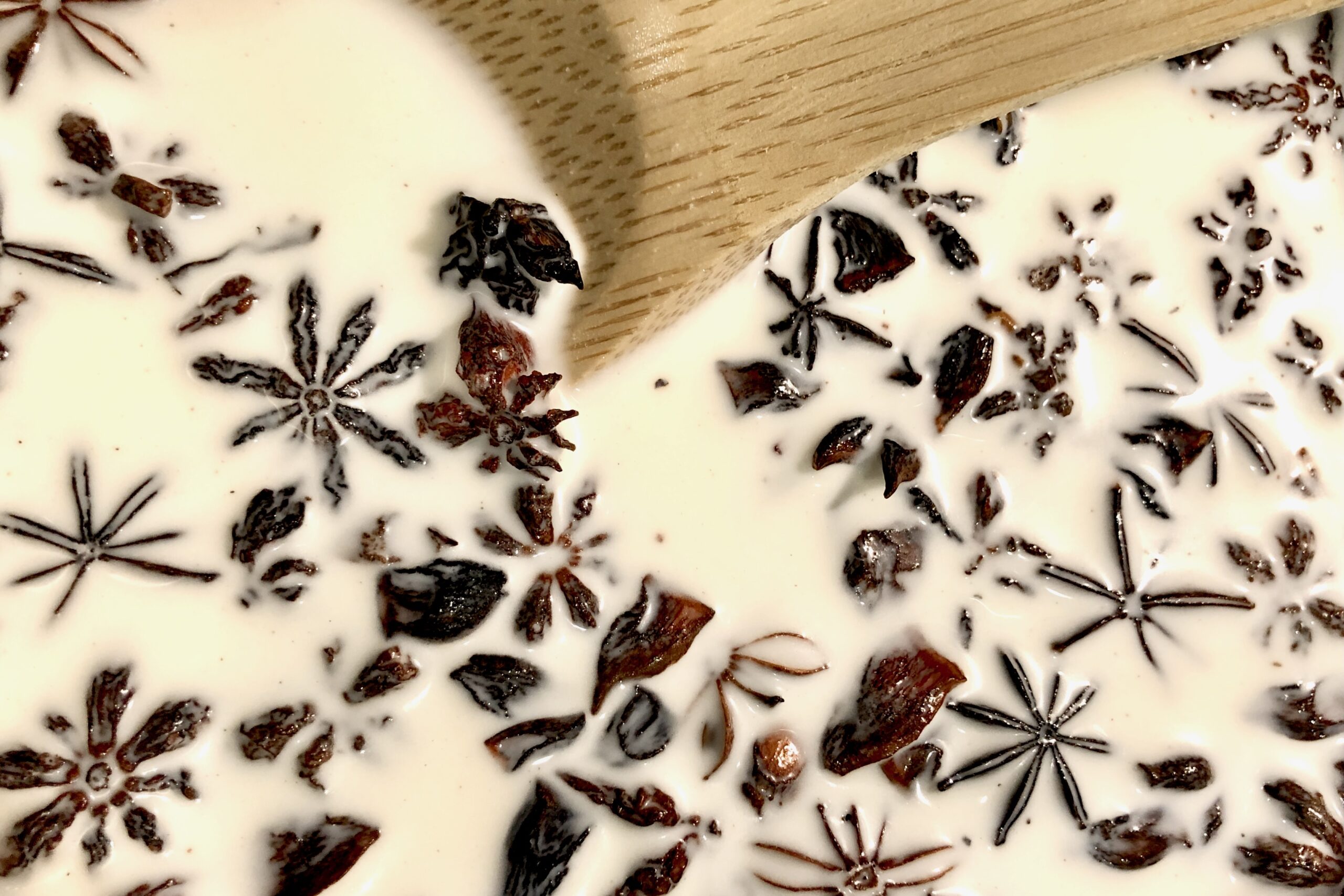
    Anijsmelk, the classic star-anise–flavored steamer of the Netherlands, is one of my favorite Dutch treats—simple, soothing, and steeped in nostalgia. Traditionally made by stirring anise-flavored sugar cubes (Anijsblokjes) into warm milk, it’s a comforting drink to warm your soul on a cold winter’s night. This homemade version captures that flavor with whole star anise and a touch of sweetness.


    Ingredients

    • 1 qt milk
    • 5–10 whole star anise
    • ⅛ tsp ground anise seed (optional, for rounder flavor)
    • 1–4 tbsp sugar, to taste (about 1 tsp per cup)
    • Small knob of butter or splash of cream (optional, for richness)

    Directions

    Infuse the Milk

    In a medium saucepan, warm the milk with the star anise over medium-low heat until steaming but not boiling. Reduce heat to low and let steep gently for 5–10 minutes, tasting occasionally to check flavor strength.

    Finish the Drink

    When the milk reaches your desired anise intensity, remove from heat and discard the star anise pods. Stir in sugar to taste and, if desired, add a small knob of butter or splash of cream for extra richness. Whisk briefly to create a light froth.

    Serve

    Pour hot into a teacup or mug and enjoy immediately. Optionally dust with a pinch of ground anise or cinnamon. Serve alongside a small Dutch biscuit or slice of buttered bread for an authentic touch.


    Notes

    Preparation

    • For the most authentic flavor, use a mix of whole star anise and a small pinch of ground anise seed.
    • Warm gently—avoid boiling, which can cause the milk to curdle or the flavor to become harsh.
    • Steep covered to preserve the delicate aroma of the anise.

    Serving Suggestions

    • Traditionally enjoyed as a bedtime drink or on cold evenings.
    • Serve in a warm ceramic cup with a dusting of ground anise, cinnamon, or nutmeg.
    • Pair with speculaas cookies or buttered toast for a cozy Dutch treat.

    Variations

    • Substitute honey or vanilla sugar for a more nuanced sweetness.
    • Add a drop of almond or vanilla extract for a gentle twist.
    • For a creamier version, replace 1 cup of milk with light cream.
  • Coconut Gelato

    Coconut Gelato

    There’s a quiet beauty to coconut when you let it stand on its own—clean, fragrant, and naturally sweet. This gelato leans into that simplicity with a smooth, silky texture and a pure coconut flavor that shines without distraction. Lightly toasted coconut infuses the base for depth, then strains away to keep every bite incredibly smooth.


    Ingredients

    Coconut Base

    • 1 can (13.5–14 oz) full-fat coconut milk
    • 1 cup whole milk
    • ⅔ cup granulated sugar
    • 3 large egg yolks
    • ⅛ tsp xanthan gum
    • ½ cup unsweetened shredded coconut, lightly toasted
    • ¼ tsp fine salt
    • 1 tsp vanilla extract
    • ¼ tsp coconut extract (optional)

    Directions

    Prepare the Coconut Base

    Toast the shredded coconut in a dry skillet over medium heat until lightly golden and fragrant. Set aside.

    In a medium saucepan, whisk together the coconut milk, whole milk, half the sugar, and salt. Warm over medium heat until steaming but not boiling.

    In a separate bowl, whisk the remaining sugar with the egg yolks until pale. Slowly ladle in some of the warm coconut milk mixture while whisking constantly, then return everything to the saucepan.

    Cook gently over medium heat, stirring constantly, until the custard reaches 175–178°F and thickens slightly, just enough to coat the back of a spoon (nappe consistency). Do not boil.

    Infuse, Strain, Stabilize & Chill

    Remove from heat, stir in the toasted coconut, cover, and let steep for 20–30 minutes.

    Strain the custard through a fine mesh sieve to remove the coconut solids. While the base is still warm, stir in the vanilla extract and optional coconut extract.

    Sprinkle the xanthan gum evenly over the surface and blend with an immersion blender (or regular blender) for 10–15 seconds to fully disperse.

    Chill completely, preferably overnight.

    Churn

    Churn the gelato in your ice cream maker until smooth and thick. Transfer to a lidded container and freeze for 4–6 hours to set.


    Notes

    Preparation

    • Lightly toasting the coconut deepens flavor without adding texture, since it is strained out.
    • Xanthan gum prevents iciness and preserves a clean coconut profile without thickening the custard.
    • Use an instant-read thermometer to monitor the custard temperature; keeping it in the 175–178°F range ensures safety and proper thickening without curdling the yolks.

    Serving Suggestions

    • Serve with fresh pineapple or mango.
    • Pair with chocolate sauce or shaved dark chocolate.
    • Excellent alongside tropical cakes or fruit tarts.

    Variations

    • Dark Chocolate Coconut Gelato: Fold in ¾ cup chopped dark chocolate during the last minute of churning. Optional: add ½ tsp almond extract for an Almond-Joy style profile.
    • Pineapple Swirl: Simmer 1 cup pineapple with 2 tbsp sugar and a pinch of salt for 5–7 minutes. Blend smooth, chill, and layer into the gelato as you transfer it from the machine.
    • Mango Swirl: Blend 1 cup ripe mango with 2–3 tbsp sugar, chill fully, and swirl into the gelato for a marbled effect.

    Make-Ahead & Storage

    • Best texture is within the first 3–4 days.
    • Store tightly covered to prevent absorption of freezer odors.
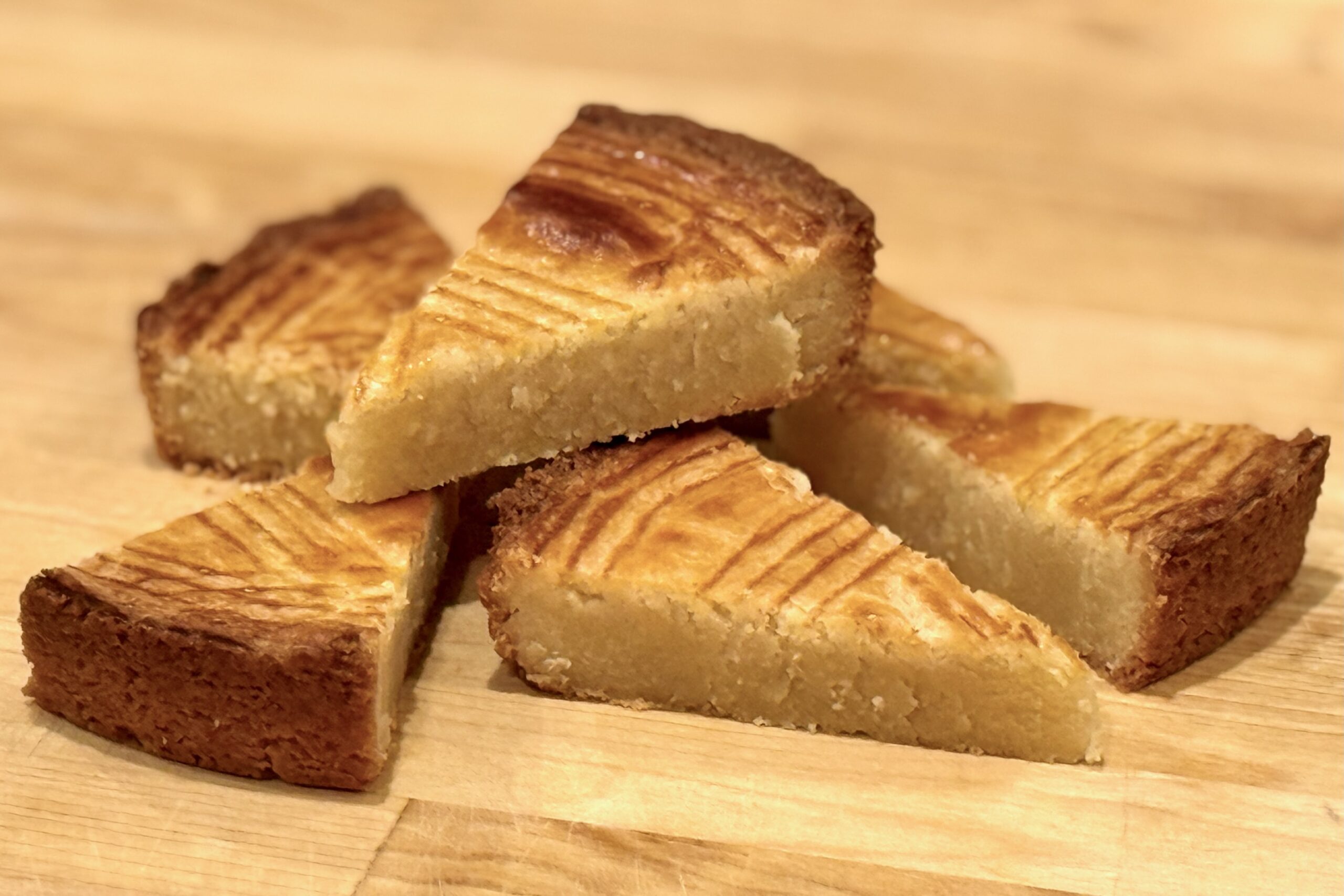
  • Boterkoek

    Boterkoek

    Oma Rasch was a spunky little lady, full of equal parts sugar and spice. I fondly remember the fun we had while I lived in her second-story row house on Krugerstraat in Den Helder, at the northernmost point of North Holland. Even in her 80s, she climbed the steep, treacherous staircase each day and set off on her bicycle to run errands. She was always willing to help as I worked to learn Dutch, once telling me, after I repeated a particularly colorful word, “There are no bad words, just words you shouldn’t use around nette mensen (respectable people).” A common treat in her home was homemade boterkoek—rich, golden, and fragrant. Whenever we walked in and smelled that buttery aroma, we knew we were in for ‘een lekker toetje’, a truly ‘heerlijk’ dessert.


    Ingredients

    • 1 cup (2 sticks) unsalted butter, at room temperature
    • 1 cup sugar
    • 2 cups all-purpose flour
    • ¼ tsp table salt
    • 1 large egg, lightly beaten, divided
    • ½ tbsp milk or buttermilk (for egg wash)
    • Optional Flavor Variations:

      • Citrus: Zest of ½ a lemon, lime, or orange, plus a small splash of juice
      • Almond: ½–1 tsp almond extract, topped with almond halves before baking
      • Speculaas: 1–1½ tsp speculaaskruiden (Dutch speculaas spice blend)
      • Ginger: 1–2 tbsp finely chopped crystallized ginger folded into the dough
      • Vanilla Sugar: 1–2 tbsp vanilla sugar mixed into the dough or sprinkled lightly on top

    Directions

    Prepare the Pan and Oven:

    Preheat the oven to 350°F (175°C). Butter an 8- or 9-inch round cake pan, then line the bottom with a circle of parchment paper. Lightly dust the sides with flour and tap out any excess. A springform or removable-bottom pan makes unmolding and slicing easier, but a standard pan works as well.

    Mix the Dough:

    In a small bowl, lightly beat the egg with a fork. Transfer about 1 tbsp of the beaten egg to a separate small bowl, add the milk or buttermilk, and whisk to combine for the egg wash. Set aside.

    In a medium mixing bowl, combine the butter and sugar. Beat just until smooth, creamy, and well combined (do not whip until light and fluffy—you want a dense boterkoek, not a cake). Add the remaining beaten egg (from the larger portion) and mix only until incorporated. If using any flavorings (citrus zest, almond extract, speculaaskruiden, crystallized ginger, or vanilla sugar), mix them in at this stage.

    Add the flour and salt. Using a spatula or wooden spoon, fold and stir just until no dry flour remains and the dough comes together. The dough will be stiff but cohesive; avoid overmixing.

    Chill the Dough:

    Scrape the dough onto a sheet of plastic wrap and pat it into a thick disk. Wrap tightly and refrigerate for 20–30 minutes, until firm but still pliable. Overchilling will make the dough harder to press evenly into the pan.

    Press, Crosshatch, and Glaze:

    Transfer the chilled dough to the prepared pan. Using your fingertips or the back of a spoon, press it evenly into the pan, smoothing the surface and making sure it reaches all the way to the edges.

    Using the tines of a fork, lightly score a crosshatch pattern across the top of the dough. For the cleanest lines, wipe the fork between strokes as needed.

    Gently brush the surface with a thin, even layer of the egg wash. Avoid pooling, especially around the edges, which can create hard spots as it bakes.

    Bake:

    Bake at 350°F (175°C) for 25–35 minutes, until the edges are deep golden brown and the center is just set and a lighter golden color. The top should not puff dramatically. Begin checking around 25 minutes, rotating the pan if needed for even browning. The boterkoek will continue to firm as it cools.

    Cool, Rest, and Serve:

    Remove the pan from the oven and place it on a wire rack. Let the boterkoek cool completely in the pan. Once cool, run a thin knife around the edge to loosen, then invert or release from the pan and remove the parchment.

    For the best flavor and texture, allow the boterkoek to rest for several hours or overnight before slicing. Cut into small wedges (it is rich) and serve at room temperature.


    Notes

    Preparation

    • Use unsalted butter for the cleanest flavor and better control over salt. The butter should be cool room temperature—soft enough to press a finger into, but not greasy or melting.
    • Be careful not to over-aerate the butter and sugar; mixing just until smooth (rather than light and fluffy) keeps the boterkoek dense and tender, as it should be.
    • For easy release and clean slices, butter the pan and line the bottom with parchment. A springform or removable-bottom pan is especially handy if you plan to unmold it for serving on a platter.
    • Approximately equal amounts of butter, sugar, and flour by weight are used in this recipe, which is traditional for Dutch boterkoek and gives it its rich, close-crumb texture.
    • Altitude adjustments (high altitude ~4,750 ft / 1,450 m): Because this is a dense, non-leavened cake, ingredient changes are usually unnecessary. Begin checking for doneness a few minutes early and remove from the oven once the edges are deep golden and the center is just set. At sea level, follow the base recipe and bake until the center is just set and no longer looks wet.

    Serving Suggestions

    • Cut into small wedges or narrow bars—boterkoek is rich and meant to be enjoyed in modest slices.
    • Serve alongside afternoon coffee, as is common in Dutch homes.
    • For a simple dessert, pair with lightly sweetened whipped cream and fresh berries or stone fruit.
    • Include on a cookie or dessert tray with other Dutch favorites such as speculaas or stroopwafels.

    Variations

    • Citrus Boterkoek: Add the finely grated zest of ½ a lemon, lime, or orange, plus a small splash of juice, to the dough along with the egg. This adds a bright, fragrant edge that balances the richness.
    • Almond Boterkoek: Add ½–1 tsp almond extract to the dough, then press blanched or sliced almonds gently into the top before baking. Almond is a very traditional flavor; start with the smaller amount of extract and increase to taste.
    • Speculaas Boterkoek: Add 1–1½ tsp speculaaskruiden (Dutch speculaas spice blend) with the flour for a warm, spiced version that’s especially nice around the holidays.
    • Ginger Boterkoek: Fold 1–2 tbsp finely chopped crystallized ginger into the dough before pressing it into the pan for pockets of sweet, spicy heat.
    • Vanilla Sugar Boterkoek: Replace 1–2 tbsp of the sugar with vanilla sugar, or sprinkle a light dusting of vanilla sugar over the top right after baking for extra aroma.

    Make-Ahead & Storage

    • Boterkoek is an excellent make-ahead dessert. The flavor and texture actually improve after resting for several hours or overnight.
    • Once completely cool, wrap tightly or store in an airtight container at room temperature for up to 3–4 days.
    • For longer storage, wrap wedges or the whole boterkoek well and freeze for up to 2 months. Thaw at room temperature in the wrapping to preserve moisture.
    • If the surface softens slightly after storage, a brief rest uncovered at room temperature will help the top regain a gentle firmness.
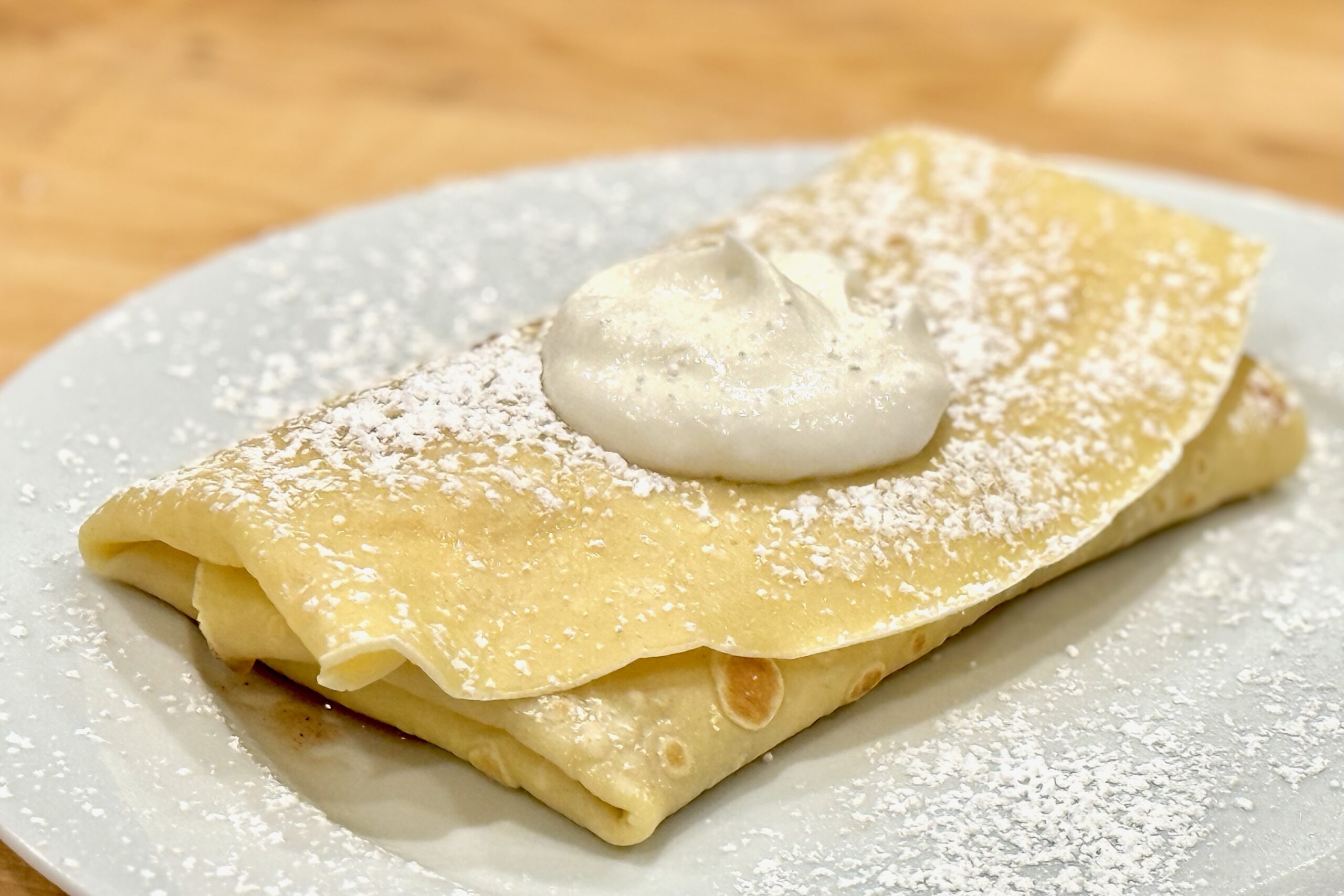
  • Crêpes

    Crêpes

    Light, delicate, and endlessly versatile, these classic French crêpes strike the perfect balance between tender centers and gently crisped edges. This refined version builds on traditional technique with small upgrades—like melted butter in the batter, a touch of sugar for browning, and a splash of water for that signature lace-like edge—making them ideal for both sweet and savory fillings.


    Ingredients

    • 4 large eggs
    • 1½ cups milk
    • ¼ cup water
    • 1¼ cups flour
    • ¼ tsp table salt
    • 2 tbsp melted butter
    • 1 tsp sugar (optional, for browning)

    Directions

    Make the Batter

    In a large mixing bowl, whisk together flour, salt, and sugar (if using).

    Make a well in the center. Add eggs and about half of the milk. Whisk from the center outward, slowly drawing in the flour until a smooth, thick paste forms.

    Add remaining milk and the water; whisk until completely smooth.

    Whisk in melted butter until incorporated.

    Rest the Batter

    Strain through a fine-mesh sieve to remove any remaining lumps. Let the batter rest for at least 30 minutes, or refrigerate up to overnight. If resting overnight, thin with a splash of milk before cooking if it has thickened.

    Cook the Crêpes

    Heat a nonstick or crêpe pan over medium heat and brush lightly with melted butter.

    Pour about ¼ cup of batter into the center of the pan and immediately swirl to coat the bottom in a thin, even layer.

    Cook until the top surface looks dry and the edges lift from the pan. Flip and cook briefly on the second side.

    Repeat, brushing the pan with more butter as needed.


    Notes

    Preparation

    • Resting the batter relaxes gluten and improves spreadability and tenderness.
    • The splash of water helps create crisp, lacy edges—a classic French technique.
    • For savory crêpes, omit the sugar; for dessert crêpes, you may increase it to 2 tsp.
    • Altitude (~4,750 ft): Batter may thicken slightly during resting. Add 1–2 tbsp extra milk as needed before cooking.

    Serving Suggestions

    • Sweet: lemon and sugar, fresh berries, Nutella, jam, honey, or pastry cream.
    • Savory: ham and cheese, sautéed mushrooms, spinach and gruyère, or smoked salmon with crème fraîche.

    Variations

    • Add ½ tsp vanilla or 1 tbsp rum for dessert crêpes.
    • Swap ¼ cup of milk for ¼ cup heavy cream for richer, more custardy crêpes.
    • Use buckwheat flour for a rustic Breton-style crêpe (best for savory fillings).

    Make-Ahead & Storage

    • Refrigerate cooked crêpes for up to 3 days with parchment between each layer.
    • Freeze for up to 2 months; thaw and warm briefly in a pan before serving.
    • Batter can be made up to 24 hours ahead; stir and thin with milk before cooking if needed.
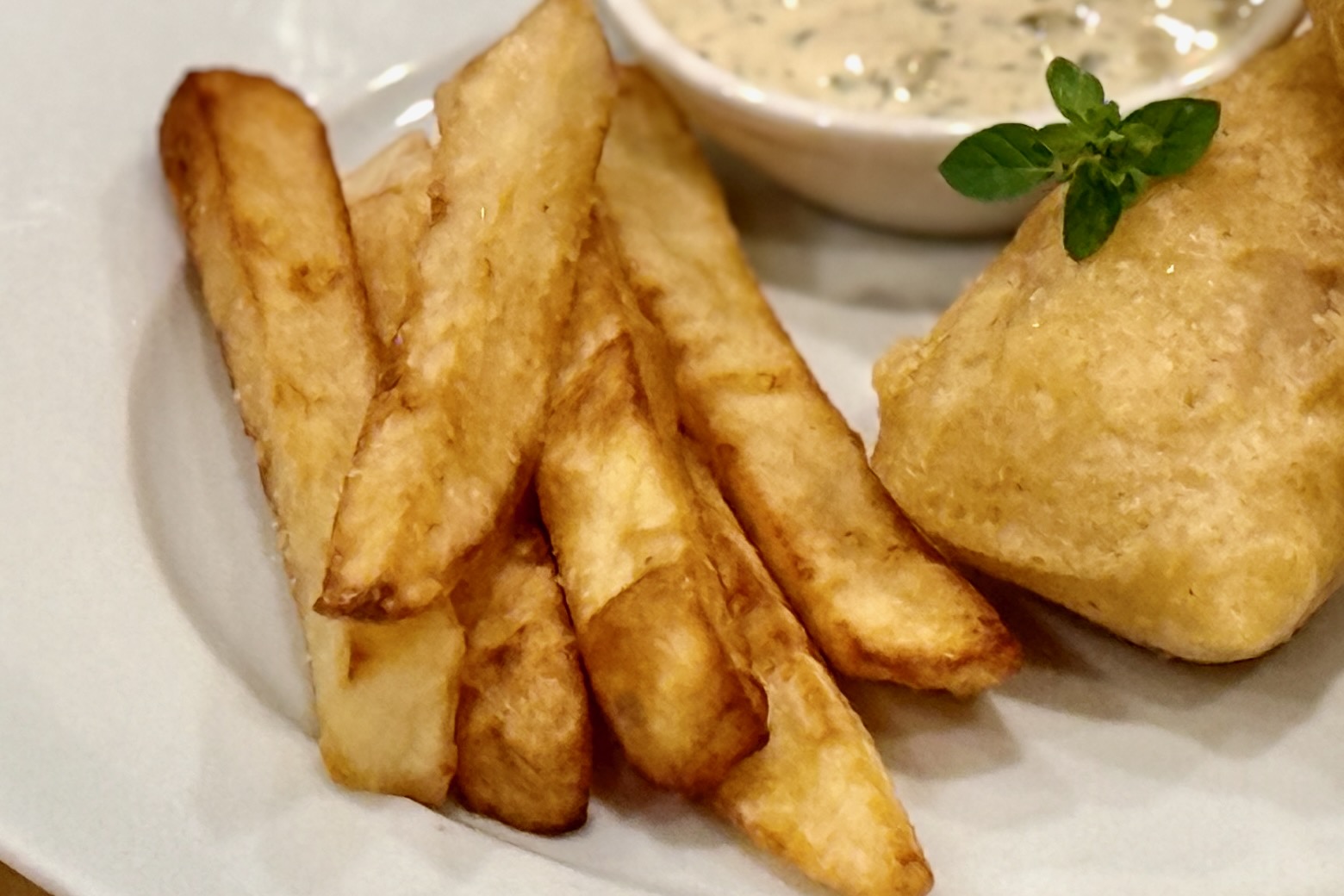
  • Double-Fried Belgian Frites

    Double-Fried Belgian Frites

    Ok, my friends, don’t get me started! Just believe me when I say, Fries are NOT French! Whether it be because of the style of the cut (frenched) or the native language of many of their early purveyors, french and fries have been erroneously linked as the name of a true Belgian creation, Frites! Calling these spears of deliciousness French is, well, just wrong.

    Real frites are presoaked and double fried, delivering a soft and fluffy interior and crisp exterior. They are traditionally salted and served with mayonnaise. But, if you are feeling a bit more adventurous, try some of the typical toppings for Frites from the Netherlands and Belgium found under Serving Suggestions at the end of the recipe. My personal favorite… Patat Speciaal!


    Ingredients

    • Large potatoes (Russet or Bintje preferred)
    • Cold water
    • Neutral oil for frying (peanut or canola)
    • Salt, to taste
    • Pepper (optional)

    Directions

    Prepare the Potatoes

    Wash and scrub potatoes well. Peel if desired, then cut into thick fries (about ⅜–½ inch / 1 cm thick). Place in a large bowl of cold water and soak for at least 20 minutes, or up to several hours, to remove excess starch.

    Drain and pat the fries completely dry with paper towels before frying.

    First Fry (Par-Cook)

    Heat oil in a deep fryer or heavy pot to 275–300°F (135–150°C). Fry the potatoes in batches for about 4–6 minutes, just until tender but not browned. Avoid overcrowding to maintain temperature.

    Remove fries and transfer to a paper towel–lined tray or a large paper bag to drain and cool. Let rest at least 20–30 minutes.

    Second Fry (Crisp & Golden)

    Increase oil temperature to 375–400°F (190–205°C). Fry the cooled potatoes again in batches for 3–5 minutes, until golden brown and crisp.

    Transfer to fresh paper towels to drain. Immediately season with salt (and pepper, if desired).

    Serve

    Serve hot in a paper cone, bowl, or basket—Belgian style—with plenty of mayonnaise or one of the regional variations listed below.


    Notes

    Preparation

    • For the most authentic texture, use starchy potatoes such as Russets or Bintjes.
    • Soaking the potatoes helps remove starch for crisper results—don’t skip this step.
    • Always cool fries completely between the first and second fry for best crispness.
    • Use a thermometer to maintain accurate oil temperature during frying.

    Serving Suggestions

    • Patat Met – Fries with mayonnaise.
    • Patat Speciaal – Fries with mayonnaise, curry ketchup, and chopped onions.
    • Patatje Oorlog – Fries with mayonnaise, peanut sauce, sambal oelek, and chopped onions.
    • Patatje Joppie – Fries with mayonnaise mixed with yellow curry spices and topped with onions.
    • Frieten met Stoofvlees – Fries served with Belgian beef stew.
  • Neapolitan-Style Tomato Sauce

    Neapolitan-Style Tomato Sauce

    This uncooked Neapolitan-style pizza sauce preserves the bright, fresh flavor of San Marzano tomatoes—sweet, rich, and perfectly balanced for high-heat baking. Using true DOP-certified tomatoes gives an authentic taste of Naples, with a smooth texture and naturally sweet finish that perfectly complements a light, airy crust.


    Ingredients

    • (For about 6–8 pizzas)
    • 1 can (28 oz / 800 g) whole peeled San Marzano tomatoes (DOP if possible)
    • ½ tbsp table salt (adjust to taste)
    • 2 tbsp extra-virgin olive oil
    • 2–4 fresh basil leaves, torn (optional but recommended)

    Directions

    Prepare the Sauce

    Drain excess juice from tomatoes into a bowl, reserving it in case the sauce needs thinning. Crush tomatoes by hand until mostly smooth but still slightly textured—avoid over-crushing for best flavor and body.

    Stir in salt, olive oil, and basil until evenly mixed.

    Use the Sauce

    Spread thinly over stretched dough just before baking (Neapolitan Pizza Dough works beautifully). Use approximately 2–2½ oz (60–70 g) of sauce per 10–12″ pizza.

    Do not pre-cook the sauce—the natural sugars in the tomatoes caramelize under high oven heat, producing rich, authentic flavor.


    Notes

    Preparation

    • Use only high-quality San Marzano tomatoes with the DOP seal for the sweetest, least acidic results.
    • Do not blend the sauce completely smooth; a slightly rustic texture gives better flavor and adhesion.

    Serving Suggestions

    • Use as the base for Pizza Margherita—add mozzarella, parmesan, and fresh basil.
    • Try on Pizza Marinara with garlic, oregano, and a drizzle of olive oil.
    • Use in Shoarma Pizza or Carnitas Pizza for a Dutch or Mexican-inspired twist.

    Variations

    • For a smoother sauce, pulse briefly with an immersion blender (1–2 seconds only).
    • For a hint of depth, add a tiny pinch of sugar if your tomatoes are unusually acidic.
    • For a garlic-forward version, rub a cut clove of garlic over the dough before adding sauce.

    Make-Ahead & Storage

    • Store sauce in an airtight container in the refrigerator for up to 5 days.
    • Freeze for up to 3 months; thaw in the refrigerator overnight before using.
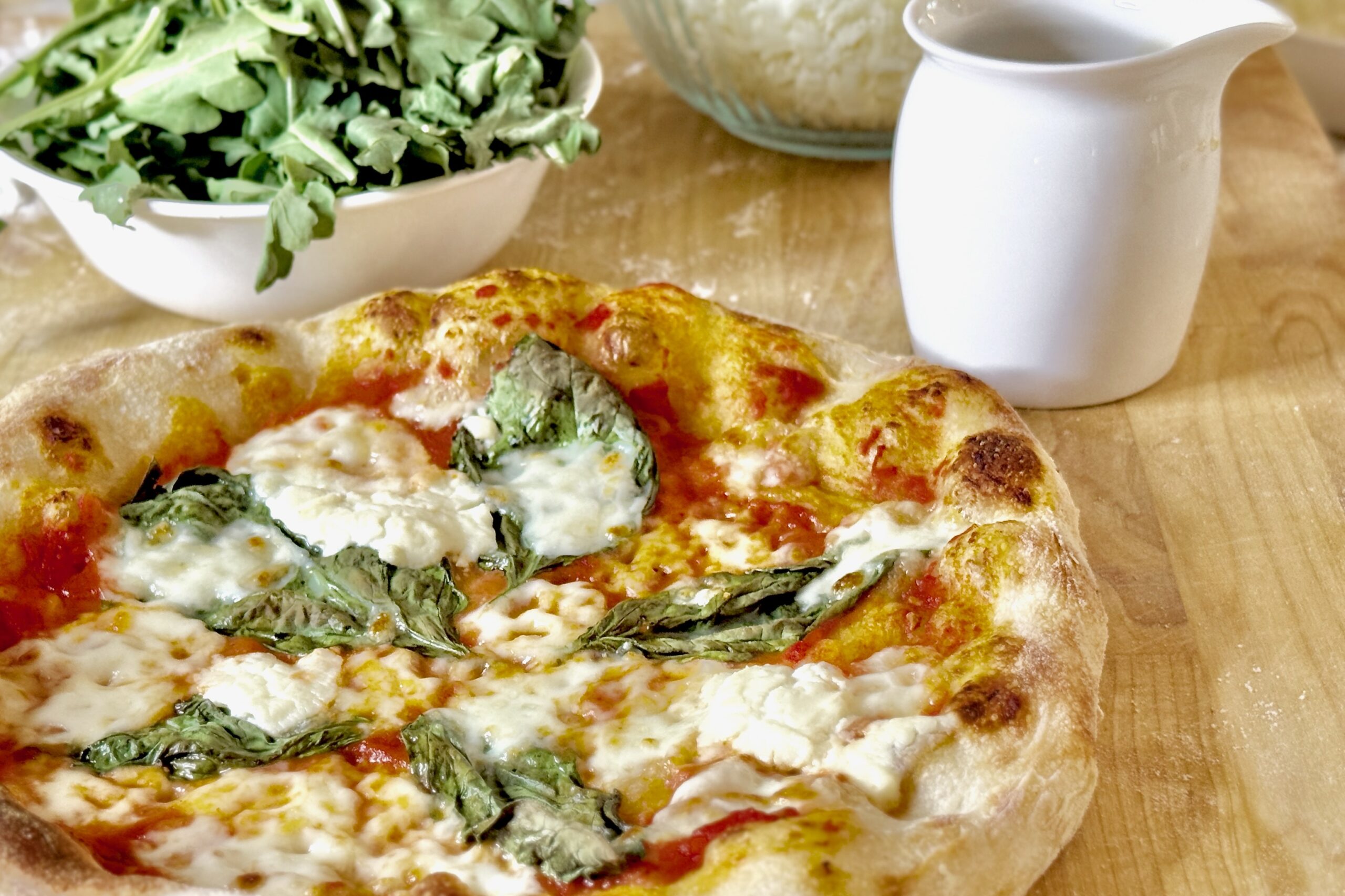
  • Neapolitan Pizza Dough

    Neapolitan Pizza Dough

    Pizza has always been a go-to meal for our family. Who can resist the combination of chewy dough, flavorful sauce, tasty toppings, and gooey cheese? Our first taste of true Neapolitan-style pizza was on our family trip to Italy—staying across the square from the Pantheon, exploring the Colosseum and Vatican museums, and often ending the day with perfectly blistered pizza from a tiny Roman restaurant. This recipe recreates that chewy, flavorful crust at home, whether you choose the cold-ferment version for deep flavor, the quick version for same-day pizza, or the freezer version for easy make-ahead dough.


    Ingredients

    • 1360 g (~3 lb) 00 flour (100%)
    • 952 g cold water (70%)
    • 27 g table salt (2%)
    • Active Dry Yeast

    • Cold Ferment: 0.41 g for 72 hours (0.03%) or 0.82 g for 48 hours (0.06%)
    • Quick Version: 2.72 g for same-day use (0.2%)
    • Freezer Version: 3.54 g for use the same day as thawed (0.26%)

    Note: Use a digital scale accurate to 0.01 g for yeast precision, or approximate to the nearest small pinch if unavailable.

    Directions

    Select Fermentation Version

    Cold Ferment (48–72 hours)

    In a large bowl, combine flour, yeast, and cold water. Mix until no dry bits remain (shaggy dough). Cover and rest 20–30 minutes.

    After resting, sprinkle salt over dough and gently pinch and squeeze to incorporate. Every 30 minutes for 2 hours, perform a set of stretch and folds (see Notes).

    After the final folds, place dough in a clean bowl, cover, and rest at room temperature (75–80°F / 23–27°C) for 1–2 hours. Divide into 8 oz (225 g) balls, lightly oil, and place in individual containers or on a floured tray covered tightly. Refrigerate 48–72 hours. Remove from refrigerator 2–3 hours before baking to come to room temperature.

    Quick Version (Same-Day)

    In a large bowl, combine flour and cold water. Mix until no dry bits remain; cover and rest 20–30 minutes.

    In a small cup, dissolve yeast in 2 tbsp warm water (105°F / 40°C) and let stand 5–10 minutes until foamy.

    Sprinkle salt over dough, then add yeast mixture. Gently pinch and squeeze to incorporate. Every 30 minutes for 2 hours, perform a set of stretch and folds (see Notes).

    After the final folds, cover and rest at warm room temperature (75–80°F / 23–27°C) for 2–3 hours, until nearly doubled. Divide into 8 oz (225 g) balls, lightly oil, and place in proofing containers or on a floured tray. Cover and proof 1–2 hours, until puffy and relaxed.

    Freezer Version (Make-Ahead)

    In a large bowl, combine flour and cold water. Mix until no dry bits remain; cover and rest 20–30 minutes.

    In a small cup, dissolve yeast in 2 tbsp warm water (105°F / 40°C) and let stand 5–10 minutes until foamy.

    Sprinkle salt over dough, then add yeast mixture. Gently pinch and squeeze to incorporate. Every 30 minutes for 2 hours, perform a set of stretch and folds (see Notes).

    After the final folds, cover and rest at warm room temperature (75–80°F / 23–27°C) for 2–3 hours, until nearly doubled. Divide into 8 oz (225 g) balls. Lightly oil, wrap tightly in plastic wrap, and place in freezer-safe bags or airtight containers. Freeze up to 3 months.

    To thaw, transfer to refrigerator for 24 hours. Then allow 1–3 hours at room temperature before stretching and baking.

    Bake the Pizzas

    Place a pizza steel on the top rack of the oven and preheat to 500–550°F (260–290°C) for at least 45 minutes. Just before baking, switch to broil for 5–10 minutes to superheat the surface.

    Stretch a dough ball gently by hand (don’t roll), top lightly with sauce, cheese, and desired toppings, and slide onto the steel. Bake 4–5 minutes, rotating halfway through. For extra char, broil the final 30–60 seconds.

    For an even closer match to wood-fired results, bake in an outdoor pizza oven at 750–850°F (400–455°C) for 60–90 seconds.


    Notes

    Preparation

    • Hydration note: The 70% hydration gives the dough an open crumb and extensible texture typical of Neapolitan-style pizza. Adjust slightly based on flour absorbency.
    • Stretch & Folds: With wet hands, grab one edge, stretch it up, and fold it over. Rotate 90°, repeat until all four sides are folded. After 3–4 rounds, the dough will feel smoother and more elastic.
    • Use minimal toppings and well-drained mozzarella to prevent sogginess during high-heat baking.
    • This dough also works for homemade pita: reduce hydration to 65%, roll ⅛–¼ inch thick, and bake 1½–2 minutes at 475–500°F (245–260°C).

    Serving Suggestions

    • Top with traditional Neapolitan tomato sauce, fresh mozzarella, and basil for a Pizza Margherita.
    • Drizzle with extra virgin olive oil after baking to enhance flavor and aroma.
    • Pair with a simple arugula salad or Italian antipasti for a complete meal.

    Variations

    • Pizza MargheritaNeapolitan tomato sauce, mozzarella, parmesan, basil; after baking add a drizzle of extra virgin olive oil.
    • Pizza MarinaraNeapolitan tomato sauce, garlic, oregano, salt; after baking add a drizzle of extra virgin olive oil.
    • Pizza CapricciosaNeapolitan tomato sauce, mozzarella, ham, artichokes, mushrooms, olives; after baking add a drizzle of extra virgin olive oil.
    • Pizza BoscaiolaNeapolitan tomato sauce, mozzarella, mushrooms, Italian sausage, and parmesan; after baking add a drizzle of extra virgin olive oil.
    • Pizza Quattro FormaggiNeapolitan tomato sauce (optional), mozzarella, ricotta, gorgonzola, parmesan, garlic, oregano (or, more traditionally, mozzarella, gorgonzola, parmigiano-reggiano, fontina; and after baking add a drizzle of extra virgin olive oil).
    • Pizza alla NapoletanaNeapolitan tomato sauce (optional), mozzarella, anchovies, capers, oregano; and after baking add a drizzle of extra virgin olive oil.
    • Pizza Prosciutto e FunghiNeapolitan tomato sauce, mozzarella, prosciutto, mushrooms; and after baking add a drizzle of extra virgin olive oil.
    • Spicy SausageNeapolitan tomato sauce, mozzarella, spicy Italian sausage, pickled jalapeños.
    • Sweet & SpicyNeapolitan tomato sauce, mozzarella, spicy Italian sausage, pickled jalapeños; after baking add a drizzle of honey.
    • Spinach & Sun-dried TomatoNeapolitan tomato sauce, mozzarella, provolone, ricotta, Parmesan, spinach, sun-dried tomatoes; after baking add fresh basil and a drizzle of extra virgin olive oil.
    • Loaded HawiianNeapolitan tomato sauce, mozzarella, ham, rotisseri chicken, bacon, pineapple, red onion, pickled jalapeños.
    • Shoarma PizzaNeapolitan tomato sauce, mozzarella, chicken shoarma; after baking add a drizzle of knoflooksaus (Dutch Garlic Sauce) and poestasaus.
    • Barbecue ChickenDr Pepper barbecue sauce, mozzarella, rotisseri chicken, bacon, pickled jalapeños.
    • Fig & PigNeapolitan tomato sauce, mozzarella, fresh sliced figs, fig jam, prosciutto, honey.
    • Fig, Pig, & GoatNeapolitan tomato sauce, goat cheese, fresh sliced figs, caramelized onions, prosciutto; after baking add arugula and a drizzle of honey.
    • Chicken Pestopesto sauce, mozzarella, rotisseri chicken, ricotta, thinly sliced tomatoes.
    • Mushroom & OliveNeapolitan tomato sauce, mozzarella, ham, mushroom, olives, pickled jalapeños.
    • Pear & Gorgonzolagarlic oil pizza base, thinly sliced pear, gorgonzola, mozzarella, walnuts or pecans; after baking add arugula and balsamic glaze.
    • Prosciutto & BurrataNeapolitan tomato sauce, mozzarella; after baking add torn burrata, prosciutto, arugula, and olive oil.
    • The MeatsNeapolitan tomato sauce, mozzarella, pepperoni, Italian sausage, ham, bacon.
    • Chicken, Spinach, & Fetagarlic oil pizza base , rotisserie chicken, spinach, feta, Parmesan, mozzarella.
    • Indo Satépeanut sauce thinned with coconut milk, saté ayam, mozzarella, blanched vegetables (thinly sliced carrots, small pieces of green beans, thin shavings of cabbage); after baking add bean sprouts tossed in lime juice and roasted sesame oil, thin cucumber slices, sambal, fresh cilantro, and a drizzle of ketjap manis.
    • Chicken FajitaNeapolitan tomato sauce with a sprinkle of cumin & paprika, mozzarella, Jack cheese, fajita chicken, red onion, roasted bell pepper strips, and pickled jalapeños; after baking add a drizzle of salsa verde and crema, with a squeeze of lime juice.
    • Saag Paneer—Pureed spinach “saag” base (spinach, blanched & puréed, sautéed onion, garlic, ginger, garam masala, cumin, coriander, a little chili, finished with cream or yogurt for silkiness) spread in a thin, even layer topped with paneer cubes, red onion, serrano chile slices; after baking add fresh cilantro, a light dusting of crumbled kasoori methi, and a drizzle of yogurt.
    • Carnitasgarlic oil pizza base, carnitas, mozzarella, red onion, roasted poblano chile strips, pickled jalapeños; after baking add fresh cilantro, diced white onion, crumbled cotija cheese or queso fresco, and a drizzle of salsa verde and crema.

  • Vanilla Poached Pears

    Vanilla Poached Pears

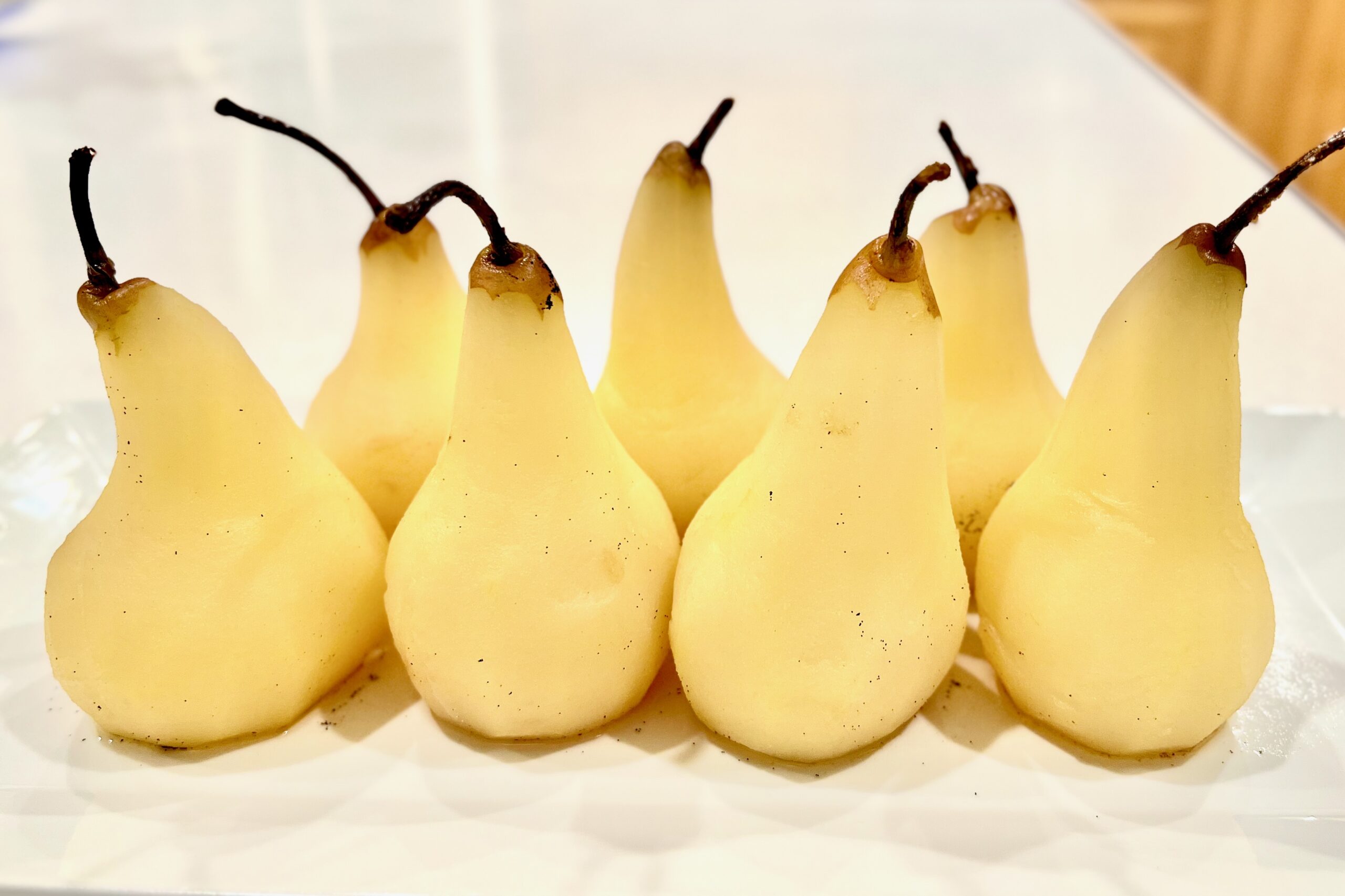
    Delicate Bosc pears are gently poached in a fragrant blend of Pinot Gris, vanilla, and cinnamon, then filled with a silky vanilla bean pastry cream. Served upright with a drizzle of reduced poaching syrup, these elegant pears make a stunning and lightly indulgent finale to any meal.


    Ingredients

      Pears

    • 1 bottle (750 ml) Pinot Gris
    • 1 cup water
    • ¾ cup sugar
    • 1–2 vanilla beans, split and seeded
    • ¼ tsp ground cinnamon
    • 6 Bosc pears, peeled with stems intact
    • Crème Pâtissière Filling

    • 1 cup whole milk
    • 1 vanilla bean, split and seeded (or 1 tsp pure vanilla extract)
    • 3 egg yolks
    • ¼ cup sugar
    • 2 tbsp cornstarch
    • 1 tbsp butter
    • Pinch of salt
    • Optional: ¼ cup lightly whipped cream, folded in after chilling for a softer texture

    Directions

    Poach the Pears

    In a large saucepan, combine Pinot Gris, water, sugar, vanilla seeds and pods, and cinnamon. Bring to a gentle boil over medium-high heat.

    Core pears from the bottom, keeping stems intact. Lower heat to maintain a steady simmer and add pears to the liquid. Cover and poach 30 minutes, or until tender when pierced with a skewer.

    Using a slotted spoon, transfer pears to a shallow dish, standing them upright. Refrigerate until cool.

    Return the poaching liquid to high heat and reduce to about 1 cup (20–25 minutes). Strain and chill for serving.

    Prepare the Crème Pâtissière

    In a saucepan, heat milk, vanilla bean seeds and pod (if using), and salt just to a simmer. Remove from heat; steep 10 minutes. Remove pod.

    In a bowl, whisk egg yolks, sugar, and cornstarch until pale and smooth.

    Gradually whisk in some of the warm milk to temper, then return mixture to the saucepan.

    Cook over medium heat, whisking constantly, until thickened and just beginning to bubble (1–2 minutes).

    Remove from heat and whisk in butter until smooth. Transfer to a bowl; cover surface with plastic wrap. Chill completely (about 1 hour).

    For a lighter texture, fold in whipped cream before using.

    Fill and Serve

    Cut a thin slice from the base of each chilled pear so it stands upright.

    Spoon or pipe the chilled crème pâtissière into the cored centers of the pears.

    Drizzle each pear with a few spoonfuls of the cooled poaching syrup. Serve upright on dessert plates, optionally garnished with a few vanilla bean flecks or edible flowers.


    Notes

    Preparation

    • The poaching syrup can be made ahead and refrigerated for up to 1 week.
    • The pastry cream can be prepared 1 day in advance; stir gently before using.
    • To help pears stand upright, cut a small flat section from the base before filling and plating.

    Serving Suggestions

    • Serve as a light finish to an elegant dinner, paired with crisp white wine or sparkling water.
    • Garnish with whipped cream, toasted almonds, or a sprig of mint for added presentation.

    Variations

    • Substitute crème fraîche or lightly sweetened whipped cream for a lighter filling.
    • Use Bartlett or Anjou pears instead of Bosc for a softer texture and milder flavor.

    Make-Ahead & Storage

    • Assemble pears up to 4 hours before serving; keep refrigerated until ready to plate.
    • Leftovers may be refrigerated up to 2 days; drizzle with syrup just before serving.
  • Sweet Potato Gnocchi

    Sweet Potato Gnocchi

    After our family took a cooking class together—where we learned to make and shape classic gnocchi—we gathered again on a Sunday evening and had a light-bulb moment: what if we made gnocchi with roasted sweet potatoes? Roasting the sweet potatoes deepens their flavor and keeps the dumplings light yet richly savory. Finished in a nutty browned butter and crisp sage leaves, each pillowy bite evokes cozy autumn warmth—without drifting into dessert territory.


    Ingredients

    • Gnocchi:

    • 2 lb (900 g) orange-flesh sweet potatoes (about 2 large)
    • 1 large egg yolk
    • ¾–1 cup (90–120 g) all-purpose flour, plus more for dusting (start with ¾ cup)
    • ½ tsp table salt
    • ¼ tsp white pepper (or black pepper)
    • pinch nutmeg (optional; up to ⅛ tsp)
    • 2–3 tbsp finely grated parmesan (optional; adds savory depth)
    • semolina or additional flour, for dusting the tray
    • To Serve:

    • 1 batch Browned Butter & Sage Sauce
    • finely grated parmesan, for finishing (optional)

    Directions

    Roast the Sweet Potatoes

    Roast sweet potatoes at 400ºF (205ºC) until completely tender, 45–60 minutes. Split open and let steam escape for 10–15 minutes to reduce moisture. Scoop out the flesh.

    Rice and Cool

    Pass warm sweet potato flesh through a ricer (or mash very thoroughly). Measure 2 packed cups (450–500 g). Spread briefly on a sheet pan to steam off residual moisture, then cool until just warm.

    Make the Dough

    In a bowl, combine sweet potato, egg yolk, salt, pepper, optional nutmeg, and parmesan. Sprinkle ¾ cup (90 g) flour over the top. Fold gently with a bench scraper or spatula until a soft dough forms. It should be supple and just slightly tacky. If sticky, add flour 1 tbsp at a time.

    Test for Texture

    Bring a small pot of well-salted water to a boil. Roll and boil a small test nugget. If it falls apart or tastes mushy, knead in 1 tbsp flour and test again. Avoid overworking the dough.

    Shape the Gnocchi

    Lightly flour the counter and divide dough into four pieces. Roll each into a ¾-inch (2 cm) rope and cut into ¾-inch (2 cm) pieces. Optionally roll on a gnocchi board or fork. Transfer pieces to a semolina- or flour-dusted sheet pan.

    Boil

    Bring a large pot of well-salted water to a boil. Cook gnocchi in batches. They will sink, then float. Cook 30–60 seconds after floating, then lift gently with a spider directly into a warm bowl.

    Serve

    Toss gently with Browned Butter & Sage Sauce, loosening with a splash of cooking water as needed. Finish with parmesan and serve immediately.


    Notes

    Preparation

    • Roasting reduces moisture and prevents dense or gummy dough.
    • Flour amounts vary based on moisture. Add just enough to make dough manageable.
    • A potato ricer ensures the lightest texture; avoid food processors, which make puree gluey.
    • Nutmeg is optional. Keep to a tiny pinch for a savory balance.
    • Parmesan in the dough deepens savoriness and firms texture slightly.

    Serving Suggestions

    • Classic pairing: Browned Butter & Sage Sauce.
    • Also works with simple garlic–olive oil or a light gorgonzola cream.
    • Top with toasted breadcrumbs for added texture.

    Variations

    • Add 1–2 tbsp minced fresh herbs (sage, thyme, chives) to the dough.
    • Use purple sweet potatoes for a more earthy, colorful version; flour amount may vary.
    • Add ¼ cup ricotta for softer, pillowy gnocchi (increase flour slightly).

    Make-Ahead & Storage

    • Freeze uncooked gnocchi on a floured tray, then store in freezer bags up to 2 months. Boil from frozen; add 1–2 minutes to cook time.
    • Refrigerate cooked gnocchi lightly coated in oil up to 2 days. Rewarm gently in sauce.
    • Refrigerate raw dough tightly wrapped up to 24 hours; dust with a little flour if it hydrates.
  • Mango Gelato

    Mango Gelato

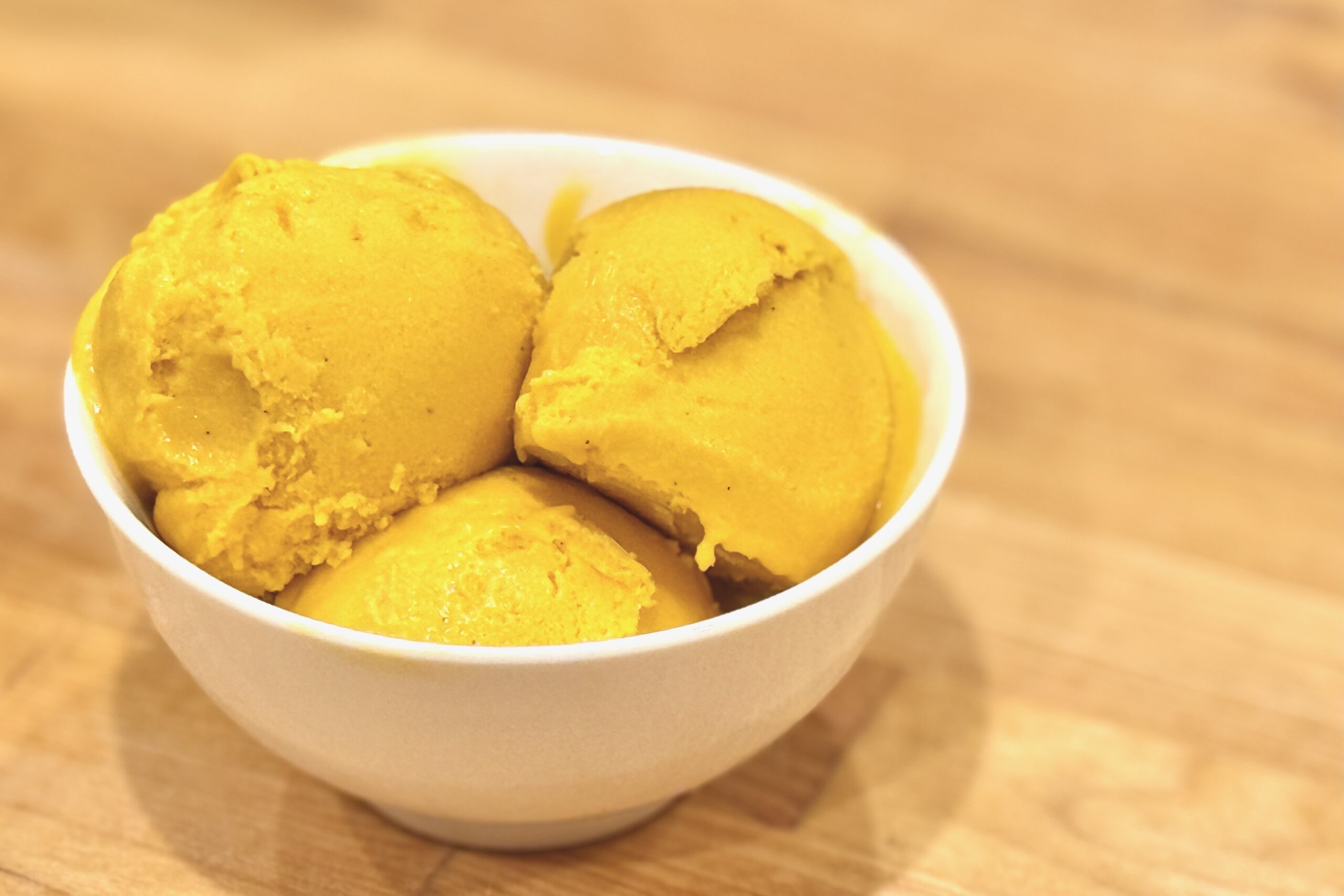
    This bright and silky gelato captures the pure flavor of ripe mangoes in classic Italian style—smooth, dense, and refreshingly balanced. The natural sweetness of the fruit shines through a light dairy base, while a touch of vanilla or spiced rum adds warmth and depth. Each scoop feels like a taste of summer, golden, fragrant, and intensely mango-forward.


    Ingredients

      Base:

    • 2 cups ripe mango purée (strained to remove fibers; from about 3–4 large mangoes or 16 oz frozen mango)
    • 1 cup whole milk
    • ¼ cup heavy cream
    • ⅔ cup sugar
    • ⅛ tsp xanthan gum (stabilizer)
    • 1 tbsp fresh lemon juice
    • pinch table salt
    • ½ tsp vanilla extract (optional; rounds flavor)
    • 1 tbsp spiced rum (optional; softens texture and adds warmth)

    Directions

    Prepare the Mango Purée

    Peel and cube ripe mangoes, or use thawed frozen mango chunks. Purée until completely smooth in a blender or food processor, then strain through a fine mesh sieve to remove fibers. Measure 2 cups purée, cover, and refrigerate.

    Make the Dairy Base

    In a small saucepan, whisk together milk, cream, sugar, and salt. Heat gently over medium heat until steaming and the sugar is fully dissolved. Remove from heat and cool slightly, about 10–15 minutes.

    Combine & Stabilize

    In a blender, combine the cooled milk mixture, mango purée, lemon juice, vanilla, and rum (if using). Sprinkle xanthan gum evenly over the surface and immediately blend on high for 30–45 seconds until emulsified and slightly thickened.

    Chill the Base

    Transfer to a covered container and refrigerate until very cold, at least 4 hours or overnight for best texture.

    Churn & Freeze

    Churn the chilled base in an ice cream maker according to manufacturer instructions until thick and velvety. Transfer to a container and freeze 3–4 hours to firm fully.


    Notes

    Preparation

    • Xanthan gum improves creaminess and prevents iciness; a little goes a long way.
    • Lemon juice brightens the mango flavor and balances natural sweetness.
    • If mangoes are less sweet, increase sugar slightly (up to ¾ cup total).
    • For a richer variation, substitute coconut milk for the whole milk.

    Serving Suggestions

    • Serve with diced fresh mango or mango coulis for extra fruit intensity.
    • Top with toasted coconut flakes or macadamia nuts for added texture.
    • Pair with lime cookies or shortbread for contrast.

    Make-Ahead & Storage

    • Refrigerate the blended base for up to 2 days before churning.
    • Store churned gelato in an airtight container for up to 1 week.
    • Allow to soften at room temperature for 5–10 minutes before scooping.
  • Semmelknödel — Bavarian Bread Dumplings

    Semmelknödel — Bavarian Bread Dumplings

    Classic Bavarian bread dumplings made from day-old rolls soaked in milk, enriched with butter, onion, and parsley. These light, tender dumplings are a beloved side dish across southern Germany — perfect with roast meats, mushroom gravies, or our family favorite, Southern Brown Gravy.


    Ingredients

    • 250 g day-old crusty white bread or Kaiser rolls, cut into 1 cm cubes
    • 200 ml whole milk (warm)
    • 2 medium eggs (or 1 large + 1 medium, see notes)
    • 1 large onion, finely chopped
    • 2 tbsp butter (or clarified butter for authentic flavor)
    • 1 small bunch fresh parsley, finely chopped
    • 50 g diced bacon (optional, for Speckknödel)
    • Salt and freshly ground black pepper, to taste
    • Pinch of grated nutmeg (optional but traditional)
    • Breadcrumbs, as needed (2–4 tbsp)

    Directions

    Prepare Bread Base

    Place bread cubes in a large mixing bowl. Pour warm milk evenly over them and toss gently to coat. Let stand for 10–15 minutes, or until the milk is mostly absorbed and the bread has softened.

    Cook Aromatics

    In a skillet, melt butter over medium heat. Add onion and sauté until translucent, about 3–4 minutes. If using bacon, add it and cook until lightly crisp. Add the chopped parsley and stir briefly to release aroma. Remove from heat and let cool slightly.

    Combine Mixture

    Add the sautéed mixture to the soaked bread. Mix in eggs, salt, pepper, and nutmeg. Stir gently until evenly combined. If the mixture feels too wet or sticky, add breadcrumbs 1 tbsp at a time until it just holds together — it should be soft and slightly tacky, not dry.

    Shape Dumplings

    With lightly wet or oiled hands, form the mixture into balls slightly smaller than a tennis ball (about 6–7 cm). Test one dumpling in simmering water — if it breaks apart, knead a bit more or add a spoonful of breadcrumbs to the mixture.

    Cook

    Bring a large pot of salted water to a gentle simmer (not a rolling boil). Add dumplings carefully and simmer for 15–20 minutes, turning occasionally, until they float to the surface and feel firm when lifted with a slotted spoon.

    Serve

    Drain well and serve hot with mushroom gravy, roast pork, or Southern Brown Gravy. For leftovers, slice cold dumplings and pan-fry them in butter for a crisp Bavarian breakfast (Knödelgröstl).


    Notes

    Preparation

    • Use firm, crusty bread such as baguette, French bread, or Kaiser rolls. Avoid enriched sandwich loaves. Lightly toasting the cubes before soaking enhances flavor and improves texture.
    • If using large eggs, start with one and add the second only if needed for binding.
    • A pinch of nutmeg adds warmth and authenticity.
    • For subtle complexity, stir in a small spoonful of German, ground, or Dijon mustard with the eggs.
    • For even texture, test one dumpling first; adjust with breadcrumbs or milk as needed.

    Serving Suggestions

    • Serve with mushroom gravy, pork roast (Schweinebraten), or Southern Brown Gravy.
    • Slice leftover dumplings and fry in butter for a crispy Bavarian breakfast (Knödelgröstl).

    Variations

    • Speckknödel: Add diced bacon to the mixture for a heartier version.
    • Kräuterknödel: Double the herbs; include chives and a touch of dill.
    • Käseknödel: Add 50–80 g grated Bergkäse or Gruyère for a richer dumpling.

    Make-Ahead & Storage

    • Refrigerate cooked dumplings for up to 3 days in an airtight container.
    • Reheat gently in simmering water or pan-fry in butter before serving.
  • Greek Salad Dressing with Feta & Olives

    Greek Salad Dressing with Feta & Olives

    This Greek-inspired salad dressing layers bright red wine vinegar and lemon juice with briny feta, savory anchovy, and a whisper of olives for a bold, restaurant-style flavor. It’s thick enough to cling to crisp lettuce and chopped vegetables, yet pourable enough for drizzling over Greek salads, grain bowls, and grilled chicken.


    Ingredients

    • ¼ cup red wine vinegar
    • ¼ cup lemon juice
    • ¼ cup water
    • 1 tbsp sugar
    • ½ tbsp dried oregano
    • 1 tsp garlic powder
    • 1 tsp onion powder
    • 1 tsp table salt
    • ¼ tsp xanthan gum
    • 2 anchovy fillets (or ½ tbsp fish sauce)
    • ⅓ cup extra virgin olive oil
    • ⅓ cup avocado oil (or canola)
    • ¼ cup feta, crumbled
    • 2 tbsp black or Kalamata olives, finely chopped (optional)
    • Black pepper, to taste

    Directions

    Blend the Base:

    In a food processor or blender, combine the red wine vinegar, lemon juice, water, sugar, dried oregano, garlic powder, onion powder, salt, xanthan gum, and anchovy fillets (or fish sauce). Blend until smooth and the seasonings are fully combined.

    Emulsify the Oils:

    With the food processor or blender running on low speed, slowly drizzle in the olive oil and avocado oil in a thin, steady stream. Continue blending until the dressing is fully emulsified and slightly thickened.

    Add Feta and Olives:

    Add the crumbled feta and, if using, the finely chopped olives. Pulse just until the feta and olives are broken up and evenly distributed for a slightly chunky, textured dressing.

    For a creamier, smoother dressing, blend a bit longer until the feta is mostly incorporated into the emulsion.

    Season and Chill:

    Taste and adjust the seasoning, adding more salt if needed and black pepper to taste.

    Transfer the dressing to a jar or bottle and refrigerate for at least 30 minutes before serving to allow the flavors to meld and the dressing to thicken slightly.


    Notes

    Preparation

    • Blend the base long enough to fully dissolve the sugar and hydrate the dried oregano before adding the oils.
    • Drizzle the oils in slowly for the most stable emulsion, especially if not using xanthan gum.
    • Use good-quality, briny feta for the best flavor and a creamy, rich finish.
    • Finely chop the olives so they distribute evenly without creating large salty bites.
    • Shake or stir well before each use, especially if the dressing has been refrigerated overnight.

    Serving Suggestions

    • Drizzle over classic Greek salads with romaine, cucumbers, tomatoes, red onion, olives, and extra feta.
    • Toss with chopped salads, grain bowls, or pasta salads for a bright, tangy kick.
    • Use as a quick marinade for chicken, pork, or shrimp before grilling or roasting.
    • Spoon over sliced tomatoes, cucumbers, and red onions for a simple side dish.

    Variations

    • Extra Creamy: Blend the feta fully into the dressing and add an extra 2 tbsp feta for a thicker, more luxurious texture.
    • Olive-Forward: Increase the chopped olives to 3–4 tbsp and leave the feta slightly chunky for more bursts of briny flavor.
    • Milder Anchovy: Start with 1 anchovy fillet or 1 tsp fish sauce, then adjust to taste if you prefer a subtler umami note.
    • No Xanthan Gum: Omit the xanthan gum for a more traditional vinaigrette-style dressing—just shake well before serving as it will separate over time.

    Make-Ahead & Storage

    • Refrigeration: Store in an airtight jar or bottle in the refrigerator.
    • Storage Time: For best quality and food safety, use within 4–5 days due to the feta and anchovy/fish sauce.
    • Before Serving: The dressing will thicken when chilled; let it sit at room temperature for 10–15 minutes and shake or stir well before using.
    • Separation: Some separation is normal. If not using xanthan gum, shake vigorously to re-emulsify before each use.
  • Chocolate Meringues

    Chocolate Meringues

    These Chocolate Meringues are light, crisp, and deeply chocolatey—fun to make, and bakery-fancy when piped into little stars. They’ve long been part of our Christmas Eve tradition, shared alongside several other homemade cookies during an evening spent with family and friends. Our Christmas Eve typically gathers 45–75 people for dinner, a Christmas program, and a spread of treats, and these meringues are always among the first to disappear. Expect a delicate, crisp exterior with a slightly chewy center (especially when they’re fresh). For the most reliable structure and brightest chocolate flavor, use natural cocoa powder rather than Dutch process.


    Ingredients

    • 3 egg whites (room temp)
    • ¾ tsp vanilla extract
    • ¾ cup sugar
    • ¼ cup natural cocoa powder (recommended; see notes)

    Directions

    Prepare the Pan and Bag

    Preheat oven to 300°F. Line baking sheets with parchment paper and cover with foil. Fit a pastry bag with a large open star tip (i.e. #8b).

    Whip the Meringue

    Place egg whites and vanilla in a very clean stainless steel mixing bowl. Beat on low speed until bubbles begin to form on the top of the eggs (like a bubble bath).

    Increase speed to high and beat until the egg whites form soft peaks.

    Gradually add sugar, about 2 tbsp at a time, beating until stiff peaks form (egg whites will be shiny, heavy, and stiff—don’t over beat).

    Add Cocoa and Pipe

    Gently fold in cocoa by hand until evenly incorporated.

    Pipe stars about 1½ in. diameter onto the foil.

    Alternatively, drop by rounded tsp if you don’t want to pipe.

    Bake and Cool

    Bake for about 30-35 minutes, or until lightly browned.

    Remove from foil and cool on wire racks.

    Store in a non-reactive uncovered bowl.


    Notes

    Preparation

    • Use a very clean stainless steel (or glass) bowl and clean beaters—any trace of grease can prevent the egg whites from whipping properly.
    • A stand mixer (kitchenaid) works best for consistent volume and texture.
    • Do not double this recipe—larger batches are less reliable and don’t hold structure as well.
    • Natural vs Dutch-Process Cocoa: Natural cocoa is slightly acidic and helps stabilize the egg-white foam, while also providing a brighter, sharper chocolate flavor. Dutch-process cocoa is darker and smoother in flavor but can be slightly more prone to deflating if over-folded.
    • Because cocoa powder contributes to both structure and drying, this recipe is designed specifically for chocolate meringues. Plain or non-cocoa meringues require additional stabilization (such as cream of tartar) and are best treated as separate recipes.

    Serving Suggestions

    • Add to cookie trays or dessert platters for contrast alongside butter cookies, spritz, or shortbread.

    Make-Ahead & Storage

    • Store in a cool, dry place. Humidity will soften meringues over time.
    • Best enjoyed within 1–3 days, though texture may vary depending on weather and storage conditions.
  • Braised Fennel

    Braised Fennel

    This elegant side transforms fennel’s natural sweetness into something truly special. Lightly caramelized and gently braised with shallots, garlic, and white wine, the tender fennel is finished with butter, lemon zest, and fresh fennel fronds for a glossy, aromatic dish worthy of any restaurant table.


    Ingredients

    • 2–3 fennel bulbs, trimmed and quartered lengthwise (cores intact)
    • 2 tbsp olive oil or butter
    • 1 shallot, thinly sliced
    • 1 clove garlic, thinly sliced
    • ¼ cup dry white wine or 1 tbsp lemon juice
    • 1 cup chicken stock
    • ½ tsp honey (optional)
    • 1 tbsp butter (for finishing)
    • salt and freshly ground black pepper, to taste
    • zest of ½ lemon, for garnish
    • chopped fennel fronds or parsley, for garnish

    Directions

    Brown the Fennel

    In a large sauté pan, heat olive oil or butter over medium-high heat. Add fennel quarters cut-side down and cook until deeply golden on both cut sides, about 3–4 minutes per side. Remove and set aside.

    Build the Aromatic Base

    Add shallot and garlic to the pan; sauté 30 seconds, just until fragrant. Deglaze with white wine (or lemon juice), scraping up any browned bits.

    Braise

    Add chicken stock and honey, if using. Return fennel to the pan, cut-side up. Bring to a simmer, reduce heat to low, and cover. Braise gently for 15–20 minutes, turning once, until fennel is tender but still holds its shape.

    Glaze & Finish

    Remove the lid and simmer uncovered for 5–7 minutes more, allowing the liquid to reduce into a glossy glaze. Stir in butter off heat to finish the sauce and season with salt and pepper.

    Serve

    Transfer fennel to a serving dish and drizzle with the reduced pan juices. Garnish with lemon zest and chopped fennel fronds or parsley before serving.


    Notes

    Preparation

    • Proper browning is essential—golden edges enhance both flavor and appearance.
    • Use vegetable stock for a vegetarian version.
    • Finishing with butter gives the glaze a rich, silky texture.

    Serving Suggestions

    • Serve as a side with roasted chicken, fish, or creamy polenta.
    • For a richer presentation, finish with freshly grated Parmesan or a drizzle of aged balsamic.
    • Add a sprinkle of toasted breadcrumbs or flaky salt for texture.

    Make-Ahead & Storage

    • Can be braised up to 1 day ahead; cool and refrigerate in its cooking liquid.
    • Reheat gently over low heat, spooning juices over the fennel to re-glaze.
    • Best served warm, but can also be enjoyed at room temperature as part of an antipasto spread.
  • Browned Butter Sage Sauce

    Browned Butter Sage Sauce

    A quick, elegant sauce that pairs beautifully with ricotta or potato gnocchi. Simple to prepare, it highlights the nutty aroma of browned butter and the earthy perfume of fresh sage. When served with gnocchi, a pinch of nutmeg in the dough adds warm, slightly sweet notes that complement the savory depth of the sage. This classic combination appears throughout Italian cooking—in pasta, meatballs, gnocchi, and creamy soups—where sage contributes its herbaceous edge and nutmeg lends a subtle, cozy warmth.


    Ingredients

    • 6 tbsp unsalted butter (85 g)
    • 8–10 fresh sage leaves
    • ⅛ tsp table salt (or to taste)
    • freshly ground black pepper (to taste)
    • 2 tbsp grated parmesan (optional, for finishing)
    • ½ tsp lemon juice (optional, brightens flavor)

    Directions

    Brown the Butter

    In a medium skillet or saucepan, melt the butter over medium heat. Add the sage leaves and cook, swirling occasionally, until the butter turns deep golden and smells nutty, about 4–5 minutes. The sage will crisp slightly as it fries.


    Finish the Sauce

    Remove from heat and stir in salt, black pepper, and lemon juice if using. Serve the sage leaves whole or remove them depending on preference.


    Serve

    Toss hot, drained gnocchi directly in the pan with the brown butter sauce until evenly coated. Serve immediately with freshly grated parmesan.


    Notes

    Preparation

    • Watch closely—brown butter goes from nutty to burnt quickly. Remove from heat as soon as the milk solids turn golden.
    • Create a silkier sauce by swirling in 1–2 tbsp pasta or gnocchi cooking water to form a light emulsion.
    • For deeper sage flavor, crisp the leaves for an extra 30 seconds before removing the pan from heat.

    Serving Suggestions

    • Drizzle over ricotta gnocchi, potato gnocchi, or sweet potato gnocchi.
    • Excellent on cheese ravioli, butternut squash ravioli, or spinach ravioli.
    • Also delicious over roasted vegetables, grilled chicken, or sautéed mushrooms.

    Variations

    • Garlic Brown Butter: Add one lightly crushed garlic clove to the skillet during browning; remove before serving.
    • Brown Butter & Walnut: Stir in ¼ cup toasted chopped walnuts for added crunch.
    • Lemon-Sage Butter: Increase lemon juice to 1 tsp and add ½ tsp lemon zest for brightness.

    Make-Ahead & Storage

    • Best served immediately after browning.
    • Refrigerate leftover sauce up to 3 days; rewarm gently over low heat before serving.
    • Sage leaves soften in storage—crisp fresh leaves separately if reheating.