Bags of Spices

Favorite Recipes

  • Honey Mustard Barbecue Sauce

    Honey Mustard Barbecue Sauce

    A good barbecue spread needs a sauce that brings everything together—and this honey mustard barbecue sauce fills that role perfectly. Creamy, tangy, lightly sweet, and just smoky enough to complement pulled pork, it’s the kind of sauce that works for everyone at the table. Built on a balanced blend of mustard, honey, and barbecue sauce, it’s just as good on sandwiches as it is for dipping fries or chicken. It’s especially popular with kids, but don’t be surprised if the adults keep coming back for it too.


    Ingredients

    • ¾ cup mayonnaise
    • ⅓ cup barbecue sauce
    • ⅓ cup yellow mustard
    • 1½ tbsp Dijon mustard
    • 2 tsp seasoned rice vinegar
    • 1 tbsp lemon juice
    • ⅓ cup honey
    • ¼ tsp turmeric
    • pinch black pepper
    • ¼ tsp garlic powder
    • ¼ tsp paprika
    • ⅛ tsp smoked paprika
    • ½ tsp table salt
    • ¼ tsp MSG (optional)
    • ⅛ tsp xanthan gum

    Directions

    Mix the Sauce

    In a medium bowl, whisk together the mayonnaise, barbecue sauce, yellow mustard, Dijon mustard, rice vinegar, lemon juice, honey, turmeric, black pepper, garlic powder, paprika, smoked paprika, salt, and MSG, if using, until smooth and fully combined.

    Sprinkle the xanthan gum evenly over the surface, then immediately blend with an immersion blender or whisk very vigorously until fully incorporated and slightly thickened.

    Cover and refrigerate for at least 1–2 hours before serving so the flavors can meld and the sauce can thicken slightly.


    Notes

    Preparation

    • For the best flavor, use a slightly smoky, not overly sweet barbecue sauce. A homemade version, such as our Dr Pepper Barbecue Sauce, works especially well.
    • Fresh Dijon mustard makes a noticeable difference. Older Dijon can taste flat and reduce the overall mustard presence in the finished sauce.
    • Garlic powder is ideal for make-ahead preparation, as it blends smoothly and develops a mellow, balanced flavor over time.
    • Xanthan gum gives the sauce a thicker, bottle-style consistency and helps it cling better to meat, sandwiches, and fries.
    • The sauce becomes more cohesive after resting. The mustard sharpness softens slightly as it chills, creating a smoother overall flavor.

    Serving Suggestions

    • Excellent with smoked pulled pork, especially on sandwiches with slaw.
    • Also works well as a mild dipping sauce for chicken, fries, or roasted potatoes.
    • This is a great kid-friendly sauce for a barbecue spread because it is creamy, mild, and slightly sweet without any heat.

    Variations

    • Tangy Version: Increase the seasoned rice vinegar to 1 tbsp for a brighter, sharper sauce.
    • Smoky Version: Replace the paprika with ¼–½ tsp smoked paprika and, if desired, add 2–3 drops hickory liquid smoke to taste.
    • Sharper / More Mustard-Forward Version: Increase the Dijon slightly, up to about 2 tbsp total, for a more pronounced mustard flavor.
    • Dipping Sauce Version: Increase the mayonnaise to 1 cup for a thicker, creamier, milder sauce.

    Make-Ahead & Storage

    • Best after at least a few hours of rest; even better the next day.
    • Store refrigerated in an airtight container for up to 5–7 days.
    • Stir before serving if any slight separation develops.
  • Blue Cheese Steak Sauce

    Blue Cheese Steak Sauce

    This steakhouse-style blue cheese sauce is built for ribeyes: deeply savory mushrooms, sweet sautéed onions, and a creamy gorgonzola finish that clings to the meat without overpowering it. A small splash of Shaoxing wine or dry sherry lifts the whole pan, and a touch of sambal adds mild background warmth (not heat). Spoon it over grilled steaks and finish with freshly ground black pepper for that final, restaurant-quality edge.


    Ingredients

    • ¼ cup butter
    • 1½ lb mushrooms, sliced
    • 1 large yellow onion, sliced pole-to-pole
    • 2 tbsp Shaoxing cooking wine or dry sherry
    • ½ tsp sambal oelek
    • 2 cups Alfredo sauce (homemade or store-bought)
    • 6 oz gorgonzola cheese, crumbled
    • Freshly ground black pepper, for finishing

    Directions

    Brown the Mushrooms

    Melt the butter in a large sauté pan over medium-high heat. Add the mushrooms and cook, stirring occasionally, until they release their liquid, the liquid evaporates, and the mushrooms begin to brown.

    Add the onion and continue cooking until softened and lightly caramelized.

    Deglaze and Build the Sauce

    Add the Shaoxing wine or sherry, stirring to loosen any browned bits. Cook until the liquid is mostly evaporated, then stir in the sambal oelek.

    Reduce heat to medium. Add the Alfredo sauce and warm gently.

    Stir in the gorgonzola and heat until mostly melted and integrated, leaving some small pieces intact for texture. Taste and add salt only if needed.

    Serve

    Spoon the sauce over grilled or barbecued ribeye steaks and finish with freshly ground black pepper just before serving.


    Notes

    Preparation

    • Different Alfredo sauces and blue cheeses vary in saltiness—taste at the end and add salt only if needed.
    • For the best steakhouse flavor, let the mushrooms cook until their liquid evaporates and they actually brown before adding the onions.

    Serving Suggestions

    • Yield: Enough for 6–8 steaks (as a generous topping).
    • Finish with freshly ground black pepper on the plated, sauced steak for the brightest aroma and cleanest bite.

    Variations

    • The ½ tsp sambal oelek is meant as mild background warmth. For very mild, reduce to ¼ tsp.
    • A small pinch of cayenne pepper may be substituted for the sambal oelek.

    Make-Ahead & Storage

    • Refrigerate in an airtight container for up to 4 days.
    • Reheat gently over low heat, stirring often. If the sauce thickens too much, loosen with a splash of milk or cream.
    • Avoid boiling after the cheese is added to help prevent separation.
  • Chicken Parmesan

    Chicken Parmesan

    A great Chicken Parmesan starts with the sauce—and this version pushes that balance a little further. It keeps the bright, clean tomato character that belongs in Chicken Parm, but builds in more savory depth with extra bloomed tomato paste, a broader basil profile, a slightly larger shallot base, and a restrained touch of heat. Paired with thin, well-seasoned chicken, a crisp Parmesan-forward crust, and just enough cheese to bring it all together, this version leans into both texture and flavor—clean, balanced, and deeply satisfying.


    Ingredients

      Sauce

    • 2 tbsp (30 ml) extra-virgin olive oil
    • 3 tbsp (45 g) finely grated shallot, or about 1½ small shallots, very finely minced
    • 2 cloves garlic (about 6 g), minced
    • 1 tbsp (15 g) tomato paste
    • ¼ tsp dried oregano
    • ¼ tsp dried basil
    • ¼ tsp red pepper flakes
    • 1 (28 oz / 794 g) can crushed tomatoes
    • ¾ tsp (4–5 g) table salt, plus more to taste
    • ¼ tsp MSG (recommended), or 1–2 tsp finely grated Parmesan rind
    • ¼ tsp sugar (optional), only if needed for balance
    • 2 tbsp (8 g) finely chopped fresh basil
    • 1 tbsp (15 ml) good-quality extra-virgin olive oil, for finishing
    • Chicken

    • 4 large boneless, skinless chicken breasts (about 3 lb / 1.36 kg total), halved horizontally
    • 1½ tsp (8–9 g) table salt
    • ½ tsp black pepper
    • ½ tsp garlic powder
    • Breading

    • 2 large eggs
    • 2 tbsp (16 g) all-purpose flour
    • 1½ cups (150 g) finely grated Parmesan cheese
    • 1 cup (60 g) panko bread crumbs
    • 1 tsp garlic powder
    • ½ tsp dried oregano
    • ½ tsp black pepper
    • For Frying & Assembly

    • ⅔ cup (160 ml) olive oil or olive oil + neutral oil blend
    • 8 oz (225 g) whole-milk mozzarella, shredded
    • 4 oz (115 g) provolone, shredded
    • Fresh basil, torn
    • Extra freshly grated Parmesan, for finishing

    Directions

    Prepare the Sauce

    Heat 2 tbsp (30 ml) olive oil in a medium saucepan over medium heat. Add the shallot with a small pinch of salt and cook, stirring occasionally, until fully softened and lightly sweet, about 4–6 minutes.

    Stir in the tomato paste and cook, stirring constantly, until darkened slightly and concentrated, about 2 minutes.

    Add the garlic, oregano, dried basil, and red pepper flakes and cook for about 30 seconds, just until fragrant.

    Add the crushed tomatoes, ¾ tsp salt, and MSG or Parmesan rind. Bring to a simmer, then reduce heat to medium-low and cook for 25–30 minutes, stirring occasionally, until slightly thickened. As it simmers, lightly crush the tomatoes with a spoon or potato masher for a more natural texture. If needed, simmer a few minutes longer until the sauce lightly coats a spoon.

    Remove from heat and stir in the fresh basil and 1 tbsp good-quality olive oil. Taste and adjust with additional salt as needed. Add the sugar only if needed to balance acidity. Keep warm.

    Prepare the Chicken

    Place the chicken between sheets of plastic wrap and pound to an even ½-inch (1.25 cm) thickness.

    Season both sides with salt, pepper, and garlic powder. Let rest at room temperature for 15–20 minutes.

    Set Up the Breading Station

    In one shallow dish, whisk together the eggs and flour until smooth.

    In a second dish, combine the Parmesan, panko, garlic powder, oregano, and pepper.

    Bread the Chicken

    Pat the chicken dry. Dip each cutlet into the egg mixture, allowing excess to drip off, then coat thoroughly in the Parmesan-panko mixture, pressing gently so the coating adheres.

    Fry the Chicken

    Heat the oil in a large skillet over medium-high heat until shimmering.

    Working in batches, add the chicken and cook without moving until deep golden brown, about 1½–2 minutes per side.

    Transfer to a wire rack set over a sheet pan, or to a paper towel–lined plate if serving immediately.

    Broil and Assemble

    Preheat the broiler and position the rack about 4 inches (10 cm) from the heat.

    Place the chicken on a baking sheet. Spoon a light layer of sauce over each cutlet, then top with the mozzarella and provolone.

    Broil until the cheese is melted and lightly browned, 2–4 minutes.

    Finish and Serve

    Transfer to a serving platter. Spoon a small amount of additional sauce around or lightly over the chicken, then finish with fresh basil, a light dusting of freshly grated Parmesan, and a drizzle of olive oil.


    Notes

    Preparation

    • For a slightly fresher texture, you can substitute whole peeled tomatoes and crush them by hand instead of using crushed tomatoes.
    • Blooming the full tablespoon of tomato paste gives the sauce more depth without pushing it into a heavy, long-cooked style.
    • Adding the red pepper flakes with the garlic keeps the heat clean and bright without risking bitterness.
    • Hold back some of the final salt adjustment until after the sauce has reduced and the MSG or Parmesan rind has been added, since both affect perceived savoriness.
    • Do not oversauce—too much sauce will soften the crust.
    • Letting the chicken rest after seasoning improves flavor and texture.

    Serving Suggestions

    • Serve with spaghetti, garlic bread, or a simple green salad.
    • Also works well sliced over pasta or tucked into a toasted sandwich roll.

    Variations

    • Substitute fontina for provolone for a softer, more melt-focused variation.
    • Use finely grated Parmesan rind instead of MSG for a more traditional source of added savory depth.
    • Use mozzarella only for a simpler, more classic approach.

    Make-Ahead & Storage

    • The sauce can be made up to 3 days ahead and refrigerated.
    • The fried chicken can be held briefly on a wire rack in a 200–225°F (95–110°C) oven before broiling.
    • Leftovers reheat best in a 375°F (190°C) oven to help preserve the crust.
  • Fresh Spaghetti Pasta

    Fresh Spaghetti Pasta

    This fresh spaghetti dough builds on the country-style noodles we’ve been using, but with a slightly firmer structure and cleaner bite—perfect for pairing with sauces like Chicken Parmesan. By blending all-purpose flour, bread flour, and semolina, the pasta rolls smoothly, cuts cleanly, and cooks up with that ideal balance of tenderness and elasticity. Mixing the dough in a KitchenAid stand mixer keeps the process simple and consistent, while a short finish by hand lets you dial in the texture before rolling.


    Ingredients

    • 1½ cups (180 g) all-purpose flour
    • ½ cup (60 g) bread flour
    • ½ cup (75 g) semolina flour
    • ½ tsp (3 g) table salt
    • 2 large eggs (about 100 g)
    • 2 large egg yolks (about 36 g)
    • 1 tbsp (15 ml) olive oil
    • 1–2 tbsp (15–30 ml) water, as needed

    Directions

    Mix the Dough

    Add the all-purpose flour, bread flour, semolina flour, and salt to the bowl of a KitchenAid stand mixer. Fit the mixer with the paddle attachment and mix briefly on low speed just to combine.

    Add the eggs, egg yolks, and olive oil. Mix on low speed until the mixture becomes evenly crumbly.

    With the mixer still on low, add water 1 tsp to 1 tbsp at a time, just until the dough begins to come together. It should still look fairly firm and somewhat shaggy at this stage.

    Knead

    Switch to the dough hook and knead on speed 2 for 5–7 minutes, until the dough becomes smooth, firm, and elastic.

    Transfer the dough to a clean work surface and knead by hand for 1–2 minutes to finish bringing it together and check the texture.

    The dough should feel firm and slightly resistant, but still pliable. It should not be sticky.

    Rest the Dough

    Wrap the dough tightly in plastic wrap and let it rest at room temperature for at least 30 minutes.

    Roll the Dough

    Divide the dough into 3–4 pieces. Flatten one piece into a rectangle and pass it through a pasta roller, starting on the widest setting.

    Fold and re-roll as needed, then gradually reduce the thickness setting until you reach a medium-thin sheet, typically setting #4 or #5.

    Cut the Spaghetti

    Pass the sheet through a spaghetti cutter attachment. Lightly dust the strands with flour and lay them on a floured surface or hang them to dry for 15–30 minutes.

    Cook

    Bring a large pot of salted water to a boil. Cook the pasta for 2–3 minutes, until tender but still firm (al dente). Drain and serve immediately.


    Notes

    Preparation

    • This dough is intentionally firmer than country-style noodles to create a cleaner bite and better structure for spaghetti.
    • The addition of bread flour increases elasticity and chew, while semolina adds texture and helps the pasta hold sauce.
    • You may need the full 2 tbsp (30 ml) water due to the higher protein content. Add it gradually, stopping as soon as the dough just comes together.
    • If the mixer strains or struggles, stop and finish kneading by hand.

    Serving Suggestions

    • Perfect with Chicken Parmesan, marinara, or light olive oil-based sauces.
    • Also works well with garlic butter, pesto, or simple tomato sauces.

    Variations

    • For a more traditional, tender pasta, replace the bread flour with additional all-purpose flour.
    • Increase semolina slightly for a firmer, more rustic texture.
    • Skip the olive oil for a more traditional Italian-style dough.

    Make-Ahead & Storage

    • Fresh pasta can be refrigerated for up to 24 hours before cooking.
    • To freeze, portion into loose nests, dust lightly with flour, and freeze on a sheet pan until solid before transferring to a container or freezer bag. Cook directly from frozen.
    • Freshly cut pasta can also be dried thoroughly and stored at room temperature for several days if fully dried.
  • Italian Salad Dressing

    Italian Salad Dressing

    This Italian-American salad dressing has been a Huggins family favorite for years—the kind you want to keep in the fridge for weeknight salads, Sunday dinners, and drizzling over a big antipasto platter. It balances tangy red wine vinegar, a touch of sweetness, and nutty Romano cheese, with just enough warmth from cayenne to keep things interesting. A bit of xanthan gum helps it stay emulsified and pourable, so it feels as smooth and reliable as your favorite pizzeria house dressing.


    Ingredients

    • ½ cup red wine vinegar
    • ⅓ cup water
    • ¼ cup vegetable oil
    • 2 tbsp light olive oil
    • ¼ cup sugar
    • ½ tbsp table salt
    • ½ tbsp lemon juice
    • ½ tsp garlic powder
    • ¼ tsp xanthan gum
    • ¼ tsp dried parsley flakes
    • ⅛ tsp dried oregano
    • ⅛ tsp cayenne pepper
    • ⅛ tsp MSG (optional)
    • 1½ oz Romano cheese, finely grated

    Directions

    Blend the Base:

    Add the red wine vinegar, water, vegetable oil, light olive oil, sugar, table salt, lemon juice, garlic powder, xanthan gum, dried parsley, dried oregano, cayenne pepper, and MSG (if using) to a blender.

    Blend on low speed for about 10–15 seconds, just until the sugar is dissolved and the mixture looks slightly thickened and evenly emulsified. Avoid over-blending so the dressing does not become too thick.

    Add the Cheese & Chill:

    Transfer the dressing to a bottle or jar. Add the finely grated Romano cheese, secure the lid, and shake until the cheese is evenly dispersed.

    Refrigerate at least 1 hour, preferably overnight, to allow the flavors to meld and the herbs to hydrate. Shake well before serving.


    Notes

    Preparation

    • Blend only until the dressing looks slightly thickened and emulsified; over-blending can make the xanthan gum thicken the dressing more than desired.
    • Adding the Romano cheese after blending keeps the texture pleasantly speckled and helps prevent the dressing from becoming gritty.
    • For best flavor, let the dressing rest in the refrigerator overnight so the herbs fully hydrate and the acidity rounds out.
    • If the dressing thickens in the refrigerator, let it sit at room temperature for a few minutes and shake well before serving.
    • MSG is optional but enhances the savory notes from the Romano cheese and makes the dressing taste a bit more “restaurant-style.”

    Serving Suggestions

    • Use on classic green salads with romaine or iceberg, tomatoes, cucumbers, olives, and red onion.
    • Drizzle over chopped salads, Italian-style subs, or an antipasto platter with cured meats, cheeses, and marinated vegetables.
    • For a simple marinade for chicken or vegetables, reduce the sugar to 2–3 tbsp per batch of dressing, then marinate for 30–60 minutes before cooking. The reduced sugar helps minimize burning on the grill or in a hot pan.

    Variations

    • Herb-Forward Italian Dressing: Increase dried parsley to ½ tsp and dried oregano to ½ tsp. Add ½ tsp dried basil for a more pronounced Italian herb profile. Allow to sit overnight so the herbs fully hydrate.
    • Optional Add-Ins: Stir in 1–2 tsp very finely minced red bell pepper for a classic Italian-American pizzeria vibe, ½–1 tsp Dijon mustard for a touch of tang and extra emulsification, or a small pinch of celery seed for an old-school “house dressing” flavor.
    • Fresh Garlic Option (Same-Day Use): If you plan to use the dressing the same day, you may substitute the garlic powder with ½ tsp very finely minced fresh garlic. For food safety and flavor, use within 24 hours and keep refrigerated.
    • Roasted Garlic Variation: For a sweeter, mellow garlic note, replace the garlic powder with 1 tsp mashed roasted garlic. This variation keeps well for several days in the refrigerator and adds a deeper, rounder garlic flavor.

    Make-Ahead & Storage

    • Store the dressing in an airtight bottle or jar in the refrigerator for up to 1 week when made with garlic powder.
    • If using fresh garlic, use within 24 hours for best flavor and food safety.
    • The cheese and xanthan gum will cause the dressing to thicken slightly over time; let it warm at room temperature for a few minutes and shake well before serving.
    • Always use a clean spoon or pour directly from the bottle to help maximize shelf life.
  • Fresh Country-Style Pasta

    Fresh Country-Style Pasta

    This country-style pasta is designed for a firm, satisfying bite—closer to traditional semolina pasta than soft egg noodles. Built on a semolina-forward dough and lightly dried before cooking, it holds its shape beautifully and maintains its texture in sauces and stir-fries. Cut slightly narrower than classic country noodles, this version is perfect when you want that same hearty chew in a longer, more versatile format.


    Ingredients

    • 350 g semolina flour
    • 100 g bread flour
    • ½ tsp table salt
    • 200–220 g water

    Directions

    Mix the Dough:

    Add the semolina flour, bread flour, and salt to the bowl of a stand mixer fitted with the paddle attachment. Mix on speed 2 just to combine.

    With the mixer running, slowly add the water until the mixture forms a coarse, crumbly dough that just begins to come together. The dough should feel firm and slightly dry—avoid adding excess water.

    Knead:

    Switch to the dough hook and knead on speed 2 for 3–4 minutes, until the dough becomes smooth and cohesive. It should be firm but pliable, not sticky.

    Rest:

    Wrap the dough tightly in plastic wrap and let rest at room temperature for 30–45 minutes to allow the flour to fully hydrate.

    Roll the Dough:

    Divide the dough into 4 portions. Working with one piece at a time, flatten slightly and pass through a pasta roller on the widest setting. Fold and repeat several times until smooth.

    Gradually reduce the thickness setting until reaching setting #4.

    Cut the Pasta:

    Run the sheets through a fettuccine cutter. Lightly dust with flour and arrange in loose nests or straight lengths to prevent sticking.

    Dry:

    Let the pasta air dry for 60–120 minutes. In a dry environment, this step helps develop a firmer texture and improves how it holds up during cooking.

    Cook:

    Cook in well-salted boiling water for 3–5 minutes, or until tender but still firm to the bite. Drain and use immediately.


    Notes

    Preparation

    • This dough is intentionally firmer than egg-based pasta dough—resist the urge to add extra water.
    • If the dough feels too dry to come together, add water 1 tsp at a time until it just holds.
    • Resting the dough is essential for proper hydration and smooth rolling.

    Serving Suggestions

    • Works well for stir-fried noodle dishes.
    • Works well with hearty sauces where a firmer pasta is preferred.

    Variations

    • For slightly richer pasta, replace 25–40 g of water with 1 large egg.
    • For a softer texture, increase bread flour slightly and reduce semolina.
    • For a more traditional pasta texture, shorten the drying time to 30–45 minutes.

    Make-Ahead & Storage

    • Pasta can be dried longer (up to overnight) for a firmer, more shelf-stable texture.
    • For short-term storage, refrigerate for up to 1 day.
    • For longer storage, freeze in loose nests and cook directly from frozen.
  • Dr Pepper Baked Beans

    Dr Pepper Baked Beans

    Inspired by the sweet, smoky profile of our Dr Pepper Barbecue Sauce, these baked beans are built for deep flavor and balanced texture from the start. Navy beans are cooked until just tender, then simmered in a rich sauce of reduced Dr Pepper, bacon, onion, molasses, tomato paste, and chipotle. Finished with layered acidity, the result is bold, glossy, and barbecue-ready—perfect alongside pulled pork, smoked meats, and a full backyard spread.


    Ingredients

    Beans

    • 2 cups (1 lb / 454 g) navy beans
    • Water, for cooking

    Dr Pepper Base

    • 1 bottle (20 oz / 591 ml) Dr Pepper, divided

    Sauce And Seasoning

    • ½ cup (120 g) ketchup
    • ¼ cup (80 g) molasses
    • 1 tbsp (21 g) honey
    • 2 tbsp (33 g) tomato paste
    • 1 tbsp hickory liquid smoke
    • 1 tbsp liquid aminos
    • 1½ tsp fish sauce
    • 1 tsp dry mustard
    • 1 tsp prepared yellow mustard
    • 1¼ tsp chipotle chili powder
    • ½ tsp garlic powder
    • ½ tsp ginger powder
    • ½ tsp galangal powder, or substitute an additional ½ tsp ginger powder
    • ½ tsp table salt, plus more to taste if needed
    • ½ tsp black pepper

    Aromatics And Bacon

    • 1 lb (454 g) thick-cut bacon, diced
    • 1 medium yellow onion, finely diced
    • 1 bell pepper, diced

    Acid And Finishing

    • 2–3 tbsp apple cider vinegar, divided
    • 1 tsp tamarind paste (optional but recommended)

    Directions

    Cook The Beans

    Rinse the beans and place them in the Instant Pot. Cover with water by 1–2 inches.

    Cook on High Pressure for 25–28 minutes, then allow a 10-minute natural release before manually releasing the remaining pressure. Drain and set aside. Beans should be tender but still hold their shape.

    Reduce The Dr Pepper

    Pour 1 cup of the Dr Pepper into a small saucepan and simmer over medium heat until reduced to a thick syrup, about 10–15 minutes. Set aside. Reserve the remaining Dr Pepper for the sauce.

    Build The Flavor Base

    Using the Instant Pot on Sauté mode or a large heavy pot on the stove, cook the bacon until rendered and lightly crisp. Transfer the bacon to a plate and reserve, leaving about 2–3 tbsp bacon fat in the pot.

    Add the onion with a small pinch of salt and cook for 8–12 minutes, stirring occasionally, until softened and lightly golden.

    Add the bell pepper and cook for 2–3 minutes, until slightly softened.

    Add the tomato paste and cook for 1–2 minutes, stirring constantly, until slightly darkened and fragrant.

    Build The Sauce

    Add the reduced Dr Pepper syrup, the remaining Dr Pepper, ketchup, molasses, honey, liquid smoke, liquid aminos, fish sauce, dry mustard, prepared mustard, chipotle chili powder, garlic powder, ginger powder, galangal powder, table salt, and black pepper.

    Stir well and bring to a simmer.

    Simmer The Beans

    Add the cooked beans and half of the bacon to the sauce.

    Simmer uncovered for 20–30 minutes, stirring occasionally, until the beans are well coated and the sauce is rich and glossy.

    Add 1 tbsp of the apple cider vinegar during this simmering stage, along with the tamarind paste if using.

    Finish And Balance

    Stir in the remaining bacon.

    Add the remaining 1–2 tbsp vinegar to taste, depending on how bright and tangy you want the finished beans.

    Taste and adjust with additional salt if needed. Simmer briefly to integrate, then serve.


    Notes

    Preparation

    • Cooking the beans just to tender (not soft) prevents them from breaking down during the final simmer.
    • Reducing part of the Dr Pepper separately concentrates its flavor and gives the finished sauce a deeper, more distinctive character.
    • Blooming the tomato paste in bacon fat adds richness and helps avoid a flat ketchup-heavy flavor.
    • If you prefer a slightly less sweet result, reduce the honey to 2 tsp.
    • Using canned beans: Substitute 3½–4 cans (15–15.5 oz each) navy or Great Northern beans, drained and rinsed. Skip the pressure cooking step. After building the sauce, simmer it for 10–15 minutes to thicken, then add the beans and simmer gently for just 10–15 minutes to heat through and coat without overcooking.

    Serving Suggestions

    • Serve with smoked pulled pork, ribs, smoked chicken, or burgers.
    • This is especially good as part of a barbecue plate with cole slaw and Jalapeño-Bacon Smoked Mac & Cheese.
    • Top with extra crisp bacon, sliced green onions, chopped cilantro, pickled jalapeños, or fried shallots if desired.

    Variations

    • For a slightly more classic profile, omit the tamarind paste and rely entirely on apple cider vinegar for the acidity.
    • For a more pronounced barbecue character, stir in 2–3 tbsp of Dr Pepper Barbecue Sauce near the end of cooking.
    • Root beer or cola may be substituted for Dr Pepper, though the flavor profile will shift slightly.

    Make-Ahead & Storage

    • The flavor improves after resting overnight.
    • Refrigerate up to 4 days.
    • Reheat gently over low heat with a splash of water or Dr Pepper if needed to loosen the sauce.
    • Freeze up to 2 months. Thaw overnight in the refrigerator before reheating.
  • Bahmi Goreng — Indonesian Fried Noodles

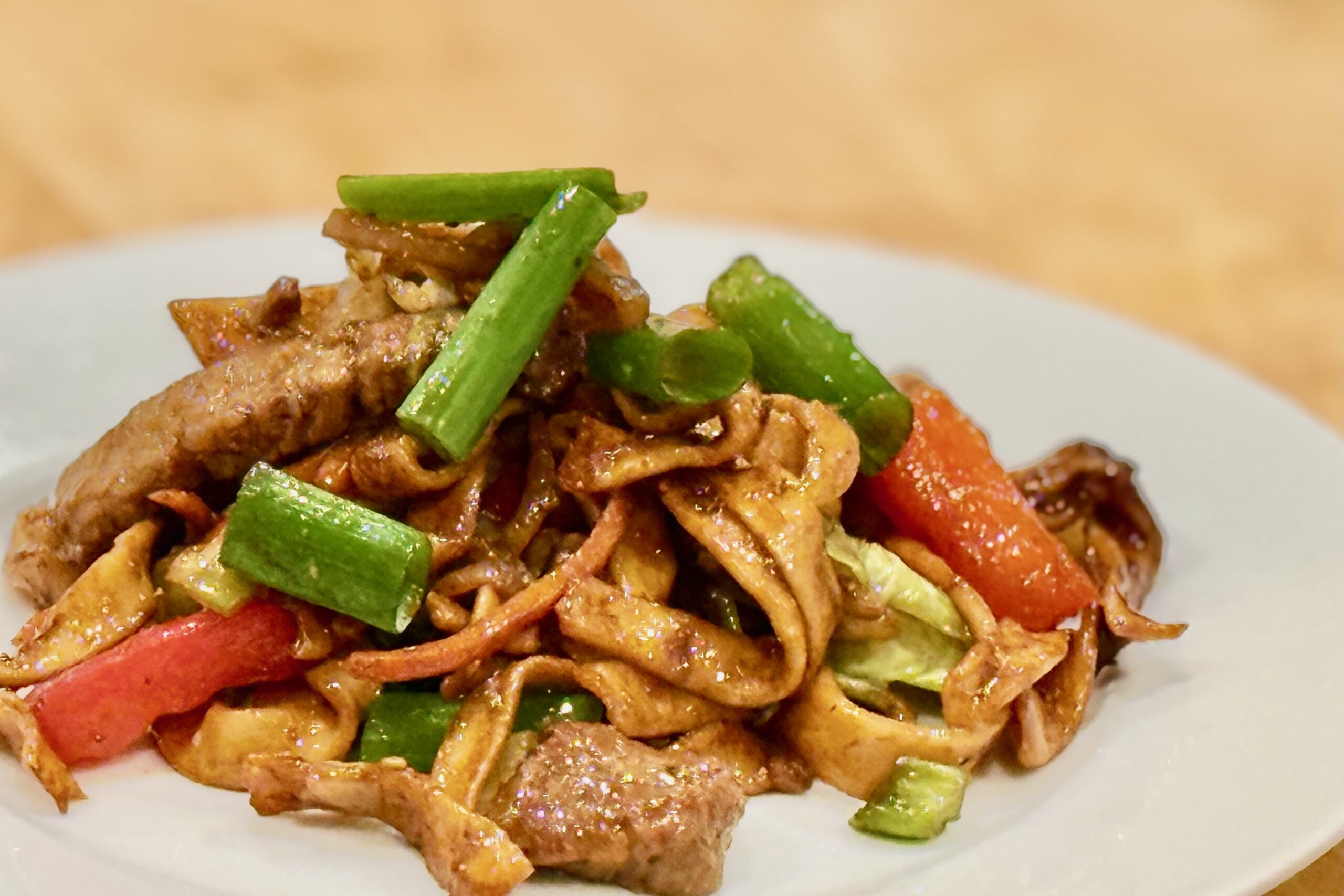
    Bahmi Goreng — Indonesian Fried Noodles

    When Jane and I returned home from our honeymoon, we talked about what to have for dinner that first Sunday back. I said Indonesian sounded great—she had no idea what I meant. That conversation started what has since become one of our favorite family food traditions. The first time I made bahmi goreng for her, the kitchen filled with the aroma of garlic, chilies, and ketjap caramelizing in a hot wok, and she was instantly hooked. Ever since, this dish has represented warmth, comfort, and the sense of adventure we shared from the very beginning. Stir-fried noodles tossed with tender chicken, pork, and shrimp, fragrant with galangal and brightened with lime, bring a taste of Indonesia to our table time and again.


    Ingredients

      Noodles

    • 12 oz (340 g) Chinese egg noodles or lo mein noodles
    • Proteins

    • 4 oz (115 g) small shrimp, peeled and halved lengthwise (optional)
    • 4 oz (115 g) chicken breast, thinly sliced
    • 4 oz (115 g) lean pork or thinly sliced beef
    • Optional Quick Marinades

    • For Shrimp: ½ tsp light soy sauce, ¼ tsp fish sauce, ¼ tsp cornstarch, pinch white pepper
    • For Pork: 1 tsp ketjap manis, ½ tsp light soy sauce, ¼ tsp cornstarch, ¼ tsp minced garlic
    • For Chicken: 1 tsp ketjap manis, ½ tsp light soy sauce, ¼ tsp cornstarch, ¼ tsp minced garlic, pinch white pepper
    • Vegetables

    • 2 cups shredded white cabbage or Chinese cabbage
    • 4 green onions, cut into 1-inch pieces
    • Bumbu (Spice Paste)

    • 3½ oz (100 g) shallots, roughly chopped
    • 4–5 cloves garlic
    • ½ oz (15 g) fresh galangal, sliced (or ½ tsp galangal powder)
    • 1–2 fresh red chilies, seeded if desired
    • 1 tbsp chopped cilantro stems
    • Seasoning Sauce

    • 2 tbsp ketjap manis (Indonesian sweet soy sauce)
    • 1 tbsp light soy sauce
    • ⅓ tsp MSG (optional but recommended)
    • ¼ tsp ground white pepper
    • ⅛ tsp turmeric
    • 1 tsp fish sauce (optional, for added umami)
    • Cooking Oil

    • 3 tbsp peanut oil, divided
    • Optional Flavor Boost

    • 1 tsp tomato paste
    • Finishing & Garnishes

    • Fresh lime juice, to taste
    • Fresh cilantro leaves
    • Fried shallots
    • Reserved chili slivers
    • Omelet shreds (optional)
    • Fried onion flakes (optional)
    • For Serving

    • Lime wedges
    • Sambal oelek or sambal badjak
    • Extra ketjap manis

    Directions

    Prepare the Noodles

    Cook the noodles according to package directions until just tender. Drain well and toss lightly with about 1 tsp of the peanut oil to prevent sticking.

    Spread the noodles out on a tray or colander and let them cool slightly while preparing the remaining ingredients.

    Optional: Marinate the Proteins

    If using the marinades, toss each protein with its respective marinade ingredients and let stand for 10–15 minutes while preparing the vegetables and bumbu.

    Prepare the Bumbu

    In a food processor or mortar and pestle, grind the shallots, garlic, galangal, chilies, and cilantro stems into a coarse aromatic paste.

    Prepare the Vegetables

    Shred the cabbage and cut the green onions into 1-inch lengths.

    Cook the Proteins

    Heat 1 tbsp peanut oil in a wok over high heat until shimmering.

    Add the chicken and pork (or beef) and spread them across the surface of the wok. Let them sear undisturbed for about 30 seconds before stir-frying.

    Continue stir-frying until just cooked through, about 2–3 minutes.

    Add the shrimp and cook briefly until pink. Transfer all proteins to a plate and set aside.

    Cook the Bumbu

    Add the remaining peanut oil to the wok.

    Add the bumbu paste and stir-fry for about 2 minutes until fragrant.

    If using the tomato paste, add it now and cook about 30 seconds until lightly caramelized.

    Build the Stir-Fry

    Add the cabbage and green onions and stir-fry for 1–2 minutes.

    Add the noodles and toss well with the aromatics.

    Return the proteins to the wok.

    Season and Finish

    Add the ketjap manis, soy sauce, MSG, white pepper, turmeric, and fish sauce if using.

    Toss everything over high heat until evenly coated and glossy. If the noodles absorb the sauce too quickly, add 1–2 tbsp hot water to loosen the sauce and help it coat the noodles.

    Finish with a squeeze of fresh lime juice.

    Serve

    Garnish with cilantro leaves, fried shallots, chili slivers, and optional omelet shreds or fried onion flakes. Serve with lime wedges, sambal, and extra ketjap manis.


    Notes

    Preparation

    • Chinese egg noodles or lo mein noodles work best for this dish.
    • If ketjap manis is unavailable, substitute 1 tbsp soy sauce mixed with 2 tsp brown sugar.
    • If using a less sweet ketjap manis, add ½ tsp brown sugar to balance the sauce.
    • A small amount of fish sauce adds savory depth similar to Indonesian shrimp paste.
    • The tomato paste adds deeper color and umami reminiscent of Dutch-Indo restaurant versions.

    Serving Suggestions

    • Serve with krupuk (Indonesian shrimp crackers).
    • A fried egg on top is a popular Indonesian presentation.
    • A side of acar timun adds refreshing contrast.

    Variations

    • Increase the chilies or add sambal badjak for a spicier Javanese-style version.
    • A light drizzle (about ½ tsp) sesame oil over the finished noodles adds subtle aroma.

    Make-Ahead & Storage

    • Best served fresh from the wok.
    • Leftovers keep up to 2 days refrigerated.
    • Reheat in a skillet with a splash of water or oil.
  • Acar Ketimun — Indonesian Pickled Cucumber

    Acar Ketimun — Indonesian Pickled Cucumber

    Bright, crisp, and refreshingly tangy, acar ketimun is a classic Indonesian quick pickle made with cucumbers, carrots, shallots, and chilies in a lightly sweet-sour vinegar brine. A pinch of turmeric gives the vegetables their traditional golden hue, while the quick pickle balances rich dishes like satay, nasi goreng, and bahmi goreng with fresh acidity and crunch.


    Ingredients

    • 2 medium cucumbers, halved lengthwise, seeded, and sliced into thin half-moons
    • 1 small carrot, julienned (optional but traditional)
    • 1 small shallot, thinly sliced
    • 1–2 small red chilies, thinly sliced (optional)
    • ½ cup rice vinegar (or white vinegar)
    • 3 tbsp sugar
    • ½ tsp table salt
    • ¼ cup water
    • ¼ tsp ground turmeric

    Directions

    Prepare the Pickling Brine

    In a small saucepan, combine the vinegar, sugar, salt, water, and turmeric.

    Warm gently over low heat just until the sugar dissolves. Do not boil. Remove from heat and allow the mixture to cool to room temperature.

    Prepare the Vegetables

    Place the sliced cucumber, carrot, shallot, and chilies in a bowl.

    Pickle

    Pour the cooled pickling liquid over the vegetables and toss to combine.

    Cover and refrigerate for at least 30 minutes before serving. The flavor improves after 2–3 hours.


    Notes

    Preparation

    • Seeding the cucumbers helps keep the pickle crisp and prevents excess water from diluting the brine.
    • Thin slicing allows the vegetables to absorb the brine quickly, giving good flavor even with short chilling times.
    • Turmeric adds the traditional golden color seen in many Indonesian acar served with rijsttafel.

    Serving Suggestions

    • Serve alongside Bahmi Goreng, nasi goreng, or Indonesian satay.
    • The bright acidity cuts through rich, savory dishes flavored with ketjap manis.
    • Also excellent with grilled chicken, pork skewers, or fried rice dishes.

    Variations

    • Bahmi Goreng Version: For a sharper pickle that pairs especially well with fried noodles, reduce the sugar to 2 tbsp and increase the vinegar to ⅔ cup.
    • No-Chili Version: Omit the chilies for a completely mild pickle.
    • Extra Crunch: Add thinly sliced cabbage or lightly blanched green beans.

    Make-Ahead & Storage

    • Best flavor develops after 2–3 hours of chilling.
    • Keeps well refrigerated for up to 3 days.
    • The vegetables will soften slightly over time but remain flavorful.
  • Pindasaus — Dutch-Indonesian Peanut Sauce

    Pindasaus — Dutch-Indonesian Peanut Sauce

    I learned to love peanut sauce (pindasaus) while living in the Netherlands. An Indonesian meal just isn’t right without it. This delicious sauce is a favorite of every member of our family. We use it most often to smother skewers of chicken (Saté Ajam) or beef (Saté Sapi), over vegetables for gado gado, or with mayonnaise and diced onions to top Frites for patatje oorlog. There are two kinds of people in the world: those who love peanut sauce, and those who haven’t eaten it often enough to crave it… yet.


    Ingredients

    Sauce

    • 2 tbsp peanut or vegetable oil
    • 2 cloves garlic, minced
    • ½ tsp hot red curry powder
    • ½ tsp ground coriander
    • 1 cup smooth peanut butter
    • ¼ cup ketjap manis
    • 2 tbsp lime juice
    • 2 tbsp brown sugar
    • 1–2 tsp sambal oelek, to taste
    • 2 tsp tamarind paste (store-bought; or use our homemade Tamarind Paste from Whole Pods)
    • 1 can (14.5 oz/400 ml) coconut milk
    • ¼ tsp aji-no-moto, or to taste
    • Warm water, as needed to thin

    Optional

    • 1 tsp dark soy sauce, for a deeper Dutch-Indonesian satay-house flavor

    Directions

    Bloom the Aromatics

    Heat the oil in a saucepan over medium-low heat. Add the garlic and cook just until fragrant, stirring constantly so it does not brown.

    Add the curry powder and ground coriander and cook for about 30 seconds, stirring, until aromatic.

    Build the Sauce

    Stir in the peanut butter, ketjap manis, lime juice, brown sugar, sambal oelek, and tamarind paste. Mix until smooth and evenly combined.

    Add the Coconut Milk

    Gradually whisk in the coconut milk until the sauce is creamy and smooth. If using the optional dark soy sauce, stir it in now.

    Reduce the heat to low and warm gently for 2–3 minutes, stirring often. Do not let the sauce boil hard.

    Finish and Adjust

    Stir in the aji-no-moto. Thin with warm water as needed until the sauce reaches your preferred consistency.

    Taste and adjust with additional tamarind for tang, sambal for heat, brown sugar for sweetness, or a little more MSG for deeper savory flavor. Keep warm for serving, or cool and refrigerate for later use.

    Serve

    Serve warm over satay, spoon over blanched vegetables for gado gado, or drizzle over Frites with mayonnaise and diced onions for patatje oorlog.


    Notes

    Preparation

    • Blooming the curry powder and coriander briefly in the oil deepens their flavor and helps them blend more fully into the sauce.
    • Tamarind gives the sauce a brighter, more balanced finish and keeps it from tasting too sweet or heavy.
    • MSG is optional, but even a small amount gives the sauce a fuller, more savory satay-stall character.
    • Use warm water for thinning so the sauce stays smooth and emulsified.

    Serving Suggestions

    • This sauce is especially good with Saté Ajam.
    • It also pairs beautifully with saté babi, grilled Saté Sapi, gado gado, or spooned over Frites with mayonnaise and diced onions for patatje oorlog.
    • For a satay platter, serve with lime wedges, Acar Ketimun, fried shallots, and steamed rice or lontong.

    Variations

    • Add the optional dark soy sauce for a slightly deeper, more savory Dutch-Indonesian satay-house flavor.
    • For a milder sauce, start with 1 tsp sambal oelek and increase to taste.
    • For a tangier sauce, add an extra 1–2 tsp tamarind paste or a little more lime juice.
    • For a looser sauce for gado gado or fries, thin with a bit more warm water until spoonable and pourable.

    Make-Ahead & Storage

    • The sauce can be made up to 3 days ahead and refrigerated in an airtight container.
    • It will thicken considerably when chilled. Rewarm gently over low heat and thin with warm water as needed before serving.
    • Leftovers are excellent repurposed as a dip for grilled chicken, a sauce for noodles, or a dressing for blanched vegetables.