
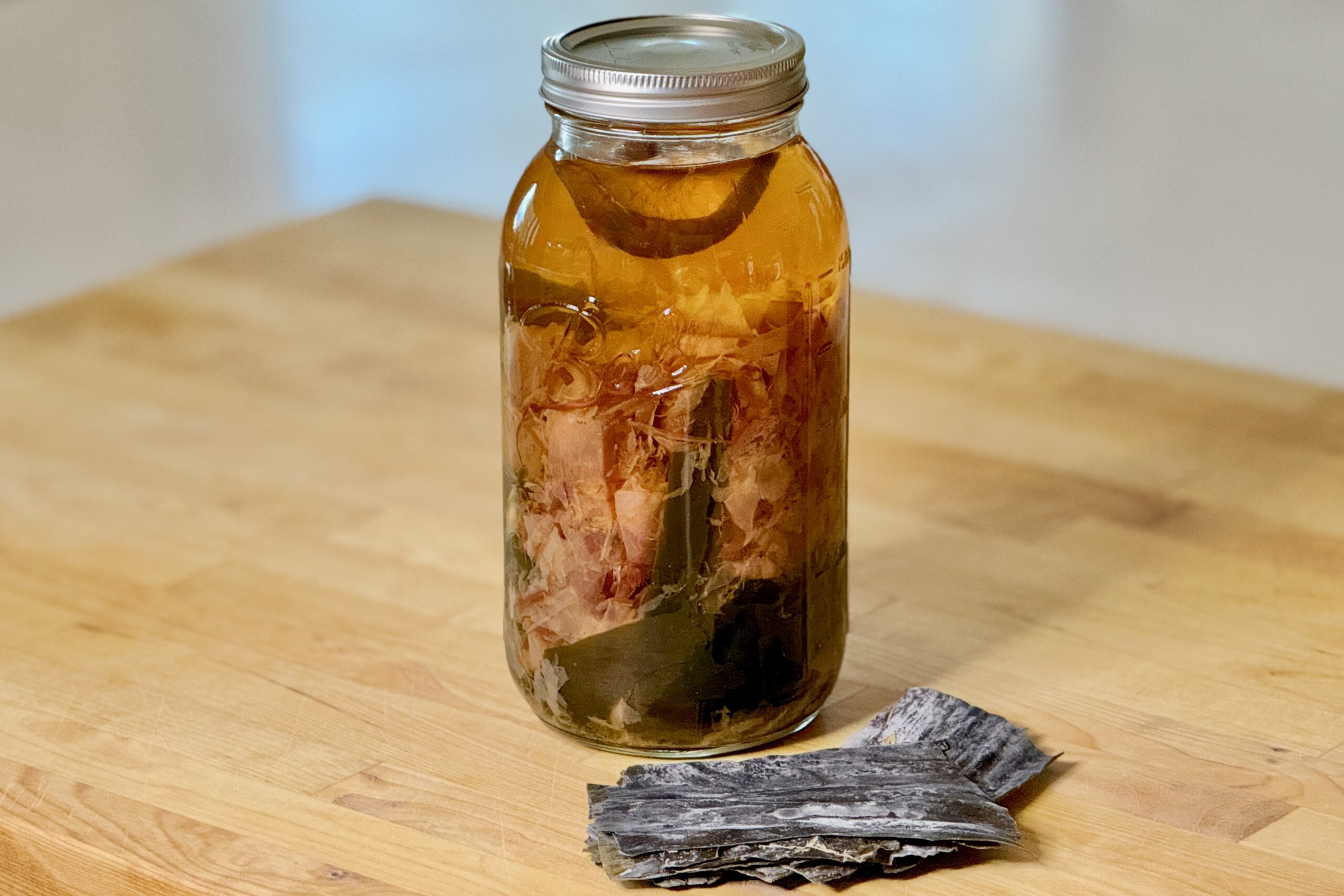
Traditional Japanese dashi doesn’t have to involve heating a pot of water. Mizudashi uses a slow, refrigerated extraction to draw the delicate flavors of kombu and bonito flakes into a beautifully clear, umami-rich broth. The result is a versatile foundation for ramen, miso soup, noodle dishes, and other Japanese recipes. I particularly like the distinctive ocean-like flavor of kombu, which brings back memories of growing up near our favorite Southern California beaches. Best of all, the ingredients do the work overnight, leaving a flavorful broth ready to use the next morning.
Ingredients
- 1 oz (28 g) kombu (dried kelp)
- ¾ oz (21 g) bonito flakes (katsuobushi)
- Approximately 7½ cups (1.8 L) cold filtered water, or enough to fill a ½-gallon mason jar, leaving a little headspace
Directions
If the kombu is sandy or dusty, gently wipe it with a barely damp cloth. Leave the white crystalline coating intact, as it contributes to the flavor of the dashi.
Place the kombu and bonito flakes in a clean ½-gallon mason jar. Fill the jar with cold filtered water, leaving a little headspace. Cover without shaking or stirring.
Refrigerate for 8–12 hours, allowing the ingredients to slowly infuse the water.
Pour the dashi through a fine-mesh sieve lined with a single layer of cheesecloth. Allow the liquid to drain naturally without pressing or squeezing the solids.
Discard the strained solids and use the dashi immediately, or refrigerate or freeze for later use.
Yield: Approximately 7 cups (1.65 L), depending on absorption and straining.
Notes
Preparation
- Cold Extraction: Mizudashi (水出し) is a Japanese technique for preparing dashi without heating the ingredients. The gentle process produces a clear broth with a clean umami flavor.
- Choosing Kombu: Japanese kombu and good-quality Korean dried kelp (dashima) both work well. Choose clean, well-dried kelp with a pleasant ocean-like aroma. Leave its naturally occurring white coating intact, as it contributes umami flavor.
Variations
- Shiitake Mizudashi: Add 3–4 dried shiitake mushrooms (approximately 10–15 g) along with the kombu and bonito flakes for a deeper, earthier broth.
- Kombu Dashi: Omit the bonito flakes for a simple, plant-based broth that emphasizes the clean, ocean-like flavor of kombu.
- Kombu-Shiitake Dashi: Omit the bonito flakes and add 3–4 dried shiitake mushrooms (10–15 g) for an earthy, umami-rich plant-based alternative.
- More Delicate Dashi: Reduce the bonito flakes to ½ oz (14 g) for a lighter broth that allows the kombu flavor to be more prominent.
Serving Suggestions
- Use this intentionally unsalted broth as a foundation for homemade ramen, miso soup, noodle dishes, and simmered vegetables. Season it as part of the finished dish.
- Dilute with a little water when a more delicate broth is desired.
Make-Ahead & Storage
- Refrigerate strained dashi in a covered container for up to 3 days.
- Freeze for up to 3 months. Thaw in the refrigerator before using.
Leave a Reply
You must be logged in to post a comment.