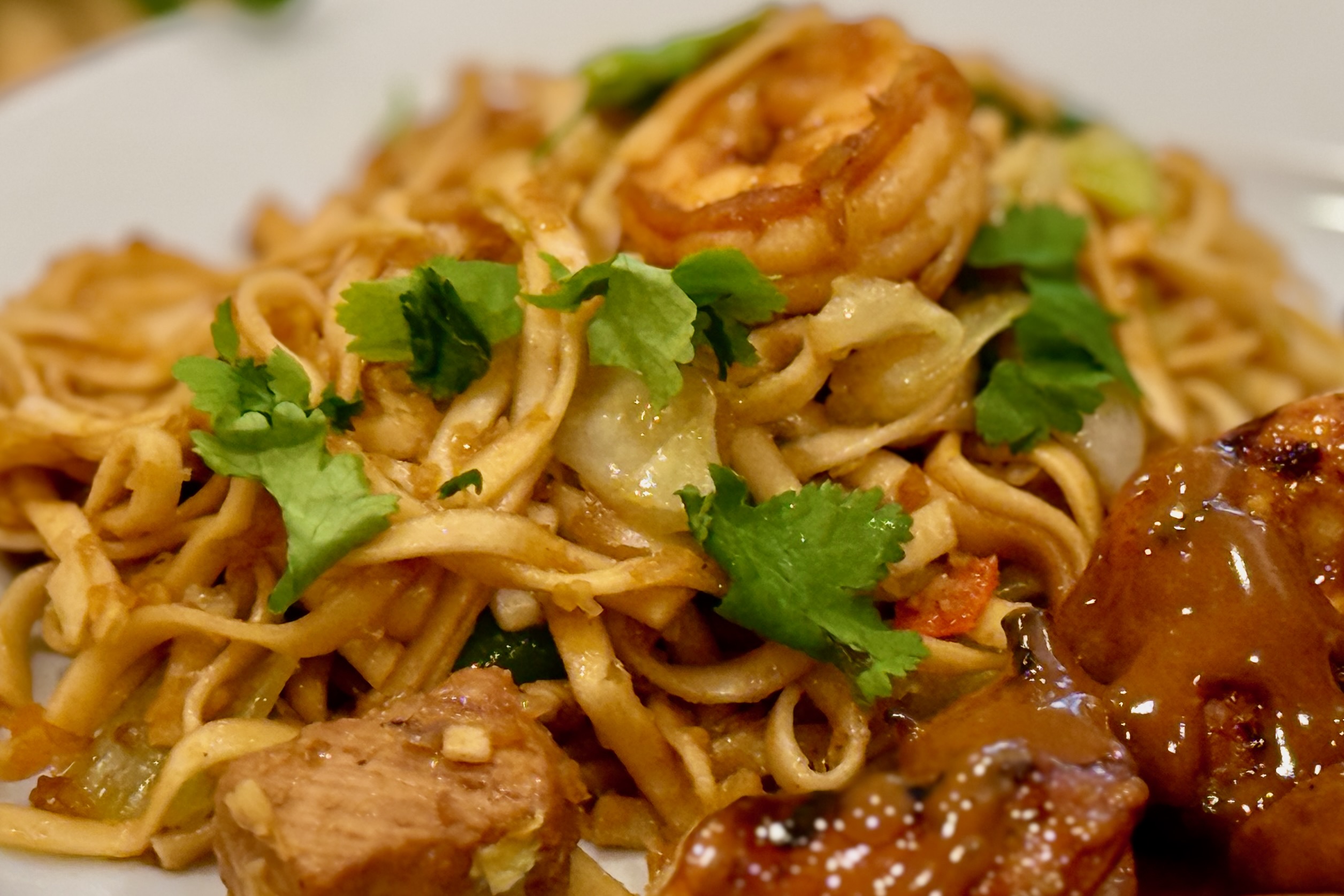
When Jane and I returned home from our honeymoon, we talked about what to have for dinner that first Sunday back. I said Indonesian sounded great—she had no idea what I meant. That conversation started what has since become one of our favorite family food traditions. The first time I made bahmi goreng for her, the kitchen filled with the aroma of garlic, chilies, and ketjap caramelizing in a hot wok, and she was instantly hooked. Ever since, this dish has represented warmth, comfort, and the sense of adventure we shared from the very beginning. Stir-fried noodles tossed with tender chicken, pork, and shrimp, fragrant with galangal and brightened with lime, bring a taste of Indonesia to our table time and again.
Ingredients
- 12 oz (340 g) Chinese egg noodles, lo mein noodles, or our homemade bahmi noodles
- 4 oz (115 g) small shrimp, peeled and halved lengthwise (optional)
- 4 oz (115 g) chicken breast, thinly sliced
- 4 oz (115 g) lean pork or thinly sliced beef
- For Shrimp: ½ tsp light soy sauce, ¼ tsp fish sauce, ¼ tsp cornstarch, pinch white pepper
- For Pork: 1 tsp ketjap manis, ½ tsp light soy sauce, ¼ tsp cornstarch, ¼ tsp minced garlic
- For Chicken: 1 tsp ketjap manis, ½ tsp light soy sauce, ¼ tsp cornstarch, ¼ tsp minced garlic, pinch white pepper
- 2 cups shredded white cabbage or Chinese cabbage
- 4 green onions, cut into 1-inch pieces
- 3½ oz (100 g) shallots, roughly chopped
- 4–5 cloves garlic
- ½ oz (15 g) fresh galangal, sliced (or ½ tsp galangal powder)
- 1–2 fresh red chilies, seeded if desired
- 1 tbsp chopped cilantro stems
- 2 tbsp ketjap manis (Indonesian sweet soy sauce)
- 1 tbsp light soy sauce
- ⅓ tsp MSG (optional but recommended)
- ¼ tsp ground white pepper
- ⅛ tsp turmeric
- 1 tsp fish sauce (optional, for added umami)
- 3 tbsp peanut oil, divided
- 1 tsp tomato paste
- Fresh lime juice, to taste
- Fresh cilantro leaves
- Fried shallots
- Reserved chili slivers
- Omelet shreds (optional)
- Fried onion flakes (optional)
- Lime wedges
- Sambal oelek or sambal badjak
- Extra ketjap manis
Noodles
Proteins
Optional Quick Marinades
Vegetables
Bumbu (Spice Paste)
Seasoning Sauce
Cooking Oil
Optional Flavor Boost
Finishing & Garnishes
For Serving
Directions
Prepare the Noodles
Cook the noodles according to package directions until just tender. Drain well and toss lightly with about 1 tsp of the peanut oil to prevent sticking.
Spread the noodles out on a tray or colander and let them cool slightly while preparing the remaining ingredients.
Optional: Marinate the Proteins
If using the marinades, toss each protein with its respective marinade ingredients and let stand for 10–15 minutes while preparing the vegetables and bumbu.
Prepare the Bumbu
In a food processor or mortar and pestle, grind the shallots, garlic, galangal, chilies, and cilantro stems into a coarse aromatic paste.
Prepare the Vegetables
Shred the cabbage and cut the green onions into 1-inch lengths.
Cook the Proteins
Heat 1 tbsp peanut oil in a wok over high heat until shimmering.
Add the chicken and pork (or beef) and spread them across the surface of the wok. Let them sear undisturbed for about 30 seconds before stir-frying.
Continue stir-frying until just cooked through, about 2–3 minutes.
Add the shrimp and cook briefly until pink. Transfer all proteins to a plate and set aside.
Cook the Bumbu
Add the remaining peanut oil to the wok.
Add the bumbu paste and stir-fry for about 2 minutes until fragrant.
If using the tomato paste, add it now and cook about 30 seconds until lightly caramelized.
Build the Stir-Fry
Add the cabbage and green onions and stir-fry for 1–2 minutes.
Add the noodles and toss well with the aromatics.
Return the proteins to the wok.
Season and Finish
Add the ketjap manis, soy sauce, MSG, white pepper, turmeric, and fish sauce if using.
Toss everything over high heat until evenly coated and glossy. If the noodles absorb the sauce too quickly, add 1–2 tbsp hot water to loosen the sauce and help it coat the noodles.
Finish with a squeeze of fresh lime juice.
Serve
Garnish with cilantro leaves, fried shallots, chili slivers, and optional omelet shreds or fried onion flakes. Serve with lime wedges, sambal, and extra ketjap manis.
Notes
Preparation
- Chinese egg noodles or lo mein noodles work best for this dish.
- If ketjap manis is unavailable, substitute 1 tbsp soy sauce mixed with 2 tsp brown sugar.
- If using a less sweet ketjap manis, add ½ tsp brown sugar to balance the sauce.
- A small amount of fish sauce adds savory depth similar to Indonesian shrimp paste.
- The tomato paste adds deeper color and umami reminiscent of Dutch-Indo restaurant versions.
Serving Suggestions
- Serve with krupuk (Indonesian shrimp crackers).
- A fried egg on top is a popular Indonesian presentation.
- A side of acar timun adds refreshing contrast.
Variations
- Bahmi goreng is highly adaptable—add vegetables like bean sprouts, julienned carrots, green beans, snap peas, or bell peppers depending on what you have on hand.
- Keep the total amount of added vegetables moderate so the noodles remain the focus.
- Cook additional vegetables quickly over high heat to avoid excess moisture and steaming.
- Increase the chilies or add sambal badjak for a spicier Javanese-style version.
- A light drizzle (about ½ tsp) sesame oil over the finished noodles adds subtle aroma.
Make-Ahead & Storage
- Best served fresh from the wok.
- Leftovers keep up to 2 days refrigerated.
- Reheat in a skillet with a splash of water or oil.
Leave a Reply
You must be logged in to post a comment.