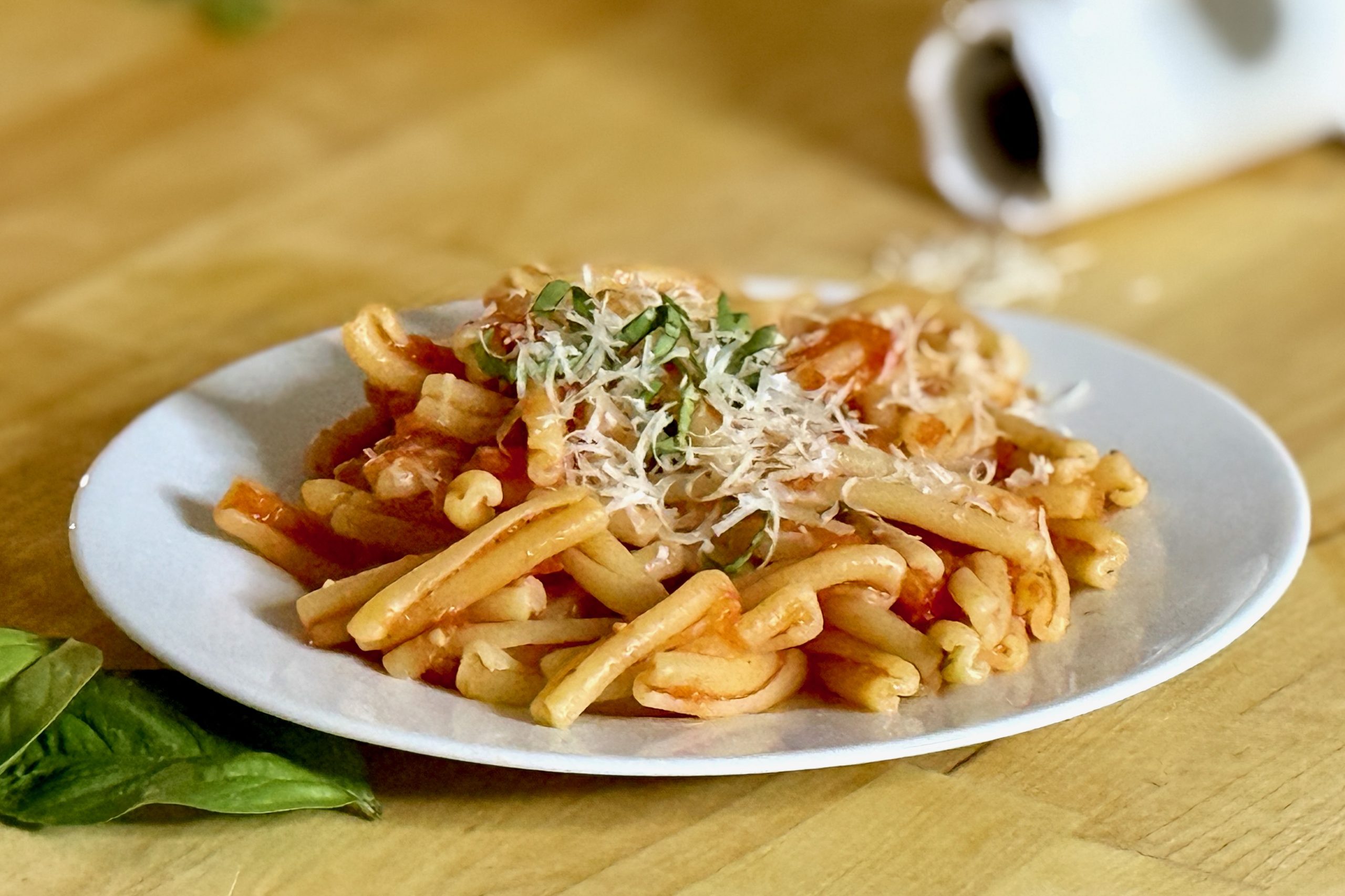
Each year, our backyard garden gives us a bumper crop of San Marzano tomatoes along with plenty of freshly harvested basil, and this sauce is one of our favorite ways to bring the two together. The tomatoes are grated and briefly simmered with gently cooked garlic, fresh basil, and olive oil, creating a sauce that is bright, fragrant, and full of fresh tomato flavor. Finishing the pasta directly in the sauce allows the tomato juices, olive oil, and pasta starch to come together into a light, silky coating that clings beautifully to every strand.
Ingredients
- 2 lb (900 g) fresh San Marzano tomatoes
- 3 tbsp (45 ml) extra-virgin olive oil, divided
- 2–3 cloves garlic, thinly sliced
- ½ tsp table salt, plus more to taste
- Freshly ground black pepper, to taste, optional
- 10–15 fresh basil leaves, divided
- Reserved pasta cooking water, only if needed
Directions
Prepare the Tomatoes
Cut the tomatoes in half. Holding each tomato by the skin, grate the cut side against the large holes of a box grater until only the skin remains. Discard the skins, retaining all of the tomato pulp, juice, seeds, and surrounding gel.
Make the Sauce
Heat 2 tbsp (30 ml) olive oil in a wide skillet or sauté pan over medium-low heat. Add the sliced garlic and cook gently for 30–60 seconds, just until fragrant. Do not allow the garlic to brown.
Add the grated tomatoes and ½ tsp salt. Add 3–4 whole basil leaves or a few tender basil stems.
Bring to a gentle simmer and cook uncovered for about 15–20 minutes, stirring occasionally, until the raw tomato flavor has softened and the tomatoes have reduced slightly. The sauce should still be relatively loose; do not continue cooking simply to achieve the consistency of a finished pasta sauce.
Remove and discard the cooked basil leaves or stems. Taste and adjust the salt and black pepper as needed.
Finish the Pasta in the Sauce
Cook the pasta in well-salted boiling water until about 2 minutes shy of your preferred doneness.
Transfer the pasta directly into the simmering tomato sauce. Toss continuously over medium to medium-high heat for about 2 minutes, or until the pasta is properly cooked and the tomato juices, starch, and olive oil have come together into a light sauce that clings to the pasta.
Add reserved pasta cooking water only if the sauce becomes too tight.
Remove from the heat. Tear the remaining fresh basil leaves into the pasta and drizzle with the remaining 1 tbsp (15 ml) olive oil. Toss well and serve immediately.
Yield: 4 servings.
Notes
Preparation
- Use fully ripe tomatoes with good natural sweetness and acidity. Because the sauce contains so few ingredients, the quality and ripeness of the tomatoes make a significant difference.
- Do not seed the tomatoes. The pulp and gel surrounding the seeds contribute flavor and moisture to the finished sauce.
- Grating the tomatoes removes the skins while retaining more pulp than processing them through a fruit and vegetable strainer.
- Keep the garlic pale and aromatic. Browning it produces a deeper flavor that can compete with the fresh tomatoes.
- Cooking time will vary somewhat with the moisture content of the tomatoes. Judge the sauce primarily by flavor rather than trying to reduce away all of the tomato liquid.
- The sauce is intentionally loose before the pasta is added. Finishing the pasta directly in the sauce allows the pasta to absorb some of the tomato liquid while released starch helps bind the tomato juices and olive oil.
- Avoid substantially extending the tomato cooking time simply to thicken the sauce. The short simmer helps preserve its fresh tomato character.
- Sugar should not normally be necessary with ripe tomatoes. If a particular batch is unusually acidic, make any adjustment only after tasting the cooked sauce.
Variations
- Spicy Tomato & Basil: Add a small pinch of crushed red pepper flakes with the garlic.
- Chunkier Sauce: Peel the tomatoes by blanching rather than grating, then hand-crush or roughly chop them before cooking.
- Fresh Pomodoro Variation: Add a small amount of finely grated onion and extend the simmer for a slightly richer, sweeter, and more developed sauce.
Serving Suggestions
- Especially good with fresh, rustic pastas such as umbricelli, where the irregular surface and substantial texture give the sauce plenty to cling to.
- Use with other fresh or dried pasta shapes, finishing the pasta directly in the sauce using the same method.
- Finish individual servings with additional fresh basil or a drizzle of extra-virgin olive oil.
- Parmigiano-Reggiano or Pecorino Romano can be served at the table, although the sauce is flavorful enough to serve without cheese.
- For a bruschetta-style serving, chill leftover sauce and spoon it over toasted or grilled bread. Finish with fresh basil and a drizzle of extra-virgin olive oil.
Make-Ahead & Storage
- The tomato sauce can be prepared several hours ahead and gently reheated before finishing the pasta in it. Reserve the finishing basil and final tablespoon of olive oil until serving.
- Refrigerate leftover sauce in an airtight container for up to 4 days.
- Leftover sauce is excellent served cold or at room temperature as a bruschetta-style topping.
- The sauce can be frozen, although its fresh basil aroma and especially fresh character are best when served shortly after preparation.
Leave a Reply
You must be logged in to post a comment.